Scientists launch hub to channel quantum power for good / Photo: © AFP

 Carrefour shares plunge after profit warning on French protests

 North Korea says 'new firepower units' in place after border threat

 Australia lawmaker loses both legs after 'targeted' attack

 Director Nick Paley channels childhood fears in new thriller 'Phony'

 'Daily struggle': Cubans dig wells in search of water
 Prized wild pepper at risk in Madagascar's shrinking forests

 World falling 'dangerously short' on climate action: UN chief

 LeBron, Sixers spoil Knicks party, Thunder top Spurs as NBA season tips off

 Sooryavanshi told to be patient by captain Iyer ahead of NZ series

 Man in court over alleged 'targeted' attack on Australia lawmaker

 As actors get more physical, Bollywood embraces intimacy coordinators

 Brazil's presidential candidates seek to disqualify each other
 French PM to meet unions as government prepares for more protests

 'To the shelter, quickly!' Air raids reshape Kyiv school life

 'Leave us alone!' DC golfers fear worst over Trump's course remodel

 NFL players union wants probe into Hurts' medical care

 Man allegedly behind 'targeted' attack on Australian lawmaker due in court
 Netflix shares drop on slowing engagement, revenue growth

 Rodri needed a rest for Barcelona ahead of Clasico, says Flick

 Musk says backs SpaceX-Tesla merger as rocket firm turns profit

 US regulators certify Boeing 737 MAX 10 after delays

 PSG strike late to get better of Yamal and Barcelona in Champions League

 Foden hat-trick fuels Man City rout of AEK Athens

 Trump says he wants Zelensky to 'make a deal' with Russia

 'I want it so badly': PSG heartbreak fuelling Arsenal, says Arteta

Scientists will work to channel the huge emerging power of quantum computers for the common good at a new institute that opened in Geneva on Tuesday, its founders said.
The Open Quantum Institute is calling on researchers from around the world to pinpoint the most promising future applications for the fast-emerging technology -- and ensure they are open and accessible to all.
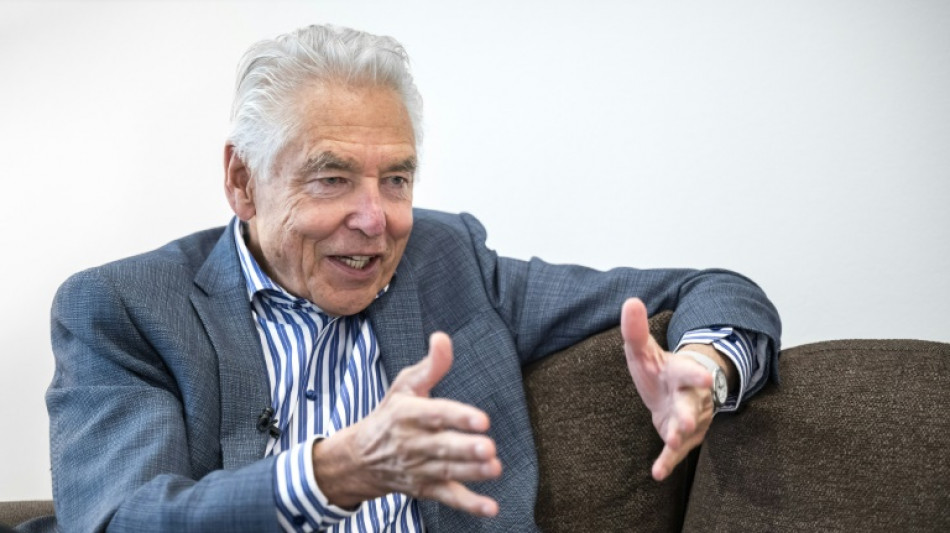
"Quantum computing has the potential of changing almost everything," said Peter Brabeck-Latmathe, chairman of the science and diplomacy platform GESDA that conceived of the project.
He told AFP the future technology was expected to be "1,000 to 10,000 times more potent than the computing power we have today", insisting it was vital to begin thinking hard about how to govern it and ensure it is used for good.
During a ceremony late Tuesday at Europe's science lab CERN, where the institute will be housed during its three-year pilot period, experts summed up discussions after a day of workshops focused on the various visions for the role it will play.
- 'Huge risk' -
It is important to reflect on "the duality of the technology", Ozge Aydogan of the United Nations-run SDG Lab told the gathering.
"It can be an asset for the future, but it can be a huge risk".
CERN chief Fabiola Gianotti meanwhile said the landmark nuclear research lab was the perfect place for the centre, which would benefit from its long experience in "employing scientific and technological progress to the benefit of society."
Quantum computing combines advances in scientific understanding of the subatomic world with leaps in information theory to solve mathematical problems that are impossible for today's conventional computers.
While traditional computers process information in bits that can be represented by 0 or 1, quantum computers use qubits, which can be a combination of both at the same time, allowing them to solve more complex problems.
The first commercial quantum computers are still believed to be up to a decade away, and the technology is not expected to be fully developed before around 2050.
Brabeck-Latmathe, the former longtime head of Swiss food giant Nestle, said it was important to make sure that such a powerful technology was governed in an open and transparent way and was not allowed to be controlled by a handful of giant tech companies.
With quantum computing still under development, there is "time to think about what's going to be the impact of these new technologies ... the ethical considerations."
The institute will seek out applications of the technology that can move the world closer to implementing the UN Sustainable Development Goals.
Quantum computing simulations and calculations might for instance help determine how to reduce carbon dioxide in the atmosphere to help rein in climate change.
It could also potentially predict patterns of antibiotic resistance, and identify new, more effective chemical compounds for battling deadly bacteria.
In a bid to speed up the search for the best applications of the technology, GESDA has joined forces with Google and non-profit tech group XPrize and launched a competition Tuesday calling for researchers everywhere to submit proposals.
The three-year competition will reward the teams submitting the best projects, with $5 million in prizes at the end.
H.Weber--VB