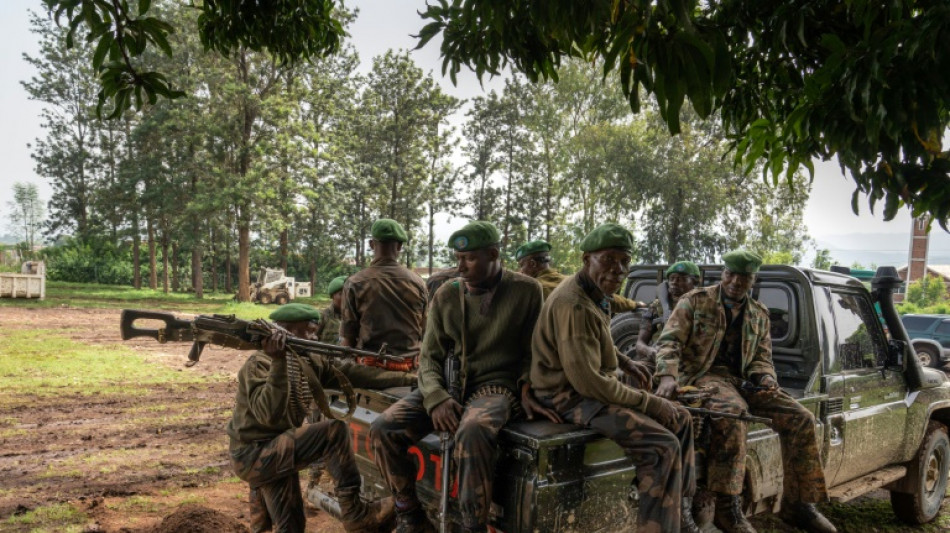
UN peacekeepers begin pullout from war-torn DR Congo / Photo: © AFP

 Tesla profits fall on higher spending as 'Elon Inc.' talk builds

 NFL Titans coach says gun incident was 'cry for help'
 Websites go dark as AI exposes critical security flaws

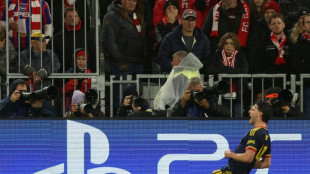
 Man Utd humiliated as Arsenal deny Bayern in Champions League

 Low-budget Brewers and Rays seek first World Series title
 Pitiful Man Utd display heaps pressure on Carrick
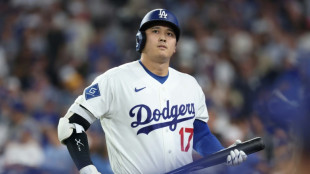 Ohtani surgery 'not on the table': Dodgers chief
 eBay to slash 1,000 more jobs, around 9% of workforce
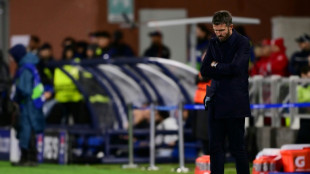
 Villa tame Viking to stay perfect in Champions League

 Tesla profits drop but top analyst estimates

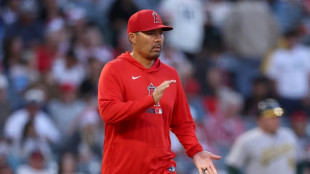 Angels drop Suzuki as manager after club's worst MLB season
 Washington orders US embassy staff, families to leave Saudi Arabia
 Musk's SpaceX results lift global stock markets
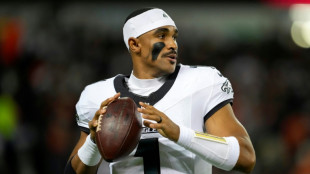
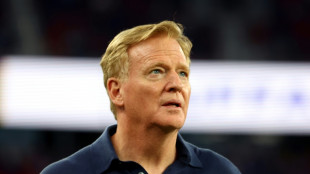 NFL boss Goodell: Comfort level 'very high' for Paris game
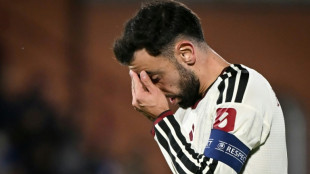 Fernandes laments 'mood of defeat' as Man Utd crumble in Como
 Maradona doctor was made 'scapegoat' for his death, Argentine court told
 Man Utd thrashed by Como in Champions League horror show

 UN experts urge Meta to safeguard political expression in Brazil election

 Websites go dark worldwide as AI exposes critical security flaws
 Defense in Maradona death trial seeks acquittal of doctor
 Jansen, Rabada put South Africa in sight of win over Australia

 Low Rhine weighed on German growth: central bank
 OpenAI says its AI agents disabled their own safety monitors
 Alldritt returns as France call up seven newcomers for Nations Championship
 UN issues call to arms to combat off-the-charts El Nino
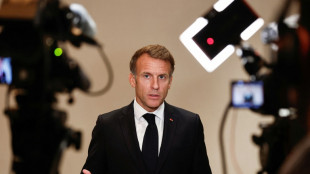
The United Nations on Wednesday started pulling peacekeepers out of Democratic Republic of Congo, moving to end a 25-year presence as conflict surges in the east of the long-troubled African state.
DR Congo demanded the withdrawal of the remaining 13,500 troops and 2,000 police in regions bordering Rwanda and Burundi despite international concerns over rampant violence.
At an official ceremony at the Kamanyola base in South Kivu province, the first to be handed over, the flags of the United Nations and the Pakistan peacekeepers at the base, were replaced by those of the DR Congo.
National police have taken charge and the UN representative in the country, Bintou Keita, said this would be the model for the withdrawal from all UN bases.
The UN Stabilisation Mission in DR Congo, or MONUSCO, was set up in 1999 in a bid to halt the second DR Congo war which pitted local forces backed by Angola, Namibia and Zimbabwe against a rival force supported by Uganda and Rwanda.
At its peak there were 20,000 UN troops in the giant country. More than 270 MONUSCO peacekeepers have been killed, according to UN figures.
Kinshasa has long accused the UN force of failing to protect civilians from the armed groups that have plagued the east of the country for three decades.
Hundreds of thousands of deaths are blamed on the succession of conflicts since the 1990s. About six million people have been displaced.
The UN Security Council voted in December to accede to Kinshasa's demand and start a gradual shutdown of MONUSCO.
Foreign Minister Christophe Lutundula has said he wants the withdrawal completed by the end of this year, though the UN Security Council has not fixed a date.
The troops are based in Ituri, South Kivu and North Kivu provinces which have suffered most over the decades.
The disengagement is to be carried out in three phases.
Phase one will see the departure of peacekeepers from 14 bases in South Kivu by the end of April. North Kivu and Ituri will follow.
It's a "historic moment", MONUSCO commander in chief General Diouf Khar said in a speech.
"We began with Kamanyola because there is stability here which allows us to leave," Keita told reporters.
-'Security vacuum' -
In Kamanyola, with a population of about 100,000, opinions appeared divided on the pullout.
Ombeni Ntaboba, head of a local youth council, said he was not concerned.
Every evening, he said, "we see them out in their armoured vehicles around the Ruzizi plain", where armed groups operate along the border.
"But the level of insecurity is still the same, with armed robberies and kidnappings."
"We salute the Congolese government's decision," said Mibonda Shingire, a rights activist, who still admitted fearing the impact on the economy as MONUSCO employs so many civilians.
Others, like Joe Wendo, said they were worried about a "security vacuum" with the Pakistani troops gone.
"Their presence at least protected us from the Rwandan invaders," he said.
Tutsi-led M23 rebels have taken swathes of territory in neighbouring North Kivu.
Intense fighting resumed last month around Goma, North Kivu's capital.
Kinshasa, the United Nations and Western countries say Rwanda supports the M23 in a bid to control the vast mineral resources in the region. Rwanda denies any role.
Local people have also criticised the UN troops.
And MONUSCO's leadership recently had to highlight its role that "supports Congo's armed forces... defends its positions... facilitates secure passage for civilians".
"The departure of the MONUSCO blue helmets concerns us, at a time when the country is at war with the rebels backed by our Rwandan neighbours," said Beatrice Tubatunziye, who leads a development association in Kamanyola.
The United Nations has insisted DR Congo security forces must be reinforced and take care of civilians at the same time as MONUSCO pulls out.
N.Schaad--VB