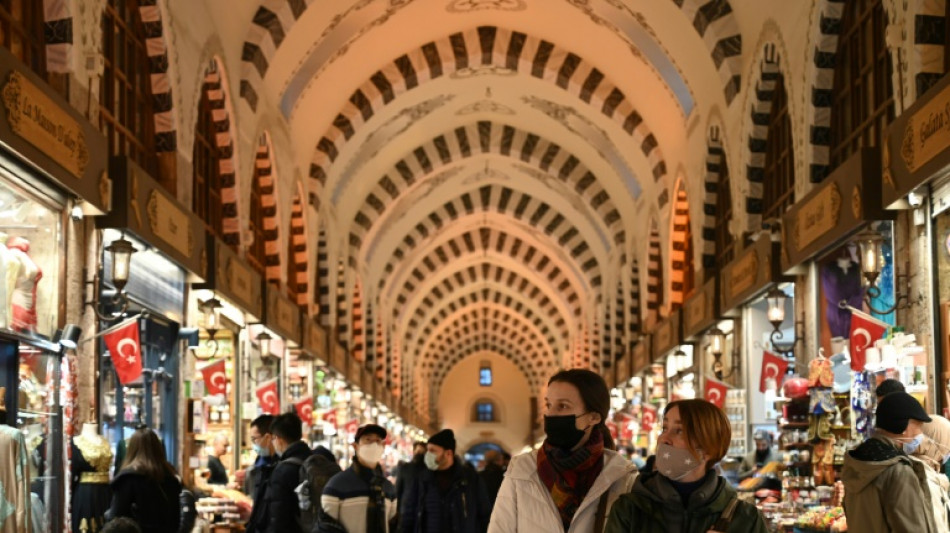
Turkey halts four-month streak of rate cuts / Photo: ©

 Lula win rattles Brazil markets over spending spree fears

 De la Fuente wins men's Ballon d'Or coach of year

 Trump slams 'rigged' Brazil election after ally loses to leftist Lula

 Nadal returns for Vegas hardcourt event

 Fainga'anuku named as loose forward for All Blacks northern tour

 Anthropic points to AI dangers, soaring sales in IPO filing

 Sinner to play rescheduled Saudi Six Kings in December

 Brazilian lawmaker Andre Janones, Lula's social media 'general'

 Swiss Ebola patient repatriated from Nigeria
 Nations far from a deal as UN nature talks enter final stretch

 Brazil markets battered, tech in focus elsewhere

 French court adjourns trial over 2020 death of delivery driver
 Serbian student movement eyes power after election triumph

 Machado ready to meet Venezuela leader after shock return

 Lula celebrates election win as Brazil markets tumble

 France's Macron accuses social media of sowing discord ahead of election
 Anthropic unveils IPO filing showing soaring sales and AI risks

 US singer Chris Brown avoids jail over London nightclub brawl

 US singer Chris Brown avoids jail over UK nightclub brawl

 Man Utd crisis deepens as Carrick faces axe
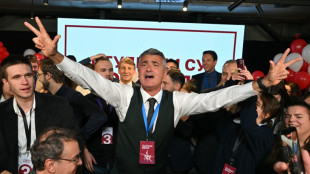 Serbian student movement eyes power after resounding snap poll victory
 Eala breezes past world number 411 in Tokyo opener
 Swedish Centre Party leader says government coalition talks failed
 Barca's big-game defeats pose familiar questions

 Russia says open to mini Ukraine ceasefires, but no let up in war
Turkey's central bank on Thursday bowed to market pressure and halted a four-month streak of interest rate cuts that saw inflation soar and the currency collapse.
The bank left its policy rate at 14 percent two days after President Recep Tayyip Erdogan -- a fervent opponent of high interest rates -- said future reductions could come "gradually and without any rush".
Erdogan has been waging a "war of economic independence" designed to break Turkey's dependence on foreign currency inflows by boosting cheap lending and revving up exports.
But the policies have seen the emerging country's economy spin dangerously out of control.
Turkey's annual inflation rate has shot to a 19-year high of 36 percent and is expected to keep climbing.
The lira lost 44 percent of its value against the dollar and became the world's worst-performing emerging market currency last year.
And the central bank's net reserves -- a gauge of both Turkey's economic health and ability to withstand a potential banking crisis -- have dropped from $21.1 billion (18.6 billion euros) in mid-December to $7.9 billion on January 7.
"The sharp falls in the lira risk entrenching inflation at very high levels," Jason Tuvey of Capital Economics said in a note to clients.
"And the weak lira could cause vulnerabilities in the banking sector to crystallise."
- 'Bad policy for longer' -
Erdogan has cited Islamic rules against usury to justify his belief that high interest rates cause inflation. Economists almost universally agree that the opposite is true.
Central banks hike rates in order to raise the cost of doing business when the economy is growing too fast. This helps bring down prices by reducing demand.
High rates also help support currencies by raising the return on local bank deposits and investments.
But Erdogan says Turkey has developed a "new economic model" for achieving sustainable growth.
The central bank attributed the spike in inflation from 21.3 percent in November to 36.2 percent last month to "distorted pricing behaviour (caused by) unhealthy price formations in the foreign exchange market".
It also blamed outside factors such as high commodity prices and global supply chain bottlenecks caused by the coronavirus pandemic.
The lira edged up slightly after the announcement to around 13.3 to the dollar.
Economists believe the bank would need to hike its policy rate substantially in order to solve Turkey's accumulating problems.
"No change (means) bad policy for longer," emerging markets economist Timothy Ash of BlueBay Asset Management remarked after the rate decision.
- 'Lira is our money'
Turks had been converting their liras into gold and dollars in order to shield themselves from price increases and an erosion of their purchasing power.
The government has tried to stem this tide by creating new bank deposits that effectively tie the value of the lira to the dollar.
Erdogan says the new scheme has attracted 163 billion liras ($12.2 billion).
He has also appealed on Turks' sense of patriotism while urging them to hold on to their liras.
"The Turkish lira is our money," he said in a traditional New Year's Eve address. "That is how we move forward -- not with this or that currency."
Yet fresh data released on Thursday showed that 62.2 percent of all Turks' deposits were still held in dollars.
The figure was down by just 1.4 percentage points on the week.
Economists believe that the mechanism is having only a marginal effect because it forces individuals and businesses to hold liras in the new deposits for at least three months.
Exporters are also unhappy with a new requirement to sell a quarter of their hard currency proceeds to the central bank.
K.Thomson--BTB