Russia says paid dollar debt in rubles amid default fears / Photo: ©

 New mum Sjostrom wins 50m butterfly for 18th European gold

 Solar eclipse darkens Arctic Russia on course for Spain
 Russian economy rebounds in second quarter despite Ukrainian strikes

 NBA's Los Angeles Lakers to be sold for $12.5 bn: ESPN
 Trump sued over sale of access to Truth Social posts

 Europe looks to the skies as solar eclipse cast its shadow
 At least 44 drown after ferry overturns on Zimbabwe's Lake Kariba
 Grieving Argentine icon Messi unsure about playing on 'much longer'
 Nigeria kidnap victims escape 'hellfire' captivity beaten, malnourished
 Google unveils finder tag, new AI smartphone features
 US equities gain as inflation report eases fear of rate rise
 Colombia declares three days mourning for quake victims

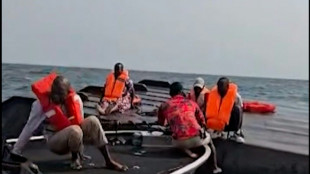 44 lives lost after ferry capsizes on Zimbabwe's Lake Kariba

 WallStreetPR Releases Report on China’s Gold Purchases and African Mining Investment

 Former Chinese premier Zhu Rongji dies aged 97

 Markets steady awaiting US inflation data
 WHO says Trump vaccine shake-up goes against evidence

 Eclipse chasers flock to Spain for 'breathtaking' experience
 'To make the civilians leave': Russia pummels Ukraine's petrol stations

 Japan brushes off Australian PM's melon drama
 Rod Stewart cancels tour dates after heart surgery
 How Britain's mapmakers track climate change

 Australian delivery drivers win 'world-leading' pay rise
 Meta meets its own 'tobacco' moment in court

 Art or medicine? Japan's cosmetic tattoo artists in limbo
Russia said Wednesday it had been forced to make foreign debt payments on dollar-denominated bonds in rubles, raising the prospect of a potential default amid unprecedented Western sanctions over the Ukraine conflict.
The announcement came on the 42nd day of Russia's military campaign in pro-Western Ukraine, with thousands killed and more than 11 million having fled their homes or the country in the worst refugee crisis in Europe since World War II.
The West has pummelled Russia with debilitating sanctions since President Vladimir Putin sent troops into Ukraine on February 24.
On Wednesday, the United States and the European Union were readying new sanctions after Ukrainian President Volodymyr Zelensky showed the UN Security Council harrowing images of violence.
The Russian finance ministry said on Wednesday that it had been forced to repay $649.2 million to foreign debt-holders in rubles after a correspondent bank refused to execute payment instructions.
Ratings agencies have downgraded Russia and warned that payments of dollar-denominated debt in local currency would constitute a sovereign default, the country's first in decades.
The United States from Monday barred Russia from making debt payments using funds held at American banks, ramping up the economic pain in Moscow.
"A foreign correspondent bank refused to execute instructions for the payment" of debt on two eurobonds on April 4, the ministry said in a statement.
"In order to fulfil the state debt obligations of the Russian Federation," the finance ministry said it "was forced to call upon a Russian financial institution to make the necessary payments".
The finance ministry did not specify whether the ruble payment had been accepted.
"If Russia attempts to transfer payment in rubles –- as it has warned in the past –- via a special payment procedure set up in mid-March, for bonds that do not have a ruble repayment clause, this will constitute default," said Elina Ribakova, deputy chief economist at the Institute of International Finance, a US-headquartered financial industry association.
- 'Putin impoverishing Russia' -
The Kremlin denied suggestions that Russia could default on foreign debt payments.
"Russia has all the necessary resources to service its debts," Kremlin spokesman Dmitry Peskov told reporters.
"There are no grounds for a real default."
Timothy Ash, an emerging markets strategist at BlueBay Asset Management, said, however, that it was hard to see Russia avoiding a sovereign default.
"Putin is impoverishing Russia for years to come," he said in a note to clients.
"Default might not crash Russian markets and the economy immediately but will have devastating longer term consequences," he said, adding that investment, growth and living standards will be affected.
Russia missed payments on domestic, ruble-denominated debt in 1998 amid a broader financial crisis, but last defaulted on its foreign currency debt in 1918, when Bolshevik revolution leader Vladimir Lenin refused to recognise the obligations of the deposed tsar's regime.
In recent years, Moscow amassed about $600 billion in foreign currency reserves, including gold, largely from oil and natural gas sales.
The government owes about $40 billion in dollar- or euro-denominated debt, though only half of that is held by foreign creditors.
- No wages? -
The sanctions also sparked an exodus from Russia of hundreds of foreign companies.
US officials expect the sanctions to plunge Russia, which has heavily relied on imports of manufacturing equipment and consumer goods, into deep recession.
Ordinary Russians have been bracing for tough times, stocking up on food and other supplies as inflation soars.
New car sales sank almost 63 percent in Russia in March year-on-year, industry data showed Wednesday, with Russians less likely to buy imported cars after the ruble plummeted in value.
Only 55,129 cars or light commercial vehicles were sold last month, a 62.9-percent drop from the same period last year, said the Association of European Businesses.
Andrei Yakovlev, director of the Institute for Industrial and Market Studies at Moscow's Higher School of Economics, said the worst economic impact of the sanctions is still to come, since many Russian businesses rely on imported components and are using up their current stocks.
"Disruption to component supplies across all industries will begin in about a month or a month and a half," Yakovlev told AFP.
"It is possible that a large number of enterprises will stop working because of this in May," he said, adding that eventually tens or even hundreds of thousands of people will stop receiving wages.
H.Seidel--BTB