Children of Chernigiv leave clues of Russian siege / Photo: ©

 New mum Sjostrom wins 50m butterfly for 18th European gold

 Solar eclipse darkens Arctic Russia on course for Spain
 Russian economy rebounds in second quarter despite Ukrainian strikes

 NBA's Los Angeles Lakers to be sold for $12.5 bn: ESPN
 Trump sued over sale of access to Truth Social posts

 Europe looks to the skies as solar eclipse cast its shadow
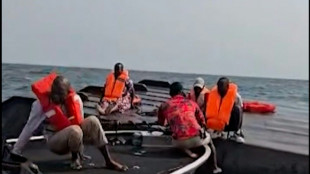 At least 44 drown after ferry overturns on Zimbabwe's Lake Kariba

 Grieving Argentine icon Messi unsure about playing on 'much longer'

 Nigeria kidnap victims escape 'hellfire' captivity beaten, malnourished

 Google unveils finder tag, new AI smartphone features
 US equities gain as inflation report eases fear of rate rise

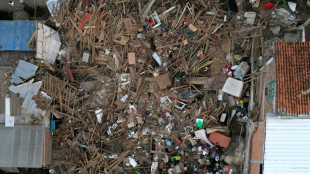 Colombia declares three days mourning for quake victims

 44 lives lost after ferry capsizes on Zimbabwe's Lake Kariba

 WallStreetPR Releases Report on China’s Gold Purchases and African Mining Investment

 Former Chinese premier Zhu Rongji dies aged 97
 Markets steady awaiting US inflation data

 WHO says Trump vaccine shake-up goes against evidence

 Eclipse chasers flock to Spain for 'breathtaking' experience

 'To make the civilians leave': Russia pummels Ukraine's petrol stations

 Japan brushes off Australian PM's melon drama

 Rod Stewart cancels tour dates after heart surgery
 How Britain's mapmakers track climate change

 Australian delivery drivers win 'world-leading' pay rise

 Meta meets its own 'tobacco' moment in court

 Art or medicine? Japan's cosmetic tattoo artists in limbo
In the dank basement of a children's hospital in Chernigiv there are cave paintings on the wall -- tiny handprints, a smeared rainbow, a fluttering Ukrainian flag.
After Russian bombs began to fall on February 24 the underage patients came here to wait out the fury being visited on the city above.
They daubed the walls to pass the hours and days. Some wrote their names inside the silhouette of a cluster of balloons: Myroslava, Vasylyna, Glasha, Ulya.
"I did not count them, but there were quite a lot," said 30 year-old Natalia, a member of Ukraine's territorial defence forces, barely visible in the stifling gloom.
Before Russia launched the war she was an interior designer. But this is a dwelling no reasonable person would choose, least of all for children.
The entrance to the stairwell has been smashed through a wall. There is head-splitting pipework hidden in the dim. The odour of damp hangs thick in the air.
"We are very grateful that the children were taken out before we had no electricity, no water and no heat," she said.
"Not all, but most of the children were taken out before all these benefits of civilisation disappeared."
"They got a chance to survive."
- A city encircled -
Chernigiv -- just 50 kilometres (31 miles) from the border with Belarus -- was swiftly encircled in the early days of the invasion ordered by Russian President Vladimir Putin.
Moscow's forces did not take the city but it was pounded with artillery and air strikes for more than a month before troops withdrew in recent days, regrouping for an offensive in eastern Ukraine.
Signs of the siege they waged to take this foothold towards the capital Kyiv are everywhere.
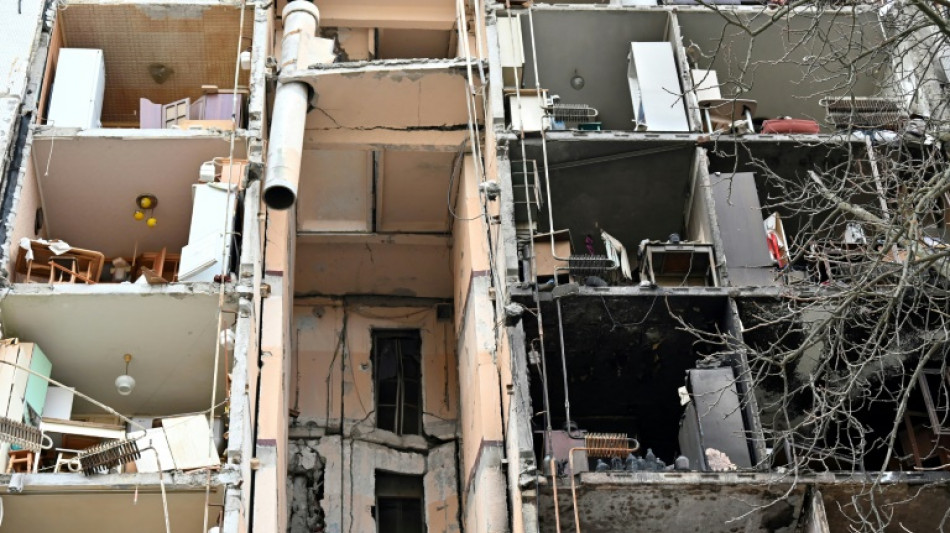
Apartment blocks have been gored by blasts. A hotel has a semicircle missing from its top half, as though the sky has taken a bite from above. The football stadium has been pummelled into its pitch.
The children's hospital has also been marked by the deluge. On the upper floor there is a puckered, charred wound from an incoming strike. The windows are flecked with holes.
Now it is being used to store aid supplies. The children -- cancer patients among them -- are no longer here. They have been transported south.
But there are clues of the traumas they endured. On a ledge outside, a plastic bag of Lego is paired with another collection of trinkets -- shrapnel garnered from the hospital grounds.
"Cluster bombs were flying, we have traces of these bombs," said 51-year-old Olena Makoviy. "The injured were brought to the children's hospital, both adults and children."
"It was very scary here from the first days of the war," she said. "They brought guys, handsome, young, but no longer alive."
- Neighbours bury neighbours -
City officials estimate around 350 civilians have been killed in Chernigiv.
Municipal council secretary Oleksandr Lomako said the city witnessed "war crimes" under "artillery, heavy weapons and bombs".
Civilians died waiting in line for water and bread, and in early March an air strike on a 12-storey residential building claimed 45 to 50 lives, he said.
All of these bodies have been buried in a mass grave by fellow citizens, in a cleared patch of forest land.
Galyna Troyanovska, 66, has come to look for the son of a friend buried among the forest of grave markers staked in the mud.
Like the children of Chernigiv, she has been living underground.
"We did not go out of the basements," she said. "There was no water, no light, no gas, the walls were trembling."
"We try not to cry, we have already cried before," she adds. "We hold back, we need to live on."
N.Fournier--BTB