War crime, crime against humanity, genocide: What's the difference? / Photo: ©

 'Trying to bury the science': US climate research under siege

 Eurovision to bar countries at war from hosting
 Italian teenager Curtis breaks 50m backstroke world record at Europeans

 New mum Sjostrom wins 50m butterfly for 18th European gold

 Solar eclipse darkens Arctic Russia on course for Spain
 Russian economy rebounds in second quarter despite Ukrainian strikes

 NBA's Los Angeles Lakers to be sold for $12.5 bn: ESPN
 Trump sued over sale of access to Truth Social posts

 Europe looks to the skies as solar eclipse cast its shadow

 At least 44 drown after ferry overturns on Zimbabwe's Lake Kariba

 Grieving Argentine icon Messi unsure about playing on 'much longer'

 Nigeria kidnap victims escape 'hellfire' captivity beaten, malnourished

 Google unveils finder tag, new AI smartphone features

 US equities gain as inflation report eases fear of rate rise

 Colombia declares three days mourning for quake victims

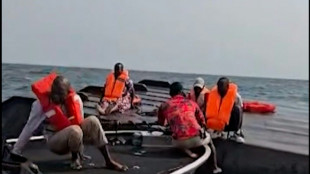 44 lives lost after ferry capsizes on Zimbabwe's Lake Kariba

 WallStreetPR Releases Report on China’s Gold Purchases and African Mining Investment

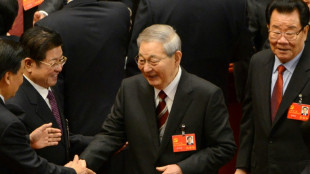
 Former Chinese premier Zhu Rongji dies aged 97

 Markets steady awaiting US inflation data
 WHO says Trump vaccine shake-up goes against evidence

 Eclipse chasers flock to Spain for 'breathtaking' experience

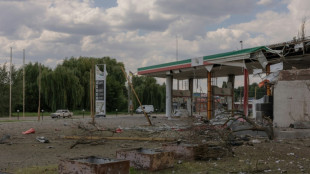 'To make the civilians leave': Russia pummels Ukraine's petrol stations

 Japan brushes off Australian PM's melon drama

 Rod Stewart cancels tour dates after heart surgery
 How Britain's mapmakers track climate change

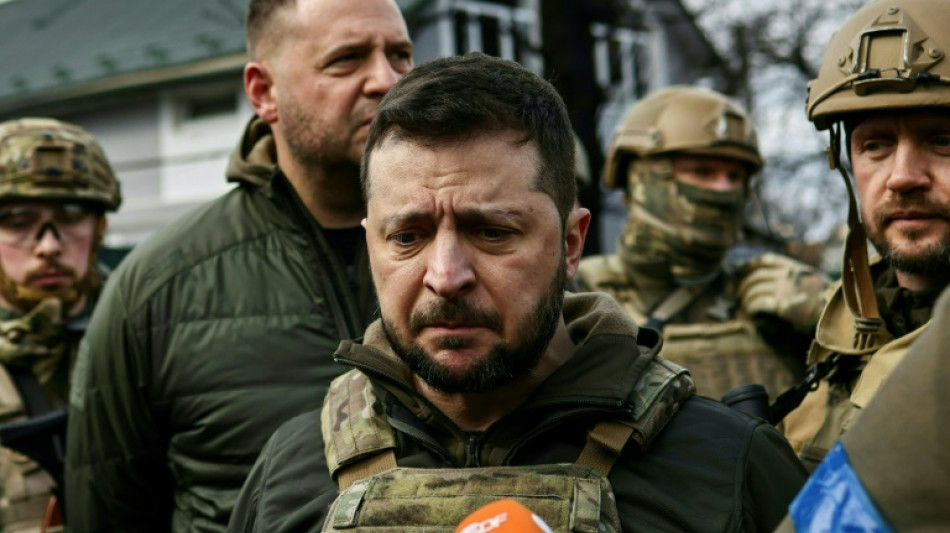
Russia is accused of war crimes in Ukraine, with the claims growing louder following the discovery of dozens of bodies in areas recently retaken from Russian forces near the capital Kyiv.
Ukrainian President Volodymyr Zelensky has accused Moscow of attempted "genocide" over the findings and labelled the bloody siege of the southern port of Mariupol a "crime against humanity".
We take a look at the different categories of the most serious crimes known to man, which the International Criminal Court (ICC) in The Hague was set up to prosecute.
Neither Russia nor Ukraine are parties to the ICC but Ukraine has accepted the court's jurisdiction for alleged crimes committed on its soil since Russia's invasion of Crimea.
The ICC's chief prosecutor opened a probe into possible war crimes in Ukraine on March 3.
- What is a war crime? -
War crimes are serious violations of international law against civilians and combatants during an armed conflict.
The parameters of what constitutes such a crime are set out in Article 8 of the 1998 Rome Statute that established the ICC.
It defines them as "grave breaches" of the 1949 Geneva Conventions covering more than 50 scenarios, including killing, torture, rape and the taking of hostages as well as attacks on humanitarian missions.
It also covers deliberate attacks on civilians or "towns, villages, dwellings or buildings which are undefended and which are not military objectives" as well as the "deportation or transfer of all or parts of the population" of an occupied territory.
- What is a crime against humanity? -
The notion of such a crime was first laid down on August 8, 1945, and codified in article 7 of the Rome Statute. It involves "a widespread or systematic attack directed against any civilian population" including "murder" and "extermination" as well as "enslavement" and "deportation or forcible transfer."
Crimes against humanity can occur in peacetime and include torture and rape and discrimination, be it racial, ethnic, cultural, religious or gender-based.
- What is genocide? -
Genocide as a legal concept dates back to the Nuremburg trials of Nazi war criminals, with Polish-Jewish lawyer Raphael Lemkin coining the term to describe the Nazi extermination of six million Jews.
The crime of genocide was formally created in the Genocide Convention of 1948 to describe "acts committed with intent to destroy, in whole or in part, a national, ethnical, racial or religious group".
Genocide is a "very specific international crime" which is difficult to prove, says Cecily Rose, professor of international law at the University of Leiden in the Netherlands, noting that it demands proof of the "mental motivation" behind it.
- Newcomer: crime of aggression -
The ICC added a crime of aggression to its remit in 2017 to includes attacks on "the sovereignty, territorial integrity or political independence" of another country.
The offence aims to ensure that political and military leaders be held accountable for invasions and other major attacks but cannot be used against the dozens of ICC members that have not recognised the court's jurisdiction for the crime.
The ICC also cannot indict the leader of a country that is not a member of the ICC for the crime of aggression.
Legal experts say that bringing such a case against Russia may require the establishment of a special tribunal.
M.Odermatt--BTB