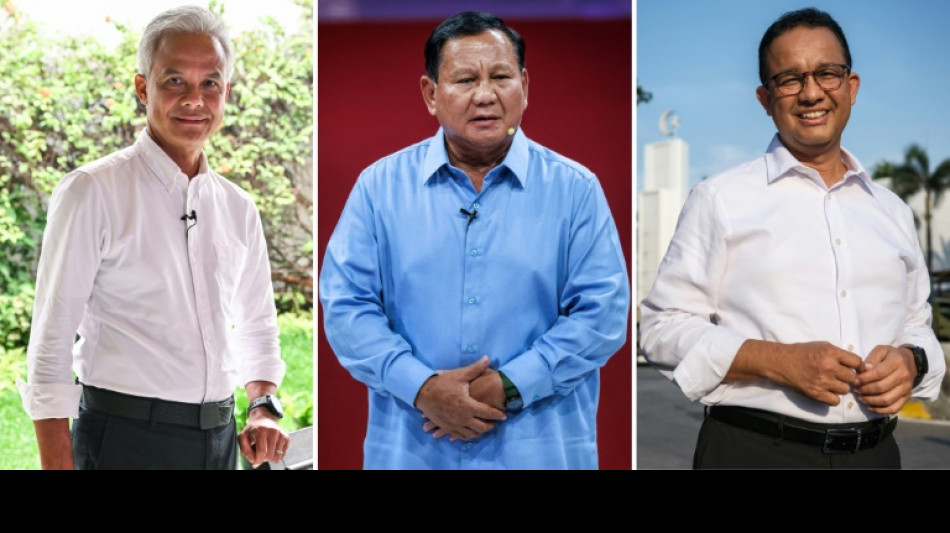
Old guard, new capital: Indonesia facts ahead of election / Photo: © AFP

 Security high as France braces for new protests
 White makes winning start as Fiji edge Eddie Jones's Japan

 Lula, Bolsonaro strike calmer tone in final Brazil election debate

 'How is it possible?': Students protest Indonesian haze
 Israel launches major West Bank operation after soldiers killed

 Typhoon Champi knocks out power to thousands in Taiwan

 As Israeli election nears, campaign turns ugly

 Oscar hopeful 'La Bola Negra' offers lessons about communicating, directors say

 Trapped: Soaring fuel costs hurt Maine lobster industry before midterms

 Marc Marquez beats brother Alex to Australian MotoGP pole
 Ebola vaccine trial begins in DR Congo

 Travelling man Wade equals Prem try record

 Rescuers search for seven people in Nairobi building collapse

 Sacha Baron Cohen revives the 'problematic dinosaur' Ali G in new film

 New race in Barcelona tops 17-event '27 IndyCar season

 Neymar backs Flavio Bolsonaro in Brazil election

 Melania Trump says she brokered truce in war-torn Ukrainian city

 Leclerc tops times for Ferrari in opening practice for US Grand Prix

 Bayern Munich coach Kompany in hospital after collapsing

 Signs point to renewed major US military ops against Iran

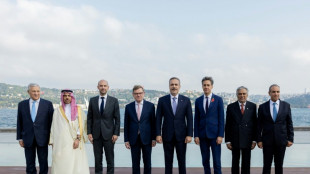 European, Mideast foreign ministers push peace and diplomacy at Istanbul talks

 Ex-All Black centre Williams undergoes 'miracle' heart surgery

 Netanyahu launches major West Bank operation after Israeli soldiers killed
 AFP photographer captures striking images from West Bank attack

 Oil hits $116 with stocks mixed on earnings, AI

Indonesia is voting for a new president and members of parliament on Wednesday.
Nearly 205 million people are eligible to vote, with the winner set to lead the world's third-largest democracy and Southeast Asia's biggest economy.
Here are some key facts about the vote in the archipelago that extends over 5,000 kilometres (3,100 miles) from east to west.
- Old guard against new -
The election will pit 72-year-old former general and current defence minister Prabowo Subianto -- seen as part of the country's old political elite -- against two candidates running for the first time.
He will run against former Central Java governor Ganjar Pranowo and ex-Jakarta governor Anies Baswedan.
The new leader will succeed President Joko Widodo, who has ruled the archipelago for a decade.
Subianto is entering the race for the third time with Widodo's eldest son Gibran Rakabuming Raka, 36, as his running mate.
The defence chief has gained a wide lead in polls with a campaign that has largely promised to continue Widodo's policies.
Baswedan, 54, is the only candidate who is not a member of a political party and some polls saw the former education minister rise to second place after initially placing last.
Pranowo, 55, was nominated by Widodo's ruling Indonesian Democratic Party of Struggle (PDI-P) and in recent polls he dropped from runner-up to third place.
- Widodo legacy -
Widodo, 62, who is constitutionally barred from seeking a third term, remains popular but has faced criticism for perceived attempts to build a political dynasty.
A controversial court ruling in October lowered the minimum age for presidential and vice-presidential candidates if they have previously served in public office.
The ruling, read by Widodo's brother-in-law and then-chief justice Anwar Usman, paved the way for Raka to run with Subianto.
The country has enjoyed steady growth on the back of his infrastructure-focused economic agenda and resource nationalism.
- New capital -
A key question in the election will be whether Widodo's successor will carry out his legacy move of relocating the capital from traffic-clogged and sinking Jakarta to Nusantara, a new city on Borneo island.
Nusantara, set to cost billions of dollars, is scheduled to begin operating as Indonesia's new political centre in August.
Subianto and Pranowo have promised to continue the development of the new capital.
Baswedan says fixing the problems of major Indonesian cities such as Jakarta -- where large areas are expected to be underwater by 2050 -- should come first.
- Youth vote -
More than half of eligible voters -- around 106 million people -- are under 40 years old, according to general election commission data.
All three candidates have used social media platforms, including popular Chinese-owned app TikTok, turning online campaigns into another battleground to attract young voters.
But the online campaigns have left social media platforms rife with disinformation.
- US, China balance -
Widodo's successor will face a delicate act balancing big power rivalries as the United States and China become increasingly locked in competition against each other.
Jakarta has long maintained a neutral foreign policy under its "free and active" doctrine.
The next leader will come to power as China is increasingly assertive in defending its claims in the strategic South China Sea.
Subianto has reiterated his commitment to Indonesia's non-aligned foreign policy, saying that he sought to maintain relations with all powers.
K.Sutter--VB