Ukraine war brings bitter harvest to Moldovan orchards / Photo: ©

 'Trying to bury the science': US climate research under siege
 Eurovision to bar countries at war from hosting
 Italian teenager Curtis breaks 50m backstroke world record at Europeans

 New mum Sjostrom wins 50m butterfly for 18th European gold
 Solar eclipse darkens Arctic Russia on course for Spain
 Russian economy rebounds in second quarter despite Ukrainian strikes

 NBA's Los Angeles Lakers to be sold for $12.5 bn: ESPN
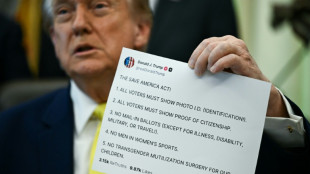 Trump sued over sale of access to Truth Social posts

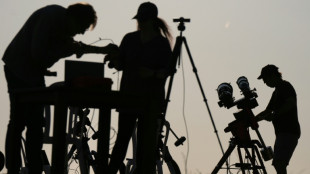 Europe looks to the skies as solar eclipse cast its shadow
 At least 44 drown after ferry overturns on Zimbabwe's Lake Kariba
 Grieving Argentine icon Messi unsure about playing on 'much longer'

 Nigeria kidnap victims escape 'hellfire' captivity beaten, malnourished
 Google unveils finder tag, new AI smartphone features

 US equities gain as inflation report eases fear of rate rise
 Colombia declares three days mourning for quake victims

 44 lives lost after ferry capsizes on Zimbabwe's Lake Kariba

 WallStreetPR Releases Report on China’s Gold Purchases and African Mining Investment

 Former Chinese premier Zhu Rongji dies aged 97
 Markets steady awaiting US inflation data
 WHO says Trump vaccine shake-up goes against evidence

 Eclipse chasers flock to Spain for 'breathtaking' experience

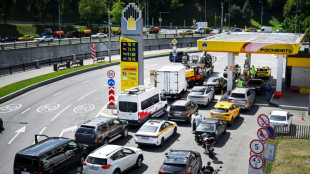
 'To make the civilians leave': Russia pummels Ukraine's petrol stations

 Japan brushes off Australian PM's melon drama

 Rod Stewart cancels tour dates after heart surgery

 How Britain's mapmakers track climate change

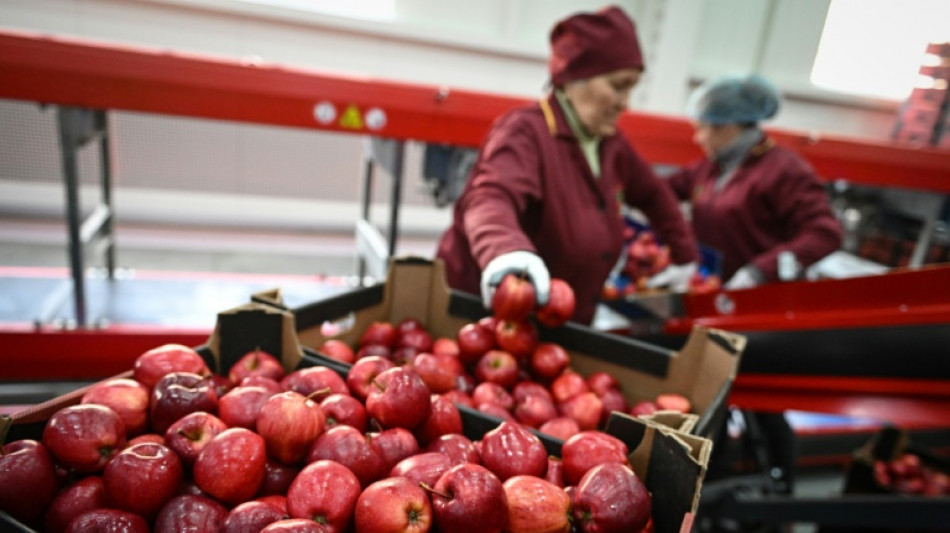
A warehouse in Moldova is piled high with crates of red apples but for an industry reeling from war in neighbouring Ukraine, the sight is far from appetising.
The conflict has all but ended apple exports to Russia, traditionally the main buyer of produce from Moldova's orchards.
"I don't know what we are going to do with the apples that are left over," admits grower Valeriu Matcovschi.
"There are too many for us to sell on the Moldovan market," he says in the northern village of Bilicenii-Vechi.
In normal times, lorries would arrive at least five times a week to take his 2,000-tonne yearly harvest to Russia.
Now he is scrambling to find new customers.
In late March he sent a first shipment to Kuwait, but he had to slash his prices by a third and accommodate clients with different demands about which varieties of apple they will take.
"I hope I won't have to start pulping the fruit. That would be a tragedy," he says.
Moldova is one of the poorest countries in Europe. The former Soviet republic of around 2.6 million people is sandwiched between Ukraine and Romania.
- Desperate appeals -
Moldova is in a "difficult situation", senior government official Dumitru Udrea told AFP.
More than 360,000 Ukrainians have fled into Moldova since the start of Russia's invasion. The vast majority have travelled on elsewhere, but 90,000 have stayed.
Energy price hikes, already rising but now exacerbated by the war, could push inflation to 30 percent by the end of the year.
Udrea fears the effects of the war mean that "in 2022 we could see a recession of between three and 15 percent".
The largely rural country, whose gross domestic product (GDP) is 0.4 percent that of Britain's, was already struggling to recover from a string of political and economic crises.
These came on top of a 2014-15 banking scandal that led to the disappearance of around one billion dollars (911 million euros).
Responding to desperate appeals from Moldova -- which formally asked to begin the process of joining the EU at the beginning of March -- Germany, France and Romania are holding a donors' conference in Berlin on Tuesday to help lighten the load.
Udrea says the government hopes for four billion euros from donors to boost energy security and protect Moldovans' purchasing power.
Thanks in part to a 2014 association agreement with the EU -- which drew the ire of Moscow -- trade with countries to its west now accounts for more than 60 percent of Moldova's total foreign trade.
- Ties to Russia -
But some traditional economic ties with Russia, Ukraine and Belarus have been less easy to replace.
"At first sight the share of exports to these countries -- 15 percent -- doesn't seem huge but several sectors are very dependent on it, above all apple growers," economist Adrian Lupusor, from the Expert-Grup think tank, told AFP.
Construction and agriculture are dependent on materials shipped from Russia and Ukraine. "Even if importers find suppliers elsewhere, the prices will be much higher," Lupusor says.
Udrea says the war could also see a plunge in the vital remittances sent back to Moldova by the more than one million people who have emigrated over the past 20 years.
That stream of income is a lifeline for many who remain in the country and represents some 15 percent of GDP.
Lupusor says that some of the 300,000 or so Moldovans working in Russia may decide to come back, putting the labour market and social security system under fresh pressure.
Meanwhile in Bilicenii Vechi, as workers sort shiny apples and forklift trucks trundle around him, Matcovschi worries for the future of the 50 or so people he employs.
Asked about possible redundancies, he replies, "I dare not think about it."
"I hope we'll be able to hold out."
C.Kovalenko--BTB