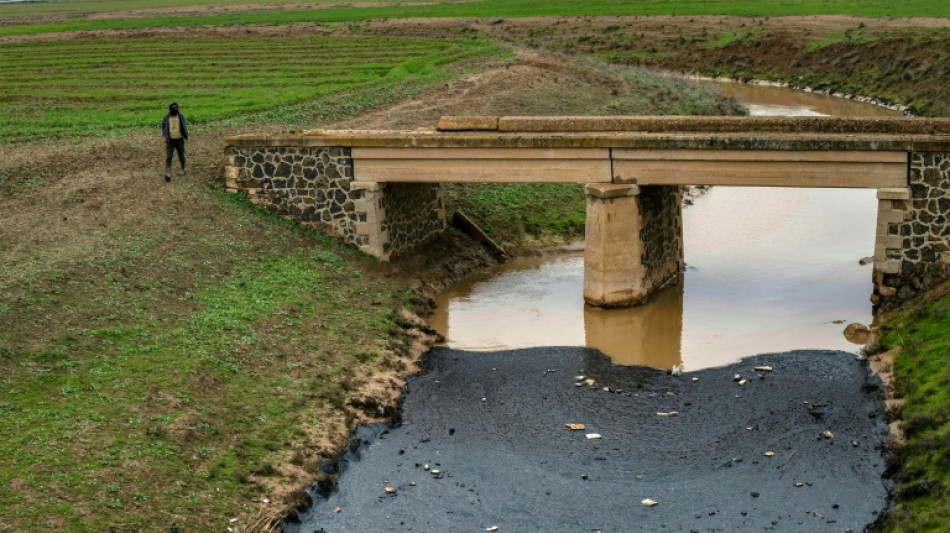
Oil slicks blamed on Turkish strikes blight northeast Syria river / Photo: © AFP

 Japan's Nakai wins Grand Prix de France for second straight year

 Ronaldinho to make comeback in Italian third tier
 Israeli forces displace Hebron families after deadly attack
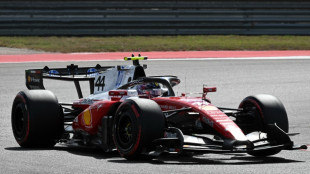 Hamilton on top with Antonelli fourth in final practice at US Grand Prix

 Beier late show sends Dortmund top of Bundesliga
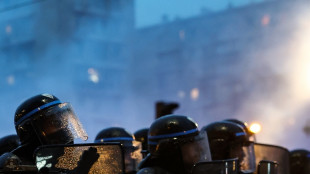
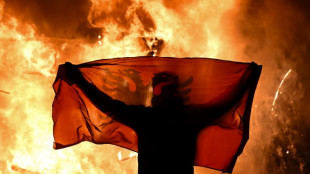 Police and protesters clash again at Albanian anti-government rally

 Arteta hails mentality as Arsenal go level with Man City

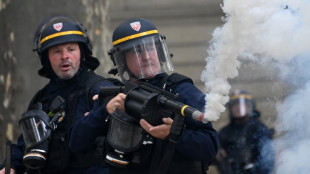 Clashes break out in Paris, other cities amid fresh protests

 Bouthier kicks Vannes to first Top 14 win of season

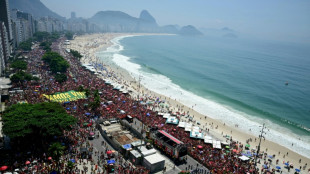 Thousands rally for Lula and Bolsonaro on eve of tight Brazil vote

 Red-hot Fuellkrug bags Bremen brace, Leipzig win

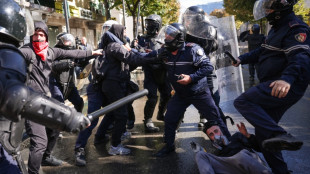 Thousands gather at new Albanian anti-government rally
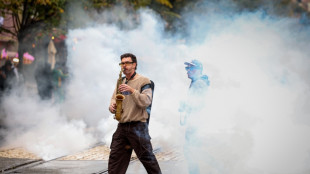
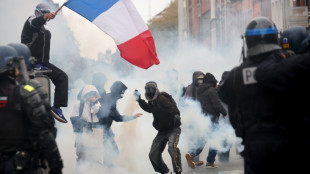 French police fire tear gas during fresh protests

 Suspect detained after fire wrecks Hitler's mountain retreat
 Alexander Skarsgard and his viral 'Wicker' transformation

 Thousands protest in Turkey over journalists' arrests, media shutdowns

 Man City beaten by Aston Villa to end perfect Premier League start

 Luis Enrique says PSG unbothered by Lyon match switch
 US gymnast Richard wins floor exercise gold at worlds
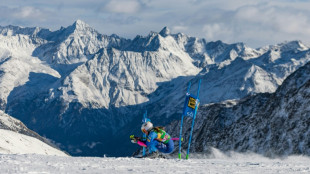 Moltzan upstages Shiffrin to win season-opening World Cup giant slalom

 Infantino says backed by 'vast majority' in bid for re-election

 Police fire tear gas as new French protests kick off

 Police fire tear gas as new French demonstrations kick off
 Tropical Storm Champi nears China after battering Taiwan, Japan

 'Weeks, not days' in Kompany recovery, say Bayern

Farmer Nizar al-Awwad has stopped irrigating his land in northeast Syria from a local river polluted by an oil spill that residents and officials in the Kurdish-held area blame on Turkish strikes.
"All the farmers in the area have stopped using the river for irrigation," said Awwad, 30, from a village near Tal Brak, in Hasakeh province.
"We'd be killing our land with our own hands if we used the polluted water," he said.
"Farmers already suffer from a lack of fuel and drought -- the polluted river has only added to our woes," Awwad added, standing near his wheat crops.
Oil pollution has been a growing concern in Syria since the 2011 onset of civil war, which has taken a toll on infrastructure and seen rival powers compete over the control of energy resources.
Hasakeh province residents told AFP they noticed the oil slicks in the waterway, which feeds into the area's lifeline Khabour River, after Turkey bombed Kurdish-affiliated oil facilities, including stations and refineries, last month.
The spill has heaped more misery on farmers already struggling to make ends meet after 12 years of war, the growing effects of climate change and a gruelling economic crisis that has triggered long power cuts and fuel shortages.
Turkey said it hit dozens of targets in northern Syria and Iraq belonging to the Kurdistan Workers' Party (PKK) and the People's Protection Units (YPG) after nine Turkish soldiers were killed in clashes with suspected Kurdish militants in Iraq.
- 'Turkish bombardment' -
Turkey and many of its Western allies have blacklisted the PKK as a "terrorist" organisation, and Ankara views the YPG as an offshoot of the group.
But the YPG dominates the US-backed Syrian Democratic Forces, the Kurds' de facto army in Syria's northeast who spearheaded the fight against the Islamic State jihadist group in the country.
Mohammed al-Aswad, who co-chairs the semi-autonomous Kurdish administration's water authority, said "Turkish bombardment" in northeast Syria, particularly on Rmeilan and Qahtaniyah in the far northeast corner of Hasakeh province, "damaged oil installations and pipelines" and caused the pollution.
Rudimentary traps set up by the administration have failed to limit the current spill.
AFP correspondents saw oil slicks on water, plants and riverbanks across a 55-kilometre (34-mile) stretch between Tal Brak and the outskirts of Hasakeh city.
While repairs to oil infrastructure were expected, authorities were advising farmers against letting livestock drink the polluted water, which could "threaten marine life and biodiversity" if it reached a dam along the Khabour river, Aswad said.
But farmer Ibrahim al-Mufdi, 50, said he had already stopped irrigating his crops with the river before the warning.
"The sheep can't be drinking from the river," he said, expressing concern over possible fish contamination.
"I just hope that the rain will keep falling so we don't have to irrigate from the river," Mufdi said.
N.Schaad--VB