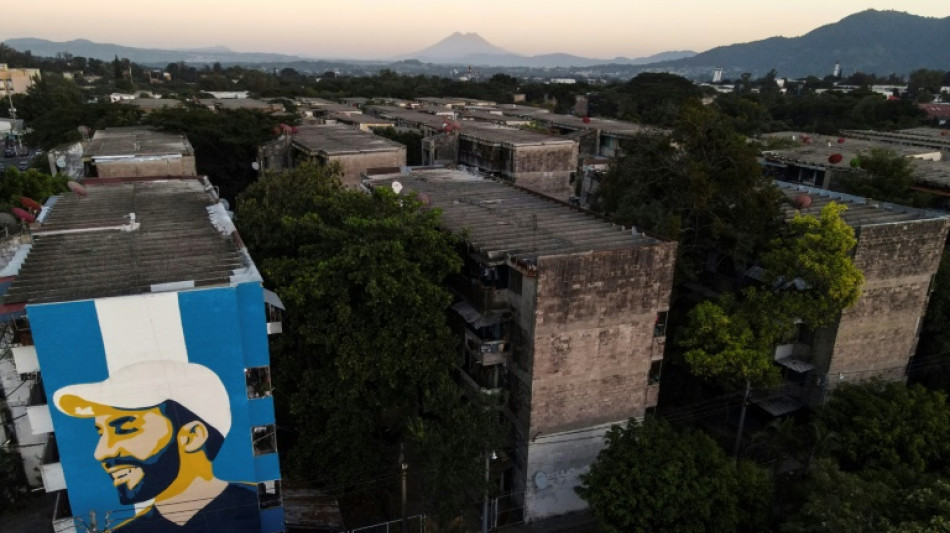
A mega-prison and a Mayan 'Pompeii': five things about El Salvador / Photo: © AFP

 Last MotoGP race at Phillip Island cancelled due to weather in Marquez setback

 Sri Lanka seeks faster green energy shift after oil shocks
 Riyadh airport resumes flights following Houthi attacks

 'Call of Duty' North Korea invasion edition tops sales charts in South
 Musk accuses Ukraine of violating Starlink's terms of service
 Fed expected to hold rates steady days ahead of US midterms

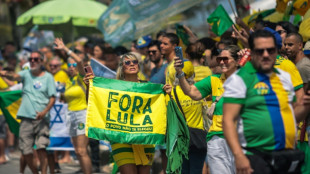 More Lula, or back to the Bolsonaros? Brazil votes in cliffhanger

 Jorge Martin out of Australian MotoGP with fracture: team

 Antonelli storms to US Grand Prix pole on weekend he can take title

 Apologetic Alvarez fires Atletico to win against Deportivo

 Lens beat PFC in Ligue 1 matchday impacted by social unrest

 Valkyries hit back against Dream to level WNBA Finals

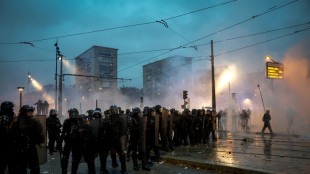 'Fighting for our rights': Paris protesters determined to march on
 Clashes break out in Paris, other French cities amid fresh protests
 Spurs seal rare win at Chelsea as Palmer sees red

 Nearly 1,000 arrested in French protests marred by 'elevated' violence: minister
 France extends detention of suspected racist shooter

 Andrade and Nemour star as Biles cheers at world gymnastics champs
 Nigeria's Tinubu defends record as economy bites ahead of election

 'Guiding star' Fuellkrug bags Bremen brace, Leipzig win
 Man City's perfect start ended by Aston Villa, Arsenal go joint-top

 Arsenal sink Everton to join Man City at Premier League summit
 France protests: Latest developments
 French ice dancers Cizeron and Fournier make golden start to season
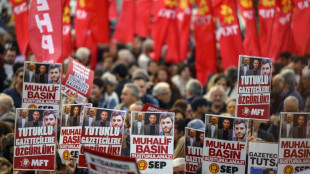 Thousands protest crackdown on media in Turkey

The Central American nation of El Salvador goes to the polls Sunday in an election dominated by President Nayib Bukele's war on gangs.
Here are five things to know about the impoverished country of 6.3 million people.
- War on gangs -
El Salvador and neighbouring Honduras and Guatemala form the "Northern Triangle", the world's most violent region outside of a conflict zone.
When Bukele took power in 2019, El Salvador had one of the world's highest murder rates at 38 per 100,000 inhabitants, with drug gangs controlling 80 percent of the country.
Bukele imposed a state of emergency, which he used to imprison more than 75,000 alleged gang members. (Some 7,000 were later released).
About 12,000 were packed into a new mega-prison billed as the biggest in the Americas.
The murder rate nosedived, falling to 2.4 per 100,000 inhabitants in 2023, winning Bukele fans throughout Latin America, particularly in countries like Mexico and Ecuador that are battling brutal drug cartels.
But his tactics have proved controversial, with rights groups, the United States and United Nations criticising arbitrary arrests, inhumane prison conditions and growing authoritarianism.
- 12-year civil war -
From 1980-1992, El Salvador was torn apart by a civil war, fuelled by social injustice, repression and the assassination of peasants rights defender, archbishop Oscar Romero, gunned down at mass.
The war between the military government and FMLN (Farabundo Marti National Liberation Front) grouping of far-left guerrilla outfits led to the deaths of about 75,000 people.
More than 7,000 disappeared before the conflict ended in 1992 after UN-mediated peace negotiations.
- Bitcoin a first, and a flop -
El Salvador has a diaspora of three million people, most living in the United States.
In a bid to facilitate remittances from emigres -- which account for a quarter of its GDP -- the country in 2021 became the first to make the cryptocurrency bitcoin legal tender.
Circulating alongside the US dollar, which replaced the Salvadoran colon in 2001, the bitcoin is little used, however.
- Draconian abortion laws -
Predominantly Christian El Salvador has some of the toughest anti-abortion laws in the world, with a ban on terminations in place since 1998, even in cases of rape or risk to the pregnant woman's life.
Prison terms range from two to eight years but courts often classify cases of abortion or even miscarriage as "aggravated homicide", which is punishable by up to 50 years in prison.
In December 2023, a woman convicted of homicide over the death of her newborn in hospital -- she was accused of neglecting the fetus while pregnant -- was freed after serving eight years of a 30-year sentence.
- Salvador's Pompeii -
El Salvador had its own Pompeii moment over 1,400 years ago when the city of Joya de Ceren, near the present-day capital San Salvador, was buried by a volcanic eruption.
Like Pompeii and Herculaneum in Italy, the archaeological site was in exceptional condition when it was discovered in 1976, providing a rare insight into the Mayan way of life, including rituals, agriculture, trade, governance and eating habits.
L.Wyss--VB