How El Salvador's Bukele became Latin America's most popular leader / Photo: © AFP

 Thousands gather in Prague to protest licence fee plans

 Pease spins to floor gold as US tops gymnastics medal table
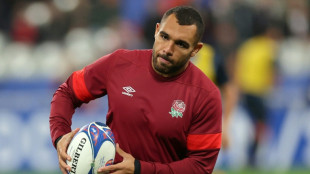 Marchant back in England training squad ahead of Nations Championship fixtures

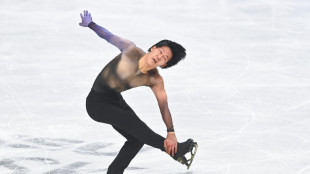 French skater Siao Him Fa soars to victory in season-opener at home
 Embattled Albanian PM vows fines for violent protesters

 Steelers top Saints in NFL's first regular-season game in Paris
 Carrick unsure over Man Utd future after Bournemouth loss
 2027 Dakar Rally to be moved from Saudi Arabia
 Man Utd battered by Bournemouth to leave Carrick on the brink

 Storms batter Europe hitting power supplies, flights and phones
 Inter rally late to down Fiorentina and regain Serie A lead

 UDST opens Fall 2027 admissions to students in Qatar and abroad

 Kuwait public works minister and UK ambassador discuss closer cooperation

 Historic Ramallah olive press joins modern production with local tradition

 Hebron operation forces 373 Palestinian families from their homes

 Kuwait legal department reviews new commercial concealment law

 Ladakh declared India’s first fully organic union territory

 IRDAI gives stakeholders until October 31 to comment on distribution reforms

 Bay cyclone forecast to strike Andhra-Yanam coast at very severe strength

 Chicago Fire rally past Atlanta United 3-2 to hold fourth place

 Pinheiro Braathen wins Soelden giant slalom
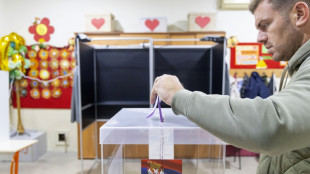
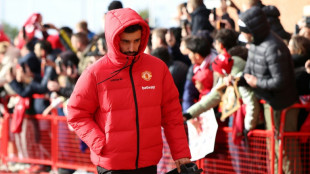 Man Utd's Fernandes dropped by Carrick after Como outburst

 England great Anderson's future unclear after Lancashire exit

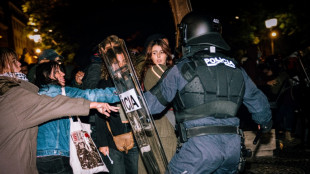 Demonstrators wounded as Portugal police clear housing protest camps

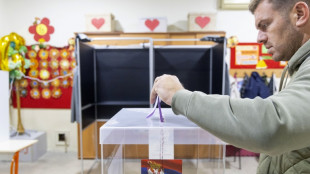 Serbia votes as ruling party faces ascendant student movement

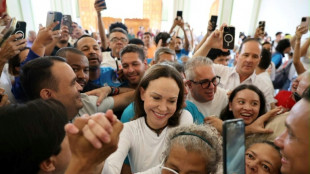
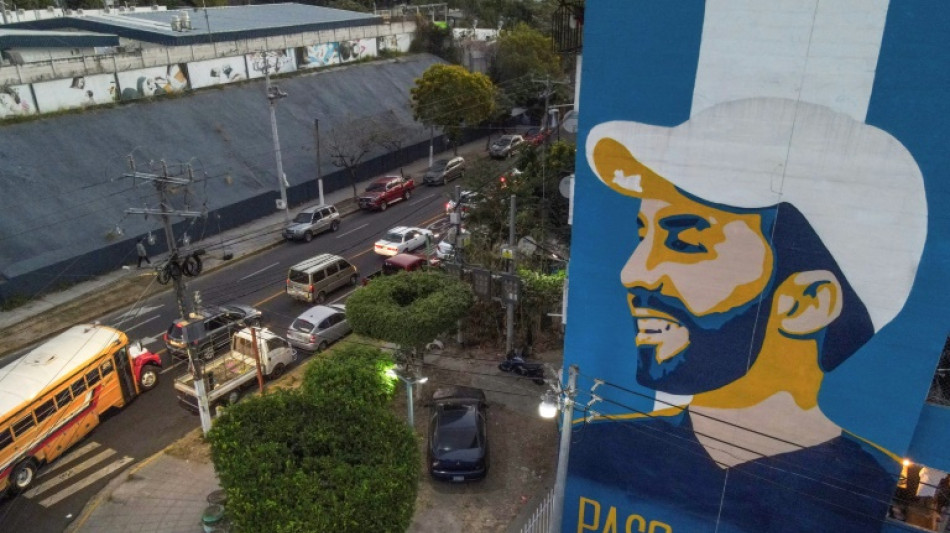
Polling as the most popular leader in Latin America -- possibly even the world -- El Salvador's Nayib Bukele has inspired calls for hard-handed tactics across a region tired of violence and losing faith in democracy.
Despite accusations he is abusing human rights and trampling on the constitution to consolidate power, Bukele's crackdown on drug gangs has won him the adoration of a nation and the esteem of leaders hoping to emulate his example... and voter support.
Bukele, 42, enjoys approval ratings around 90 percent according to numerous polls, ahead of elections Sunday he is expected to win hands down.
- How did he do it? -
After a weekend of particularly bloody gang violence, a parliament loyal to Bukele decreed a state of emergency in March 2022 that suspended the need for arrest warrants, among other civil liberties.
Under the provision, authorities have rounded up nearly 80,000 suspected gangsters, many of them locked away in a prison -- the largest in the Americas -- that Bukele had specially built.
The complex is a major target for rights observers due to allegations of inhumane conditions and widespread abuses, including the detention of minors and torture.
But despite these concerns, and fears that many innocent people have gotten caught up in Bukele's dragnet, El Salvador last year recorded its lowest homicide rate in three decades.
This prompted Bukele to boast it was now "officially the safest country in all of Latin America." It was not long ago one of the deadliest.
The young, social-media-savvy Bukele's online presence has also helped bolster his popularity. He has 5.8 million followers on X.
- Will others follow? -
Presidents Xiomara Castro of Honduras and Daniel Noboa of Ecuador -- countries beset by violence perpetrated by gangs with links to powerful international cartels -- have both evoked the Bukele example.
And people in countries as far away as Chile and Argentina, where crime is seen as a growing problem, have been calling for a tougher government approach echoing El Salvador.
There is even a term for it: Bukelization.
But Bukele's success is not only down to his gang war.
"It's the failure of what preceded," analyst Michael Shifter of the Inter-American Dialogue thinktank in Washington told AFP.
"It's the sclerosis of the political class. A political class that became completely removed from society and what its demands are and what its needs are."
Last year, only 48 percent of Latin Americans said they believed democracy was the best form of government, according to the Latinobarometro polling agency, based in Chile.
In 2010 support for democracy stood at 63 percent.
In times of insecurity, "all people in Latin America like authoritarian narratives," said Ana Maria Mendez Dardon, director for Central America for the Washington Office on Latin America, an NGO promoting human rights and justice.
- Can it last? -
Bukele represents a break from a recent Latin American trend of voting out incumbents.
Given that he has delivered on his promise to reduce violence, voters "are willing to make the tradeoff," said Shifter.
"They realize they may be losing some liberty and they realize that he's going for a second term that's not constitutional, but they are willing to accept that as long as they get some benefits," he said.
"And they're getting benefits in terms of being able to take their kids to the park or whatever it is without constant fear."
El Salvador's constitution does not allow successive presidential terms, but a Bukele-stacked Supreme Court has allowed him to run.
In the longer term, analysts expect the country's economic woes will turn voters away, and point to migration numbers that have remained high.
"The honeymoon will end," Latinobarometro director Marta Lagos told AFP.
"There's a bit of an idealized view of what Bukele has done. The Latin American who wants to live in El Salvador does not know the living conditions in El Salvador," she said.
According to the UN's OCHA humanitarian organization, more than a quarter of the country's 6.3 million people live in poverty.
Bukele may also not be able to indefinitely hold out against gangs with ties to powerful, multinational cartels.
"He cannot keep putting people in jail, beheading cartels and gangs. There will always be... other actors, other gangs," said Christophe Ventura, research director at the IRIS international relations thinktank in Paris.
If voters do turn on him, analysts fear Bukele may go full authoritarian, given his consolidation of power of state institutions.
"He may defy history and be the exception to the rule in Latin America... or things can really take a turn for the worse," said Shifter.
U.Maertens--VB