
Will Yemen air strikes stop the Red Sea attacks? / Photo: © AFP

 Hearn dismisses Fury talk of Joshua no-show for super fight

 'Like a war zone': France evacuates 20,000 due to wildfires

 Ships avoid Ukrainian grain ports after Russian attacks

 Oil passes $100 a barrel again: why it's more serious this time

 Who are the six candidates vying to lead the UN?

 Hamilton proud of recovery after hitting rock bottom a year ago
 Carapaz eyes polkadot mountains jersey after stage win
 Fields medal awarded to four young mathematicians

 Carapaz claims Tour de France stage as Pogacar loses key team-mate

 Alonso welcomes Aston Martin upgrade, warns against unreal expectations

 Anderson declares Man City 'kings of Manchester' after £116 mn move

 Relieved Russell says Mercedes have solved his power problems mystery

 Oil soars above $100 as Middle East fears grow

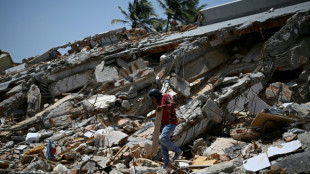 Venezuelans turn to scrap collecting in quake-hit beach 'paradise'

 Heptathlon champion Johnson-Thompson joins list of Commonwealth Games absentees

 Nigeria's Dangote raises $2.5bn to expand Africa's largest refinery

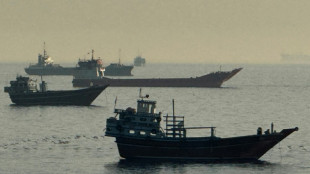 Oil soars to $100 on fresh Mideast attacks
 Coal-fired power generation rising globally on Mideast war: IEA

 Premier League champions Arsenal sign Greece winger Tzolis from Brugge

 French Jewish DJ sues after activists disrupt gig: lawyer

 Venice film festival promises Pattinson, Oasis and Musk doc

 ASEAN calls for open straits as US-Iran war casts shadow

 Ford and Geely to form joint venture at struggling Spain plant

 Russia warns US against Ukraine arms sales in Manila meeting

 New UK PM announces tax cut for struggling pubs

US and British strikes on rebel-held Yemen on Friday marked a sharp escalation after weeks of attacks on Red Sea shipping by the Iran-backed Huthi insurgents.
AFP examines the impact and possible repercussions of the aerial assault on the Huthis, who say they are targeting Israel-linked vessels in retaliation for the war in Gaza.
- What happened in the strikes? -
More than 100 precision-guided munitions struck 60 targets at 16 locations in an attack involving fighter jets and Tomahawk missiles, US Central Command said in a statement.
Britain's air force said its Typhoon fighter jets dropped guided bombs on a drone launch site in Bani and an airfield in Abs, both located in northwest Yemen.
The Huthis said there were 73 strikes, targeting sites in the capital Sanaa and Hodeida, Taez, Hajjah, and Saada provinces and that five people were killed and six injured.
- How effective were they? -
Even with precision bombing, it is no easy task to cripple a battle-hardened operation that has survived years of air strikes by a Saudi-led military coalition.
Analysts were split on how effective the US-UK bombings would prove.
"The Huthis are immune to air strikes," Maged Al-Madhaji, co-founder of the Sanaa Center for Strategic Studies think-tank, told AFP.
"For years they have learnt to avoid strikes and hide their arsenal by taking advantage of the difficult geography of the territory.
"These strikes could therefore destroy part of their military capabilities, but they will not eliminate them, and the threat will remain high."
However, the Middle East Institute's Fatima Abo Alasrar said the strikes "will significantly disrupt their military capabilities particularly in threatening international shipping lanes".
Fabian Hinz, a research fellow at the International Institute for Strategic Studies, said the strikes' effectiveness would depend on US intelligence about the Huthi sites.
"Many of the systems used by the Huthis are quite small and quite mobile, so it's easy to disperse them around the country," he said.
"The Huthis adapted during the war in Yemen. They are quite good in hiding their assets. So to know where the storage areas are... the launching sites or who are high-ranking people, intelligence is very important."
- What happens next? -
One fear is that the Huthis will target US interests including the country's military bases scattered around the Gulf, widening the Middle East conflict further still.
However, Cinzia Bianco, a visiting fellow at the European Council on Foreign Relations, said that would be a step too far for the Huthis.
"It would be just too much of a provocation and they know very well, and Iran knows very well, that would (trigger) inevitably the beginning of a much broader US-led international mission in Yemen," she told AFP.
Hinz said: "The risk of regional escalation seems low as big players like Iran are keen on avoiding a regional war."
Instead, said Mohammed Albasha of the Navanti Group consultancy, the Huthis could choose to take more drastic action in the Red Sea.
With the US Navy proving effective at repelling Huthi efforts so far, the rebels could be "contemplating a more coordinated swarm offensive", he said, in either the Red or Arabian seas, with multiple drones, missiles, mines and improvised explosive devices.
Regardless of any retaliation, the Huthis have vowed to continue targeting what they consider Israeli-linked shipping in the Red Sea, one of the world's busiest trade routes.
"It seems very likely that the Huthis will continue attacking ships with whatever capabilities they have left. I would expect them to strike back," said Hinz.
C.Kreuzer--VB