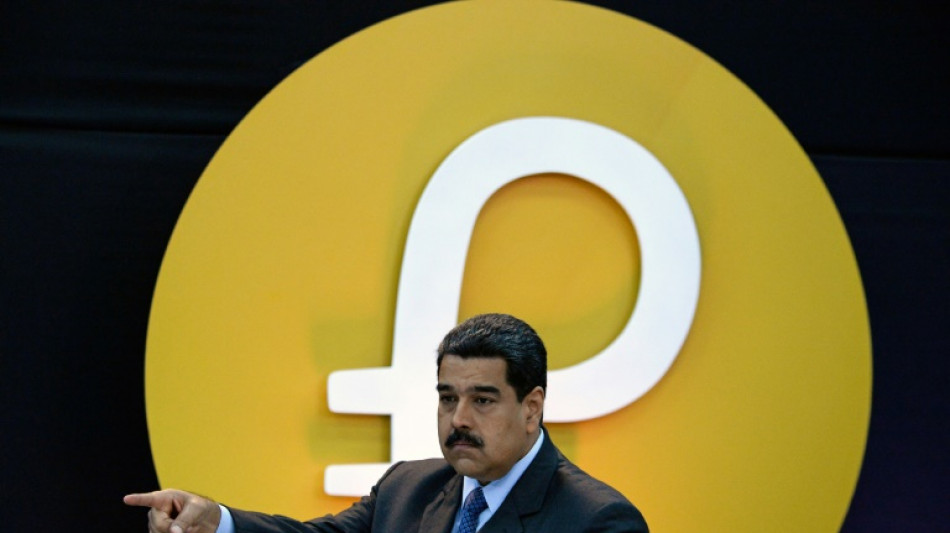
Venezuela kills off petro cryptocurrency / Photo: © AFP/File

 Hearn dismisses Fury talk of Joshua no-show for super fight

 'Like a war zone': France evacuates 20,000 due to wildfires

 Ships avoid Ukrainian grain ports after Russian attacks

 Oil passes $100 a barrel again: why it's more serious this time

 Who are the six candidates vying to lead the UN?

 Hamilton proud of recovery after hitting rock bottom a year ago

 Carapaz eyes polkadot mountains jersey after stage win
 Fields medal awarded to four young mathematicians

 Carapaz claims Tour de France stage as Pogacar loses key team-mate

 Alonso welcomes Aston Martin upgrade, warns against unreal expectations
 Anderson declares Man City 'kings of Manchester' after £116 mn move

 Relieved Russell says Mercedes have solved his power problems mystery

 Oil soars above $100 as Middle East fears grow

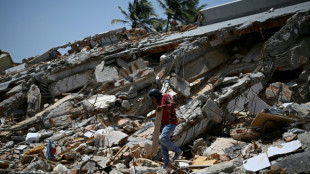 Venezuelans turn to scrap collecting in quake-hit beach 'paradise'

 Heptathlon champion Johnson-Thompson joins list of Commonwealth Games absentees

 Nigeria's Dangote raises $2.5bn to expand Africa's largest refinery

 Oil soars to $100 on fresh Mideast attacks
 Coal-fired power generation rising globally on Mideast war: IEA

 Premier League champions Arsenal sign Greece winger Tzolis from Brugge

 French Jewish DJ sues after activists disrupt gig: lawyer

 Venice film festival promises Pattinson, Oasis and Musk doc

 ASEAN calls for open straits as US-Iran war casts shadow

 Ford and Geely to form joint venture at struggling Spain plant

 Russia warns US against Ukraine arms sales in Manila meeting

 New UK PM announces tax cut for struggling pubs

Venezuela is putting an end to the petro cryptocurrency that President Nicolas Maduro launched six years ago to sidestep US sanctions, but which never took off and became embroiled in a graft scandal.
All crypto wallets held on the Patria Platform -- the only website where the petro was tradeable -- will be shut down on Monday, January 15, according to a message displayed on the platform's site.
Any remaining petros are being converted to bolivars, the ailing local currency.
The cryptocurrency was launched with great pomp and ceremony in February 2018, backed by Venezuela's vast petrol reserves, and priced at US $60 per unit.
With Caracas strangled by Washington's economic sanctions, Maduro vowed the petro would "allow new forms of international financing."
However, citizens struggled to understand how to use it and it was labeled a "scam" by some risk rating bodies.
In 2020, Maduro tried to revive the coin by ordering airlines flying from Caracas to use it to pay for fuel, and making it mandatory to pay for state services such as getting a new passport.
Ultimately however, its use remained limited to some state operations such as the payment of taxes. Traffic fines were handed out in petros, but it was not possible to actually pay them using the cryptocurrency.
The government forced banks to present their balances in both bolivars and petros.
On the Patria Platform, mainly used by government to dole out subsidies to the population, users could only exchange petros for bolivars via an auction system.
"The petro (PTR) is officially dead," the private platform CryptoLand Venezuela wrote on social media last week.
The death knell was a corruption scandal that erupted last year over irregularities in the management of funds from oil operations carried out with crypto assets.
The case led to the resignation of once-powerful petroleum minister Tareck El Aissami and the detention of dozens of officials including top management of the Sunacrip crypto regulator.
It also led to a crackdown on bitcoin mining operations in the country where other cryptocurrencies like bitcoin have been a hugely popular guard against hyperinflation and the deflation of the bolivar.
According to a survey presented in 2022 at the United Nations Conference on Trade and Development, 10.3 percent of Venezuelans own crypto, compared to 8.3 percent of Americans and 5 percent of Britons.
D.Schlegel--VB