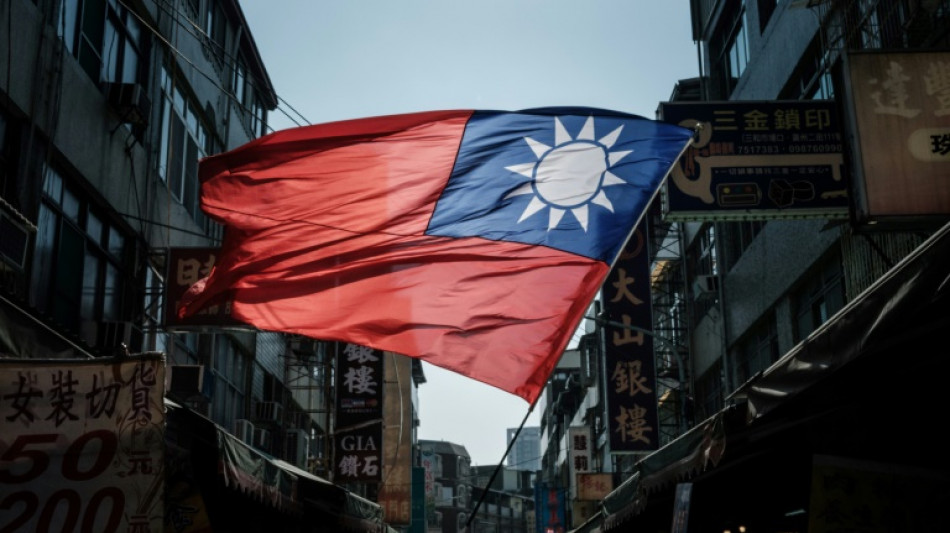
'Our way of life': Taiwan to vote in election dominated by China / Photo: © AFP

 Six candidates to lead UN take stage for televised debate

 King Charles opens slimmed down Commonwealth Games in Glasgow
 US unveils new tariffs on 60 partners as Trump rebuilds trade agenda

 WNBA viral star Cunningham wades into trans athletes row
 Hearn dismisses Fury talk of Joshua no-show for super fight

 'Like a war zone': France evacuates 20,000 due to wildfires

 Ships avoid Ukrainian grain ports after Russian attacks

 Oil passes $100 a barrel again: why it's more serious this time

 Who are the six candidates vying to lead the UN?
 Hamilton proud of recovery after hitting rock bottom a year ago
 Carapaz eyes polkadot mountains jersey after stage win
 Fields medal awarded to four young mathematicians
 Carapaz claims Tour de France stage as Pogacar loses key team-mate
 Alonso welcomes Aston Martin upgrade, warns against unreal expectations
 Anderson declares Man City 'kings of Manchester' after £116 mn move
 Relieved Russell says Mercedes have solved his power problems mystery

 Oil soars above $100 as Middle East fears grow
 Venezuelans turn to scrap collecting in quake-hit beach 'paradise'

 Heptathlon champion Johnson-Thompson joins list of Commonwealth Games absentees

 Nigeria's Dangote raises $2.5bn to expand Africa's largest refinery
 Oil soars to $100 on fresh Mideast attacks
 Coal-fired power generation rising globally on Mideast war: IEA

 Premier League champions Arsenal sign Greece winger Tzolis from Brugge

 French Jewish DJ sues after activists disrupt gig: lawyer

 Venice film festival promises Pattinson, Oasis and Musk doc
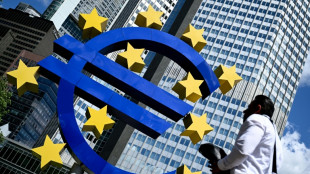
Taiwan will vote for a new president on Saturday in an election closely watched across the world, as the new leader will set the course for the democratic island facing growing aggression from China.
A bustling, vibrant democracy of 23 million, Taiwan is separated by a narrow 180-kilometre (110-mile) strait from communist-ruled China, which claims it as part of its territory.
Chinese President Xi Jinping has never renounced the use of force to bring Taiwan under its control, and the threat Beijing poses has dominated the race to the polls.
Frontrunner and Vice President Lai Ching-te of the ruling Democratic Progressive Party (DPP) -- which positions itself as the defender of the island's sovereignty -- has called for voters to "choose the right path" to keep Taiwan's democracy strong.
His main opponent, former police chief and mayor Hou Yu-ih says Lai is a danger for cross-strait relations, and touts his Kuomintang (KMT) as the only party able to maintain peace with China.
And rousing anti-establishment sentiments is the Taiwan People's Party (TPP), which has emerged as an unexpected political force with leader Ko Wen-je presenting himself as a path out of the two-party deadlock.
Taiwan's freewheeling political discourse has ranged from stagnating wages to social housing programmes, but China remains top-of-mind for voters.
The island moved from an autocracy under the nationalists who fled China in 1949 following the Communist Party's takeover to a democracy in the 1990s, and has never looked back.
"We just want to maintain our way of life and principles," said 65-year-old Chen at a recent DPP rally in southern Taiwan.
- Sabre-rattling -
For decades, tensions with China have made Taiwan a potential military flashpoint of global concern.
Washington has spent billions arming the island, crucially located on a maritime gateway connecting the South China Sea and Pacific Ocean.
As China's military prowess and ambitions have grown, so have its manoeuvres around Taiwan.
Chinese warplanes, reconnaissance drones and naval vessels are detected near-daily, and Beijing recently staged massive wargames simulating a blockade and sending missiles to its surrounding waters.
"All these threats certainly reflect Beijing's desire to move towards 'reunification'," Francoise Mengin, a China expert at Sciences Po in Paris, told AFP.
But with high-level communications cut off by Beijing, there are also fears of "accidental conflict", she said.
China issued a fresh threat on Thursday, saying an election win by Lai would pose a "severe danger" to cross-strait ties.
Victory for the frontrunner would be an unprecedented third consecutive term for a party in the democratic era.
It would also "determine the cross-strait dynamics in the next four years, which will in turn affect the stability of Taiwan Strait and... the region," said Ivy Kwek of International Crisis Group.
"Rising tensions... could potentially lead to direct conflict between the two major powers –- US and China."
US President Joe Biden told Xi in a meeting last year to "respect" Taiwan's democratic processes, while the Chinese leader called on Washington to "stop arming" Taipei.
- Chip powerhouse -
Taiwan is also home to a powerhouse semiconductor industry, producing 90 percent of the world's most advanced microchips -- tiny silicon wafers needed to power everything from coffee machines to cellphones to missile launch pads.
This makes it a critical cog in the global economy, particularly as the United States and China have clashed over technology exports surrounding semiconductors.
Any conflict would have "huge ramifications on the world's economy," Kwek said.
A blockade of the island would turn the key Taiwan Strait into a chokehold, affecting the transport of 50 percent of the world's containers and costing the global economy at least $2 trillion, according to Rhodium Group.
China's growing show of military force has also hardened Taiwan's people against Xi's rhetoric that both sides of the strait are part of "one family".
Today, less than three percent of the population say they feel Chinese -- an evolution in identity from 1992 when about a quarter said they were Chinese.
Sarah Liu of the University of Edinburgh said the whole world has an interest in preserving the island as "one of the strongest democracies in Asia".
"The world has recognised the importance of preventing an authoritarian regime to grow drastically as it has implications for the world's safety and democracy," she said.
Russia's invasion of Ukraine in 2022 sent a frisson of fear across the world, while China's clampdown on Hong Kong has further alarmed the Taiwanese public.
"It's best... to just maintain the status quo for everyone's peace," said KMT supporter Huang Shi-Chang, 67.
"Let the Chinese Communist Party live their life, and we live ours."
M.Betschart--VB