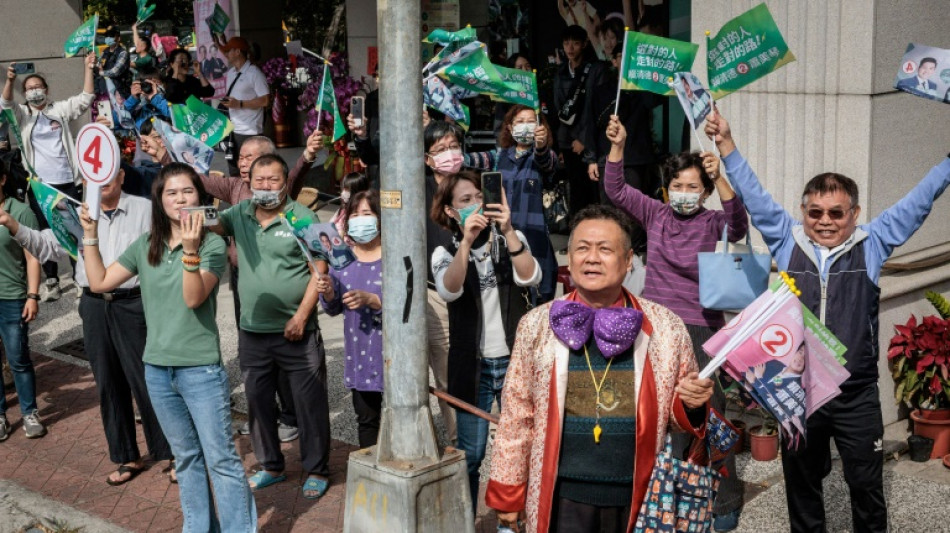
With Taiwan vote, US believes tensions won't go past simmer / Photo: © AFP

 Six candidates to lead UN take stage for televised debate
 King Charles opens slimmed down Commonwealth Games in Glasgow

 US unveils new tariffs on 60 partners as Trump rebuilds trade agenda

 WNBA viral star Cunningham wades into trans athletes row
 Hearn dismisses Fury talk of Joshua no-show for super fight

 'Like a war zone': France evacuates 20,000 due to wildfires

 Ships avoid Ukrainian grain ports after Russian attacks

 Oil passes $100 a barrel again: why it's more serious this time

 Who are the six candidates vying to lead the UN?
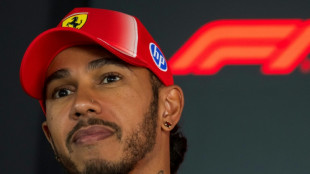 Hamilton proud of recovery after hitting rock bottom a year ago

 Carapaz eyes polkadot mountains jersey after stage win
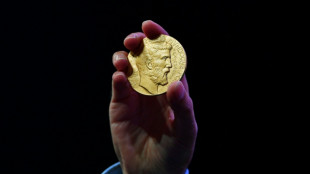 Fields medal awarded to four young mathematicians

 Carapaz claims Tour de France stage as Pogacar loses key team-mate
 Alonso welcomes Aston Martin upgrade, warns against unreal expectations
 Anderson declares Man City 'kings of Manchester' after £116 mn move
 Relieved Russell says Mercedes have solved his power problems mystery

 Oil soars above $100 as Middle East fears grow
 Venezuelans turn to scrap collecting in quake-hit beach 'paradise'

 Heptathlon champion Johnson-Thompson joins list of Commonwealth Games absentees

 Nigeria's Dangote raises $2.5bn to expand Africa's largest refinery
 Oil soars to $100 on fresh Mideast attacks
 Coal-fired power generation rising globally on Mideast war: IEA

 Premier League champions Arsenal sign Greece winger Tzolis from Brugge

 French Jewish DJ sues after activists disrupt gig: lawyer

 Venice film festival promises Pattinson, Oasis and Musk doc
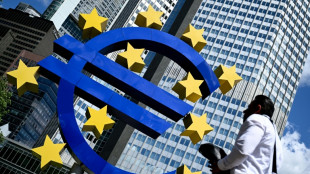
Taiwan's election had long loomed for US policymakers who feared a showdown with China. Ahead of the vote Saturday, Washington now largely expects to avoid near-term escalation -- but is taking no chances in the longer term.
President Joe Biden plans to send a delegation to Taiwan after the election, and expects no let-up in rising defense and trade cooperation with the self-governing democracy claimed by Beijing, officials said.
But the Biden administration has also stepped up dialogue with China, which has notched down its strident tone on the United States as President Xi Jinping looks to focus on economic headwinds at home.
China since 2022 has carried out two rounds of major military exercises in response to support of Taiwan by US House speakers and, ahead of the vote, has derided election front-runner Lai Ching-te.
A Biden administration official warned China not to be a "provocateur," but called Beijing's actions ahead of the election "consistent with what we have seen in the past" during Taiwan's elections.
And in Taiwan, once sharp partisan gaps on how to handle China have evaporated in the face of Chinese saber-rattling and two other events that stirred fears -- Beijing's clampdown in Hong Kong, and Russia's invasion of Ukraine.
"Even though this is the most important, in many ways, historical time for this issue, this election has less of an impact" on how the United States approaches Taiwan, said Oriana Skylar Mastro, an expert on Taiwan at Stanford University.
Taiwan's leading candidates largely agree on the need to build robust defenses and have stepped back from options backed by previous leaders, whether flirting with outright independence or with economic integration with the mainland.
- Risk reduced? -
The Eurasia Group, in an annual look ahead on global risks, played down once high fears of conflict over Taiwan, pointing to an easing of US-China tension and the cautious statements of Lai.
"We view the likelihood of an attack of China on Taiwan as negligibly small in 2024," Eurasia Group president Ian Bremmer said.
In a recent essay in Foreign Affairs, three experts, Bonnie Glaser, Jessica Chen Weiss, and Thomas Christensen, argued that the United States needed to reassure China, including by making crystal-clear opposition to Taiwan independence.
"The more powerful and credible one's threat of military action, the more important and the more difficult it is to credibly assure the potential adversary," they wrote.
Biden has said that US troops would defend Taiwan -- at odds with the traditional US policy of ambiguity -- and his administration has taken the new step of directly giving weapons to Taipei, which historically has purchased them.
Support for Taiwan is especially robust in Congress. Republican Speaker Mike Johnson, following his two predecessors, promised to "help in the defense of Taiwan" in a pre-election meeting with Taiwan's representative in Washington.
"We want to deter the Chinese Communist Party and any military provocation," Johnson told him Tuesday.
Donald Trump, campaigning to regain the White House, has made opposition to China a signature issue but has also balked at defense commitments.
- Longer-term concerns -
Lai, now vice president, comes from the Democratic Progressive Party, which has historically emphasized Taiwan's separate identity.
His opponents include Hou Yu-ih of the Kuomintang, the heirs to China's defeated nationalists who have backed closer ties with the mainland, and former Taipei mayor Ko Wen-je, who is promoting a third way.
"My sense is that the Biden administration genuinely doesn't have a favorite horse in this race," said Scott Kennedy of the Center for Strategic and International Studies.
"I wonder if, on the other hand, in Congress there may be some disappointment if Lai doesn't win," he said, predicting possible charges of Chinese meddling.
Representative Mike Gallagher, a Republican who heads a committee on China, encouraged Taiwan not to "downplay" Beijing's tactics, including threats of trade pressure if the ruling party wins.
"Don't delay defensive action for fear of provoking China because that will only make them more aggressive," he said in a recent Fox News interview.
CIA Director Bill Burns last year said that China wanted to be able to seize Taiwan by 2027, but that Russia's struggles in Ukraine may give it pause.
Mastro, the Stanford scholar, doubted the election would change China's intentions in the long term, even if a Kuomintang victory may delay its timeline.
China wants Taiwan under its official control, "and I don't see that happening without some sort of use of force," she said.
"It's like a domestic-abuse situation," she said of China's tone on Taiwan. "You're in the honeymoon, but if you think he's not going to do it again, you're crazy."
M.Betschart--VB