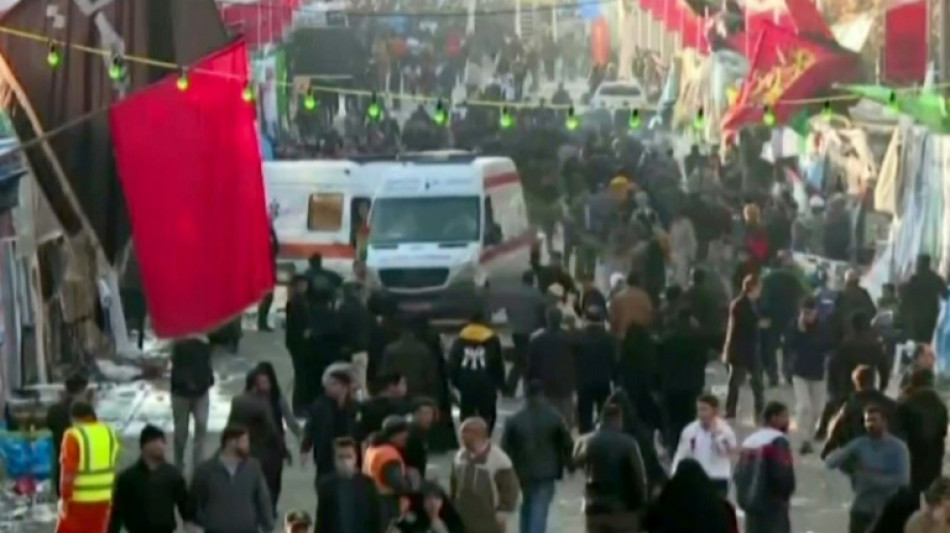
Gaza war tensions spike after deadly Iran blasts, Lebanon killing / Photo: © IRAN PRESS/AFP

 Trump under pressure from all sides over Chinese AI surge

 ICC member states decide fate of embattled prosecutor Karim Khan
 Dodgers return to Trump White House despite fan anger

 Lyles, Richardson ease into 100m semis at US athletics championships
 Salman Rushdie testifies at knife attacker's US terror trial

 World Bank confirms plan to phase out China lending by 2031
 US panel backs trendy peptides despite safety concerns

 Justice Dept withdraws NY Times subpoenas over Trump plane report

 Barcelona's De Jong returns from World Cup with torn ligament
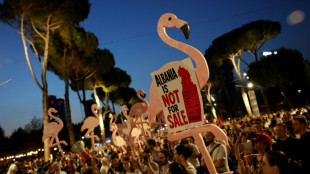 Albania police teargas protesters against Trump-linked resort

 US panel says to loosen restrictions on popular peptide despite safety concerns

 Verstappen swerves around future questions
 EU renews online child sex abuse detection powers

 Airbus, Boeing fly in different directions at Farnborough

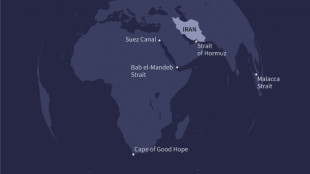 Bab al-Mandeb Strait: another key oil shipping route under threat

 Deadly wildfires in Europe force thousands to flee

 NATO to overhaul European fuel pipeline network
 US trade envoy to make tariff announcement as 10% duty soon expires

 Trump stuns Saudis by pinning nuclear deal to Israel ties

 Tough day for Ubisoft stock topped with weaker revenues

 Swelling jet fuel costs hit American Airlines outlook
 Carapaz climbs unopposed to Tour de France 18th stage win

 Sooryavanshi hits maiden 50 as India thump Zimbabwe in T20
 ECB opens door to September rate-hike as Iran war flares up

 World Bank estimates Venezuela quakes caused $19.6 bn in damage
Fears that Israel's war in Gaza could spiral across the Middle East grew Wednesday after a drone strike killed a Hamas senior leader in Lebanon and twin explosions ripped through an Iranian crowd, claiming at least 103 lives.
Another 140 people were wounded when two blasts 10 minutes apart struck Iranian mourners commemorating slain Revolutionary Guards general Qasem Soleimani on the fourth anniversary of his killing, Iran's state media reported.
The blasts -- which were not claimed by any actor but labelled a "terrorist attack" on state-run TV -- came with regional tensions running high a day after Hamas number two Saleh al-Aruri was killed in a Beirut drone strike that was widely blamed on Israel.
Israeli army spokesman Daniel Hagari said, following Tuesday's unclaimed Beirut attack, that the military was in a "very high state of readiness in all arenas" and "highly prepared for any scenario".
Israel and Iran have long been bitter enemies, and violence involving Iran-backed groups in Lebanon, Iraq, Syria and Yemen has spiked amid the Gaza war sparked by the October 7 attack by Palestinian militant group Hamas.
Lebanon's Iran-backed armed group Hezbollah has meanwhile vowed retaliation against its foe Israel, which it blamed for the drone strike in its Shiite Muslim stronghold of southern Beirut.
Although Israel did not claim the assassination, Hamas and Lebanese security sources blamed it for the killing of Saleh al-Aruri, 57, the political number two of Hamas and one of the founders of its military wing.
Hezbollah vowed the killing of Aruri and six other Hamas operatives would not go unpunished and labelled it "a serious assault on Lebanon... and a dangerous development".
The powerful group's leader Hassan Nasrallah, who has lived in hiding for years, was due to deliver a televised address at 1400GMT on Wednesday evening.
Amid the almost three-month-old war, Israel has traded almost daily cross-border fire with Hezbollah, an ally of Hamas, while so far avoiding a full-scale war.
Iran's Foreign Minister Hossein Amir-Abdollahian condemned the "cowardly" Beirut strike and said it proved that Israel "has not achieved any of its goals after weeks of war crimes, genocide and destruction in Gaza and the West Bank of Palestine, despite the direct support of the White House".
Wednesday's blasts in Iran tore through crowds near a mosque in Soleimani's hometown Kerman, who had come to honour the revered commander who was killed in a 2020 Baghdad drone strike by Israel's top ally the United States.
Iran's Tasnim news agency, quoting what it called informed sources, said "two bags carrying bombs went off" and that "the perpetrators ... apparently detonated the bombs by remote control".
Soleimani headed the Quds Force, the foreign operations arm of Iran's Islamic Revolutionary Guard Corps, setting Iran's political and military agenda across the region.
- 'Settling the score' -
The Gaza war started after the Hamas attack on Israel claimed the lives of around 1,140 people, most of them civilians, according to an AFP tally based on official Israeli figures.
Militants also took around 250 hostages back to Hamas-ruled Gaza, 129 of whom remain in captivity, according to Israel.
In response to the deadliest attack in its history, Israel launched a relentless offensive that has reduced vast swathes of Gaza to rubble and claimed over 22,300 lives, according to the territory's health ministry.
Most of its 2.4 million people have been displaced and forced south, where many now live in crowded shelters and tents.
The Israeli army again bombed Gaza targets overnight, including in the southern city of Rafah where eyewitnesses said survivors flocked to Al-Najjar Hospital to mourn the dead, including a child.
Israel has labelled Hamas's Gaza leader Yahya Sinwar a "dead man walking" and vowed to also kill other commanders of the Islamist movement considered a "terrorist" group by the United States and European Union.
The head of Mossad, David Barnea, said Israel's spy agency "is committed to settling the score with the murderers" who carried out the October 7 and with Hamas's leadership.
"It will take time, just like after the Munich massacre, but we will lay our hands on them wherever they will be," he said, referring to the 1972 attack on Israeli Olympic athletes in Germany by the Palestinian militant group Black September.
"Every Arab mother ought to know that if her son participated, directly or indirectly, in the slaughter of October 7, his blood shall be upon his own head."
- 'We both now have nothing' -
Palestinian prime minister Mohammad Shtayyeh also condemned the killing and warned of its "risks and consequences".
More Israeli strikes on Tuesday struck a building of the Palestinian Red Crescent in the southern city of Khan Yunis, killing five people, the organisation said.
The head of the UN World Health Organization, Tedros Adhanom Ghebreyesus, deplored the strikes as "unconscionable".
Israelis have meanwhile shared grave fears for the remaining hostages inside Gaza, believed to be held in tunnels amid the ongoing combat and bombardment.
One former hostage, Ruti Munder, 78, from the Nir Oz kibbutz that was devastated in the Hamas attack, reflected on her 50 days in captivity in The New York Times.
She recounted how Hamas gunmen killed her son and kidnapped her along with her daughter, grandson and husband, who remains missing.
Munder wrote she was kept "in a small room on the second floor of a hospital", guarded by a man who had told her that, without Hamas, "he would have had no money or opportunities".
"The bitter irony is that because of Hamas, we both now have nothing," she wrote.
"I hope our two peoples can finally live in peace, side by side. And I know that if Hamas remains in power, that will never happen."
burs-jd-fz/jkb
B.Baumann--VB