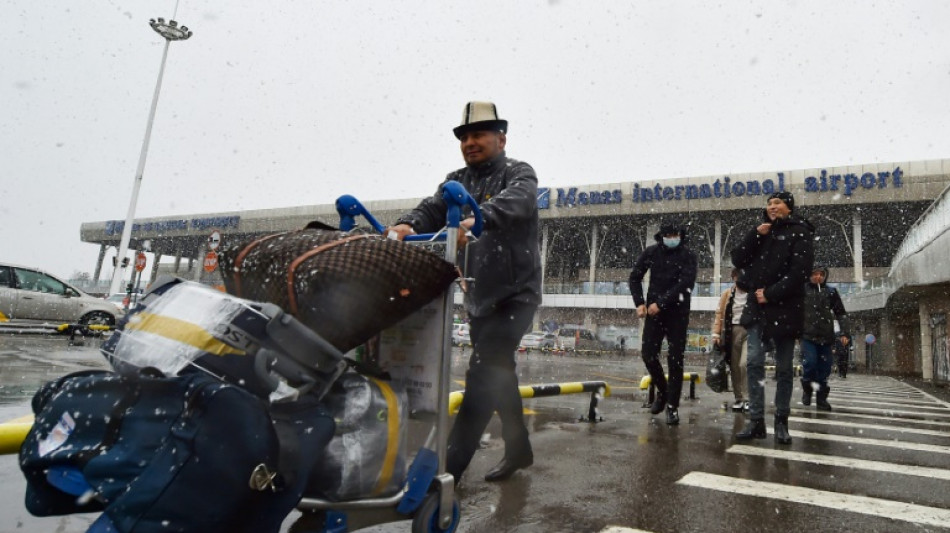
Central Asian migrants eye Russia exit amid economic pain / Photo: ©

 Trump 'low-key' bets on economic pressure against Iran
 Pitch invaders take selfies with Fernandes during Man Utd friendly
 No-stress Sabalenka won't fret over lackluster 2026 results

 Hometown hero Hudson-Smith basks in Euro glory

 PSG down Aston Villa to retain UEFA Super Cup

 Trump's spokesperson Karoline Leavitt to step down
 'Imposing ignorance': US climate science under siege
 As millions gazed in awe, a swathe of Spain plunged into darkness

 Xavi named first foreign Netherlands coach since 1978

 NBA triple-double king Westbrook to retire after 18 seasons

 'Trying to bury the science': US climate research under siege

 Eurovision to bar countries at war from hosting
 Italian teenager Curtis breaks 50m backstroke world record at Europeans

 New mum Sjostrom wins 50m butterfly for 18th European gold
 Solar eclipse darkens Arctic Russia on course for Spain
 Russian economy rebounds in second quarter despite Ukrainian strikes

 NBA's Los Angeles Lakers to be sold for $12.5 bn: ESPN
 Trump sued over sale of access to Truth Social posts

 Europe looks to the skies as solar eclipse cast its shadow
 At least 44 drown after ferry overturns on Zimbabwe's Lake Kariba
 Grieving Argentine icon Messi unsure about playing on 'much longer'
 Nigeria kidnap victims escape 'hellfire' captivity beaten, malnourished
 Google unveils finder tag, new AI smartphone features
 US equities gain as inflation report eases fear of rate rise
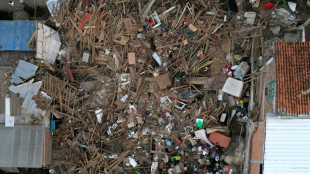 Colombia declares three days mourning for quake victims

Weeks after returning from Russia amid sanctions triggered by Moscow's invasion of Ukraine, Emomali Safarov has swapped construction tools for a video camera and his old low-paid journalism job in Tajikistan's capital Dushanbe.
He has not yet planned his next steps, but, for the moment, 24-year-old Safarov's feelings are those of relief as the Tajik national reflects on his hasty exit from Russia, just two days after the war with Ukraine began on February 24.
"I was speaking to migrants who have been working in Russia for 30 years. They told me that it is impossible to compare today's Russia with the Russia of old. The situation is very bad. Work has become very difficult," Safarov said as he filmed paralympic athletes in Dushanbe for a news outlet.
Hundreds of thousands of nationals of former Soviet countries in Central Asia are facing similar choices: shrinking work opportunities in Russia and wages in the weakened ruble versus a return to the homeland where they have family homes, but even fewer job prospects.
It wasn't always this way.
Russia's continuous economic growth during President Vladimir Putin's first two terms in office, powered by rising energy prices, set the stage for a swell of migration from countries like Tajikistan, where remittances typically equate to between a quarter and two-fifths of GDP.
But successive economic setbacks, most notably the double whammy of Western sanctions over the Kremlin's first invasion of Ukraine in 2014 and the oil price crash, have led to tighter margins for guest workers feeding families back home.
Since Russian forces poured into Ukraine the ruble has fallen by around a fifth, with Western forecasters predicting an economic contraction of between five and 10 percent this year and a continuing recession in 2023.
The World Bank in March forecasted that the real value of remittances sent to Tajikistan would fall by 22 percent this year, scrapping its pre-invasion forecast of a two percent rise.
For Safarov, the bleak economic outlook in Russia was compounded by police raids on his and other migrants' places of residence, which he said grew in frequency in the build-up to the invasion.
"We need to stop going to Russia in search of work. We need to find a path to work in Europe," Safarov told AFP.
- Remittances already falling -
Tajikistan, a majority-Muslim country of 9.5 million is the poorest of the 15 republics that gained independence from the Soviet Union in the 1990s.
Average monthly salaries hover around $100.
By earning up to $700 per month on building sites in Moscow and in Russia-annexed Crimea prior to the invasion, Safarov was able to send double that amount to his wife and child.
But women gathered outside a bank in central Dushanbe earlier in March told AFP that cash transfers sent by male relatives toiling in Russia were falling in local currency terms, despite the Tajik somoni sliding around 14 percent under pressure from the ailing ruble.
"(They have fallen) by 10 to 20 percent," said Nargis Mukhammedova, 44, who receives transfers from her son, a delivery worker in the Moscow region.
"My son says things there are getting worse. One day there is work, the next there isn't," said another woman, Zulfiya Aminova, 52, as a third woman began complaining about the rising cost of flour.
- 'Big worry' -
The economy of Tajikistan's neighbour Kyrgyzstan has even more exposure to the Russian labour market, according to World Bank data, with over four-fifths of total remittances sent from Russia in the first three quarters of 2021 compared to 58 percent in Tajikistan's case.
The World Bank's preliminary projection that the dollar value of remittances could fall by a third in Kyrgyzstan this year will alarm policy-makers in the mountainous, import-dependent country of just under seven million people.
Chynarkan Sydykova, a leading member of a Kyrgyz diaspora association in the Russian Siberian city of Novosibirsk, has returned to the Kyrgyz capital, Bishkek, to care for a family member.
She told AFP that compatriots still in Russia have bombarded her with phone calls, asking her about ways to return home and find work.
Western sanctions will hit Kyrgyzstan particularly hard, the 51-year-old warned, due to the prevalence of Kyrgyz workers in retail and hospitality in major Russian cities, where big-name brands such as McDonald's have suspended operations.
"We have over 100,000 unemployed here (in Kyrgyzstan). If (migrants) return, where will they work, how will they feed their families? This is a big worry," Sydykova said.
M.Odermatt--BTB