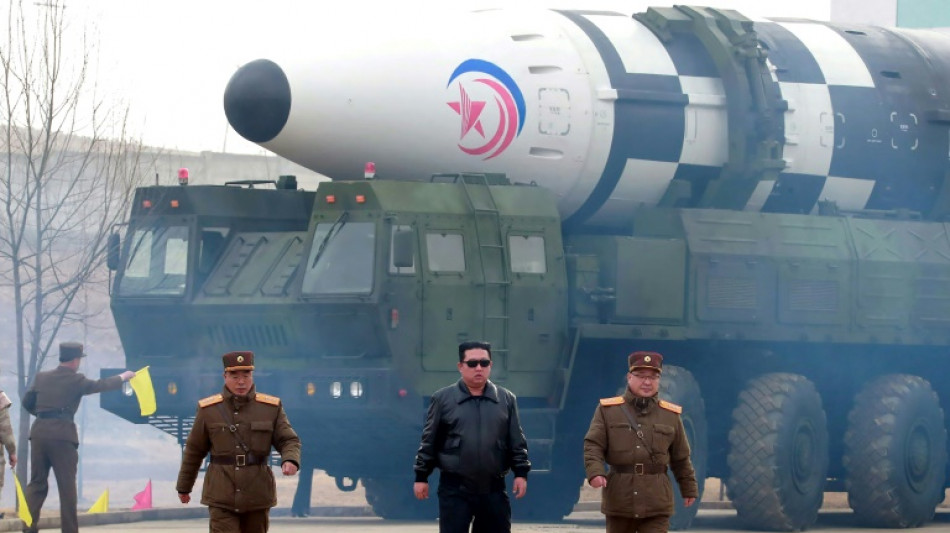
Why did North Korea fake a 'monster missile' test? / Photo: ©

 Venezuela govt, opposition wrap up round of post-Maduro talks

 Five things to know about Zambia as it goes to the polls
 Nakashima holds off Jodar to book first ATP Masters final in Montreal

 Trump 'low-key' bets on economic pressure against Iran
 Pitch invaders take selfies with Fernandes during Man Utd friendly

 No-stress Sabalenka won't fret over lackluster 2026 results

 Hometown hero Hudson-Smith basks in Euro glory
 PSG down Aston Villa to retain UEFA Super Cup
 Trump's spokesperson Karoline Leavitt to step down

 'Imposing ignorance': US climate science under siege
 As millions gazed in awe, a swathe of Spain plunged into darkness

 Xavi named first foreign Netherlands coach since 1978

 NBA triple-double king Westbrook to retire after 18 seasons
 'Trying to bury the science': US climate research under siege

 Eurovision to bar countries at war from hosting
 Italian teenager Curtis breaks 50m backstroke world record at Europeans
 New mum Sjostrom wins 50m butterfly for 18th European gold
 Solar eclipse darkens Arctic Russia on course for Spain
 Russian economy rebounds in second quarter despite Ukrainian strikes

 NBA's Los Angeles Lakers to be sold for $12.5 bn: ESPN
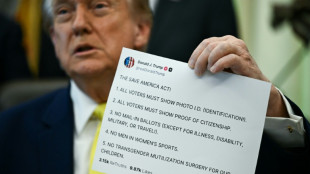 Trump sued over sale of access to Truth Social posts

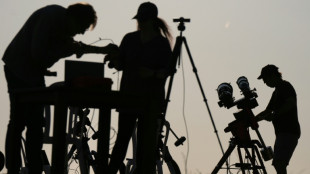 Europe looks to the skies as solar eclipse cast its shadow

 At least 44 drown after ferry overturns on Zimbabwe's Lake Kariba
 Grieving Argentine icon Messi unsure about playing on 'much longer'

 Nigeria kidnap victims escape 'hellfire' captivity beaten, malnourished

North Korea faked a "successful" launch of its most powerful long-range missile to shore up domestic support for Kim Jong Un's regime after the real test ended in failure, analysts say.
State media trumpeted the "miraculous" launch of what it claimed was a new Hwasong-17 intercontinental ballistic missile on March 24, publishing dramatic photos and videos of leader Kim personally overseeing the test.
But analysts identified discrepancies in Pyongyang's account, and South Korean and US intelligence agencies have concluded that North Korea actually fired a Hwasong-15 -- a less-advanced ICBM which it had already tested in 2017.
Why would North Korea do this? Analysts say it urgently needed a domestic propaganda victory ahead of a key anniversary, after the real launch of the Hwasong-17 a week before ended in failure with the missile exploding above the capital Pyongyang.
"North Korea wanted to shore up citizens' loyalty ahead of the Day of the Sun by branding Kim Jong Un a capable leader of a military powerhouse," analyst Yang Moo-jin told AFP, referring to the birth anniversary of founding leader Kim Il Sung on April 15.
But "the March 16 launch failed spectacularly and -- worse -- it happened in Pyongyang so people got to witness the dramatic failure. Kim probably thought he needed something very strong to make up for it, and that's probably why he lied," Yang added.
A South Korean intelligence briefing said that after the botched March 16 launch, Pyongyang turned to fabrication "to stem rumours and bring regime stability," local reports said.
With only eight days between the failed launch and the purported successful one, there would have been no time to analyse what went wrong and actually correct it -- hence why Pyongyang turned to subterfuge, the reports added.
- Fake it til you make it? -
It would not be the first time North Korea has fabricated weapons development progress -- it attempted to pass off a failed January 2016 submarine-launched ballistic missile test as a success using altered video footage, analysts said.
It is surprising that Pyongyang is still up to "such 'fake it till you make it' shenanigans", said Mason Richey, an associate professor at Hankuk University.
The fact that independent analysts -- let alone US and South Korean intelligence -- were able to detect it so quickly undermines North Korea's credibility, he said.
If Pyongyang has "lied about something as apparently obvious as ICBM type, have they also lied about more opaque areas", like whether their missiles survive re-entry or how light and compact their warheads are.
If the credibility of its nuclear deterrent is called into question, it "could make uber-hawkish defence officials in the US a bit itchier to try a bloody-nose or decapitation strike in future US-North Korea crises," he added.
North Korea announced the purported Hwasong-17 launch with a slick, Hollywood-style video featuring leader Kim in a black leather jacket and sunglasses, flanked by generals, appearing to give the signal to launch a giant missile.
But discrepancies spotted in that footage were what first tipped analysts off that the official version of events was misleading at best.
Seoul-based specialist website NK News analysed satellite imagery and found indications that some of the footage was filmed earlier than state media claimed, likely at the failed March 16 test.
"Kim Jong Un was likely targeting domestic audiences, to suppress rumours likely spreading over the highly visible ICBM failure over Pyongyang the previous week," and to boost "nationalistic pride" ahead of April 15, NK News analyst Colin Zwirko told AFP.
"He might not have wanted to waste the Hwasong-17 footage and wasn't able to launch another quickly, and telling the truth about a Hwasong-15 test would have lacked impact", as it was first tested in 2017, he added.
- Propaganda revolution -
The fact that Kim himself was front and centre of the event indicates that the propaganda was aimed at shoring up support for the leader personally, Hong Min of the Korea Institute for National Unification said.
"The North faked a Hwasong-17 launch out of a strong drive to show achievements under Kim's watch to the public with Kim at the centre," he said.
The dramatic KCTV video announcing Hwasong-17 was a "major departure" from previous North Korean propaganda efforts, said Rachel Minyoung Lee, a non-resident fellow with the 38 North programme at the Washington-based Stimson Center.
"It's a revolution in the history of North Korean propaganda," she told AFP.
While state propaganda has changed and evolved since Kim Jong Un came to power, largely to compete with the influx of foreign movies and dramas, this took things to a new level, she said.
"It had to up its game and make propaganda content more real, interesting, and persuasive," she said, even if the events it purportedly documented were a fabrication.
K.Brown--BTB