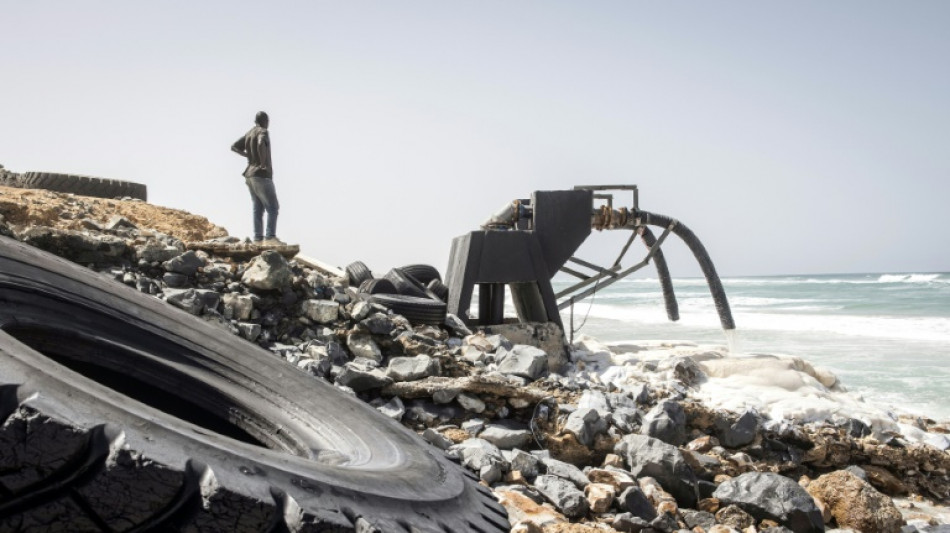
Political will, pandemic weigh on talks to save nature / Photo: ©

 Venezuela govt, opposition wrap up round of post-Maduro talks

 Five things to know about Zambia as it goes to the polls
 Nakashima holds off Jodar to book first ATP Masters final in Montreal
 Trump 'low-key' bets on economic pressure against Iran
 Pitch invaders take selfies with Fernandes during Man Utd friendly
 No-stress Sabalenka won't fret over lackluster 2026 results
 Hometown hero Hudson-Smith basks in Euro glory

 PSG down Aston Villa to retain UEFA Super Cup
 Trump's spokesperson Karoline Leavitt to step down

 'Imposing ignorance': US climate science under siege
 As millions gazed in awe, a swathe of Spain plunged into darkness

 Xavi named first foreign Netherlands coach since 1978

 NBA triple-double king Westbrook to retire after 18 seasons

 'Trying to bury the science': US climate research under siege

 Eurovision to bar countries at war from hosting
 Italian teenager Curtis breaks 50m backstroke world record at Europeans

 New mum Sjostrom wins 50m butterfly for 18th European gold
 Solar eclipse darkens Arctic Russia on course for Spain
 Russian economy rebounds in second quarter despite Ukrainian strikes

 NBA's Los Angeles Lakers to be sold for $12.5 bn: ESPN
 Trump sued over sale of access to Truth Social posts

 Europe looks to the skies as solar eclipse cast its shadow
 At least 44 drown after ferry overturns on Zimbabwe's Lake Kariba

 Grieving Argentine icon Messi unsure about playing on 'much longer'

 Nigeria kidnap victims escape 'hellfire' captivity beaten, malnourished
Nations aiming to agree a global plan to save nature ended their first in-person meeting in two years Tuesday saying negotiations needed more time, as observers called for greater political momentum in the race to halt biodiversity loss.
Two weeks of talks in Geneva produced a draft biodiversity framework for living "in harmony with nature" by mid-century -- with key milestones in 2030 -- that will be adopted at the United Nations COP15 conference in China later this year.
But the delegates representing nearly 200 nations -- although not the United States -- agreed to hold new negotiations in Nairobi in June, acknowledging that additions made to the draft by governments would need further negotiation.
The world is facing catastrophic declines in animals and plants that pose a twin threat to life on Earth with the interrelated menace of climate change.
Stemming the extinctions is a daunting task, not least because biodiversity is undermined by a host of human activities, from intensive agriculture and overfishing, to mining and rapid urbanisation.
"Biodiversity is not restricted to one place, it is everywhere, it is life," said Ghanaian academic Alfred Oteng-Yeboah, who has played a key role in international efforts to protect wildlife and species diversity.
The imperative to set ambitions that will be acted upon is even more urgent because the world missed almost all the targets that were set for the last decade.
"We think that this is the last chance that we have and if we miss it we don't know what is going to happen," said Oteng-Yeboah.
- 'Future generations' -
After two years of pandemic delay, the negotiations sought to pack in both technical scientific work as well as high-level negotiations on the overarching targets.
As talks in Geneva drew to a close on Tuesday evening delegations called for the process to step up a gear.
Speaking at the closing plenary, the New Zealand representative said the next meeting should move from countries stating positions into "negotiating mode".
While more than 90 nations have signed up to a pledge to halt biodiversity loss by 2030, delegates said the weight of that political will has not yet been felt at the negotiations.
"Despite leaders repeatedly signaling that they are committed to taking action on nature, we saw only limited progress in Geneva," said Marco Lambertini, Director General of WWF International, calling for "greater leadership" going into the next round of talks.
The most emblematic aim in the draft text is the protection of 30 percent of land and oceans by 2030 globally.
It is supported by a growing number of countries, but delegates cautioned that even that cornerstone target was not yet certain to be part of the agreement in Kunming, with several delegates saying that even COP 15 host China was reluctant to support the target.
And experts say that while headline goals are important, the failure to achieve previous ambitions points to deeper challenges.
A major one is money.
A group of nations issued a call at the end of the Geneva meeting for a sharp expansion in funding from developed nations of an extra $100 billion annually, rising to $700 billion a year, saying the failure to meet previous targets was partly because of a lack of funds.
"We have a responsibility to ourselves, our peoples, and our biodiversity, and to present and future generations to live in harmony with nature," said a statement from the group led by Gabon.
- Call to act -
Developed countries accept that more financing should go into protecting and restoring natural habitats, but they say this should come from national budgets, international aid, private financing.
The draft text also includes an aim to redirect, reform or end some $500 billion annually in subsidies that encourage activities harmful to nature.
But several delegates said the negotiations had not yet wrestled with the most difficult issues.
"We have not talked a lot about the transformation of production, agriculture, urban planning," said one.
A new meeting in the Kenyan capital will now be held between June 21 and 26 to finalise the draft text before COP15 in China, which sources say is expected in late August.
Neville Ash, who heads the UN Environment World Conservation Monitoring Centre, said he was confident that COP15 would result in an ambitious new set of goals and targets.
"We have no shortage of commitments. The success of the COP is not measured in terms of the outcome from the meeting itself, it's over the next decade and beyond in what actions are taken to deliver on those commitments," he told AFP.
C.Meier--BTB