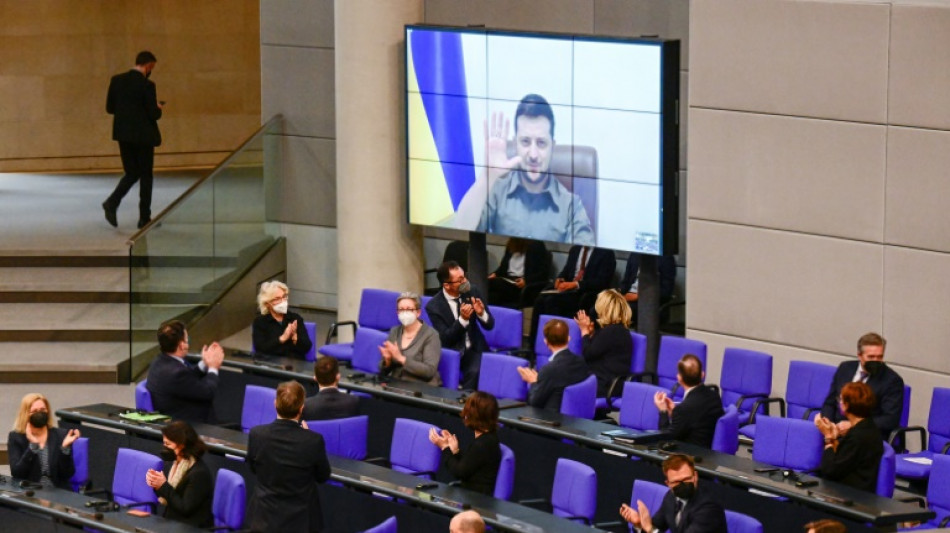
'Just one percent!' Ukraine impatience grows over Europe's red lines / Photo: ©

 Brewers beat Rays 4-1 to capture first World Series title
 Philippine island fights rising seas with nature, not concrete

 Bangladesh presses India before Ganges water treaty expires

 Trump accuses Alaska Democrats of fraud over same-name scandal
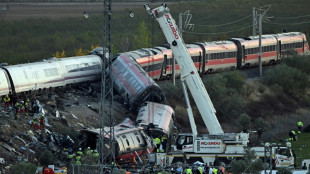 Spain mourns after latest train tragedy kills 68

 Trump's border: quiet, but few people are happy
 Australian defence chief says China military buildup creating 'pressure' in SE Asia
 No penalty practice? No problem for Man City in shoot-out win
 Microsoft beats expectations fueled by Azure cloud business
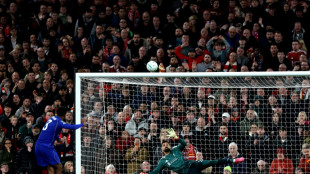
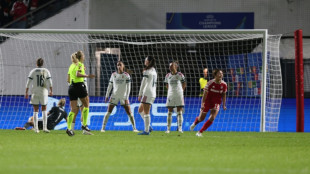 Chelsea win as Bayern draw with Madrid in Women's Champions League

 Kane watches as Bayern cruise into German Cup last 16

 Bayern boss Kompany out of hospital after meningeal irritation
 Shares in Google owner Alphabet sink on profit miss, ad slowdown
 Chelsea win as Bayern and Madrid draw in Women's Champions League
 Made with munitions from the Falklands War, a 'Chalice of Peace' for the pope
 Pioneering US labor leader Dolores Huerta dies at 96

 Italian PM slams 'shameful' release of alleged protest organiser
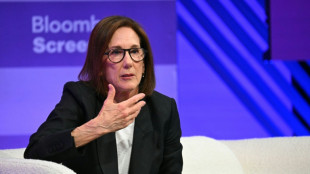 Hollywood producer Kennedy to head LA28 Olympic ceremony plans
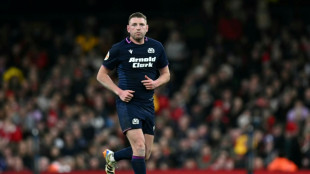
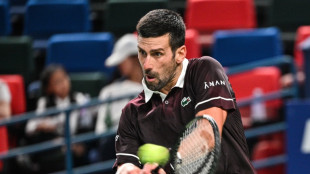 Djokovic wins Basel opener to boost ATP Finals bid

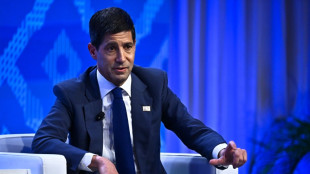 US Fed holds interest rates steady despite surging inflation
 Chiefs sign ex-Ravens kicker suspended over sex allegations

 Inglis and Carey put Australia in command of South Africa decider

 92-year-old US judge handling Maduro case dies

 Perez extends Cadillac deal to 2029
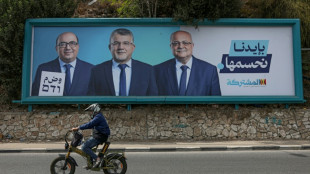 Arab Israelis proud of high election turnout, uncertain for future
Ukraine is growing increasingly impatient over the reluctance of Europe to step up military support for Kyiv, threatening to fray the united front that has prevailed since the Russian invasion.
Ukrainian President Volodymyr Zelensky has in the last days criticised European NATO members -- and especially France and Germany -- for not sending more military hardware to them.
In video addresses, Zelensky has repeatedly urged the West to send "just one percent" of their stocks of tanks and fighter jets to bolster the Ukrainian army.
Asked in an interview with The Economist magazine why French President Emmanuel Macron had described sending tanks to Ukraine as a red line for Europe, Zelensky replied: "Because they are afraid of Russia."
"And that's it. And those who say it first are the first to be afraid," he added.
British Prime Minister Boris Johnson "is a leader who is helping more", he added, at the risk of inflaming post-Brexit tensions between the EU and London. Germany, he said, was "making a mistake" by trying to be balanced.
Macron acknowledged last week that Zelensky had made his needs clear.
But while the allies would supply defensive and lethal weapons the "red line" was that NATO must not become a "co-belligerent" in the conflict.
The French leader has also made every effort to maintain dialogue with Russian President Vladimir Putin, speaking to him nine times since the invasion including a new call set for later Tuesday.
He sees his task as "achieving first a ceasefire and then the total withdrawal of (Russian) troops by diplomatic means", he told broadcaster France 3 at the weekend.
"If we want to do that, we can't escalate either in words or actions."
France has also taken care to keep the nature of its military assistance to Kyiv under wraps, although the Le Monde daily this month said that help included several dozen Milan anti-tank missiles.
- 'Encourages escalation' -
Wojtciech Lorenz, analyst at the Warsaw-based Polish Institute of International Affairs (PISM), told AFP that while it was right to keep "diplomatic channels open" setting such red lines carried risks.
"It's good not to make provocative statements but also not to set red lines as this only encourages escalation and makes a resolution more difficult," he said.
There was a mindset among the leaders of France and Germany going back many years "that you have to de-escalate at all costs and this leads to a situation where Russia perceives the West as weak", said Lorenz.
Since the invasion "Europe has been much more united than Putin expected...," he added.
"But there is a pretty high risk that this will evaporate when Russia indicates it is prepared to negotiate."
Zelensky's video messages show an increasing frustration with his Western allies. His language has sometimes become angry and emotional as he hits out at the Western red lines.
"I have been repeating the same thing for a month now -- Ukraine needs military assistance without restrictions," he told NATO on March 24.
"You have thousands of fighter jets. But we have not been give any yet! We asked for tanks - you have 20,000 tanks, Ukraine asked for just one percent of your tanks to be given or sold to us. But we do not have a clear answer yet."
Western officials, including NATO chief Jens Stoltenberg, have warned that steps such as a no-fly zone over Ukraine risk sparking a full war between the West and Russia.
- 'Getting angry' -
In a video conference late on March 26, Zelensky went even further, denouncing how Western military hardware was "covered with dust at their storage facilities" rather than being sent to Ukraine.
In a stinging aside, he implied NATO was so scared of Russia that Moscow was running the alliance.
"So who runs the Euro-Atlantic alliance? Is it still Moscow because of intimidation? Partners need to step up assistance to Ukraine," he said.
Isabelle Veyrat-Masson, a specialist in political communication at the French National Centre for Scientific Research (CNRS), said Zelensky's courageous decision to stay in Kyiv despite the bombs gives him a considerable advantage in terms of projecting his image abroad.
"He is getting angry because he finds that things are not going fast enough. But he made the choice to stay in Kyiv, and he is the one there, he is the one resisting."
Zelensky needed to strike a tough tone so as to be taken seriously, she said. But there was also a risk of "going too far and thus being discredited".
M.Ouellet--BTB