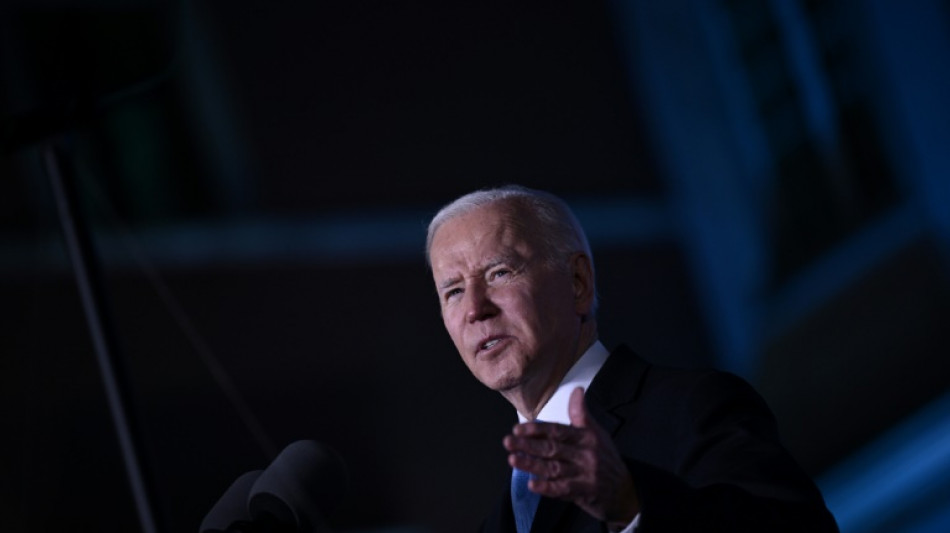
US would up aid to Ukraine, tax rich under Biden's proposed budget / Photo: ©

 Brewers beat Rays 4-1 to capture first World Series title

 Philippine island fights rising seas with nature, not concrete

 Bangladesh presses India before Ganges water treaty expires

 Trump accuses Alaska Democrats of fraud over same-name scandal

 Spain mourns after latest train tragedy kills 68

 Trump's border: quiet, but few people are happy

 Australian defence chief says China military buildup creating 'pressure' in SE Asia
 No penalty practice? No problem for Man City in shoot-out win

 Microsoft beats expectations fueled by Azure cloud business

 Chelsea win as Bayern draw with Madrid in Women's Champions League

 Kane watches as Bayern cruise into German Cup last 16

 Bayern boss Kompany out of hospital after meningeal irritation

 Shares in Google owner Alphabet sink on profit miss, ad slowdown
 Chelsea win as Bayern and Madrid draw in Women's Champions League
 Made with munitions from the Falklands War, a 'Chalice of Peace' for the pope

 Pioneering US labor leader Dolores Huerta dies at 96

 Italian PM slams 'shameful' release of alleged protest organiser

 Hollywood producer Kennedy to head LA28 Olympic ceremony plans

 Djokovic wins Basel opener to boost ATP Finals bid

 US Fed holds interest rates steady despite surging inflation

 Chiefs sign ex-Ravens kicker suspended over sex allegations

 Inglis and Carey put Australia in command of South Africa decider

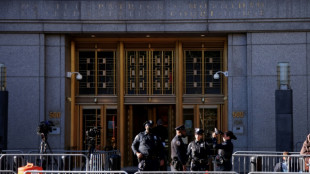 92-year-old US judge handling Maduro case dies

 Perez extends Cadillac deal to 2029

 Arab Israelis proud of high election turnout, uncertain for future

The United States would allocate billions of dollars in aid to Ukraine, tax the wealthy and lower its deficit under a budget proposal President Joe Biden unveiled on Monday.
The massive $5.8 trillion plan would pay for many of Biden's policy proposals, as his administration struggles with low approval ratings, a record inflation wave and ongoing uncertainty linked to the Covid-19 pandemic.
The budget must be approved by Congress, which Biden's Democratic party controls by a slim majority, but where lawmakers of both parties are sure to demand changes.
"Budgets are statements of values," Biden said, as he announced the measure.
His administration's plan "sends a clear message that we value fiscal responsibility, safety and security at home and around the world, and the investments needed to continue our equitable growth and build a better America," he added.
Among its provisions are a $6.9 billion infusion of funding for Ukraine to assist in defending against Russia's invasion, as well as to aid NATO. Another $1 billion would go towards Washington's efforts to counter Moscow's influence.
Biden also proposed a minimum tax on the income of taxpayers that make more than $100 million, satisfying a demand of progressive Democrats who have called for taxing the rich as a way to address inequality.
"This minimum tax would apply only to the wealthiest 0.01 percent of households -- those with more than $100 million -- and over half the revenue would come from billionaires alone," the White House said in a statement.
"It would ensure that, in any given year, they pay at least 20 percent of their total income in federal income taxes."
All told, the proposal would lower the US budget deficit by $1.3 trillion next year, though the $24.8 trillion national debt would continue to increase, according to projections published by the White House.
- Recovering economy -
While the US economy has regained much of the ground it lost to the Covid-19 pandemic since Biden took office last year, his approval ratings have suffered after supply chain snarls, rising oil prices and strong consumer demand sent inflation climbing to levels not seen since the 1980s.
The budget plan was released months after Biden's landmark legislation to spend hundreds of billions of dollars revamping the country's social services and fighting climate change, dubbed Build Back Better, stalled in Congress due to divisions among Democrats.
The budget resurrects a proposal first mulled during negotiations over the bill to raise the corporate tax rate to 28 percent, reversing legislation passed under Biden's Republican predecessor Donald Trump in 2017 that lowered it to 21 percent in a bid to supercharge businesses.
"While their profits have soared, their investment in our economy did not: the tax breaks did not trickle down to workers or consumers," the White House said, noting the new rate is "still the lowest tax rate faced by corporations since World War II except in the years after the 2017 tax cut."
Less controversial is the proposed $6.9 billion infusion meant to "enhance the capabilities and readiness of US forces, NATO allies and regional partners in the face of Russian aggression," according to the White House.
Another $1 billion would go to the departments of defense and state as well as USAID "to counter Russian malign influence and to meet emerging needs related to security, energy, cyber security issues, disinformation, macroeconomic stabilization, and civil society resilience."
Washington has also backed a deal negotiated under the auspices of the Organisation for Economic Co-operation and Development that would put a 15 percent minimum tax on corporations globally.
The White House said the budget proposal "contains additional measures to ensure that multinationals operating in the United States cannot use tax havens to undercut the global minimum tax."
Y.Bouchard--BTB