'My blood boils': Kissinger's bitter legacy in Southeast Asia / Photo: © AFP

 US panel endorses more unproven if buzzy peptides

 ICC prosecutor Karim Khan removed over 'serious misconduct'
 Venezuela to withdraw from International Criminal Court

 Trump tariff wall set to stay after Supreme Court blow: analysts
 Canada inaugurates US border bridge after cancelling joint ceremony
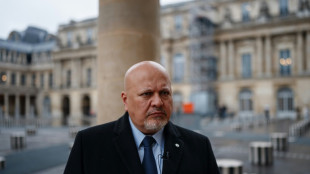 ICC members vote to dismiss embattled prosecutor Karim Khan

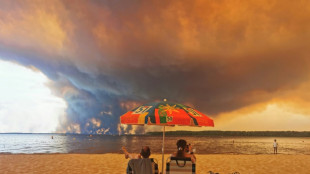
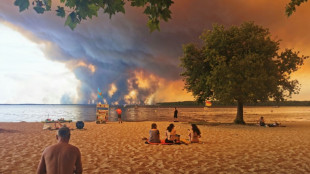
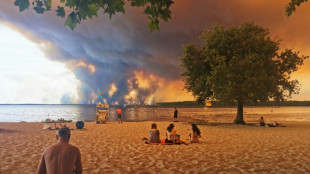 Over 100,000 flee or hole up indoors as wildfires rage in France and Spain

 Trump says EU to pay 'very big price' for Google fine

 Michael Kim fires 59 at PGA Tour 3M Open
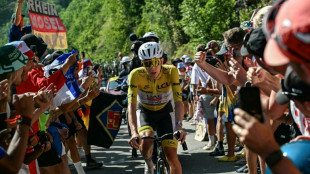 Pogacar lauds team spirit after 'rough' Tour de France days

 James hopes to bring title magic to Philadelphia 76ers
 Anthropic bets on cheaper AI with new model
 LeBron James: 'King' seeks final NBA conquest with 76ers
 British sprinter Ujah denies alleged cryptocurrency fraud
 Hamilton tops times ahead of Leclerc in Ferrari 1-2 in Hungary

 LeBron James says he will play for Philadelphia 76ers

 Росія після Путіна: «Парламент із шансом в один відсоток»
 Has AI become too powerful to control?

 IOC reject complaint against FIFA chief Infantino over 'political neutrality'
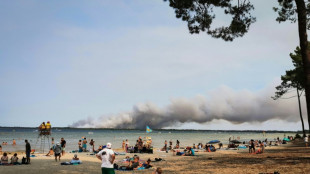 More than 80,000 flee forest infernos in France and Spain
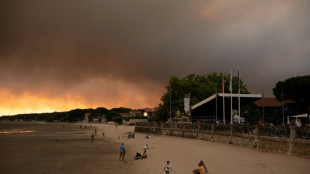 Tens of thousands in France flee burning holiday haven, by road and sea
 Maresca says it's a 'privilege' to succeed Guardiola at Man City

 Dutchman van Bommel appointed new Belgium football coach

 Russia after Putin: The ‘parliament with a one-per-cent chance’
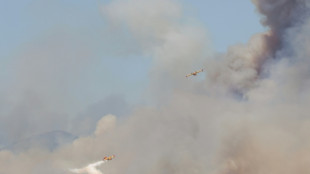 Two wildfires merge near Madrid, 19,000 evacuated or confined
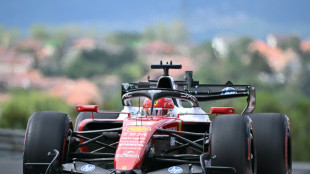
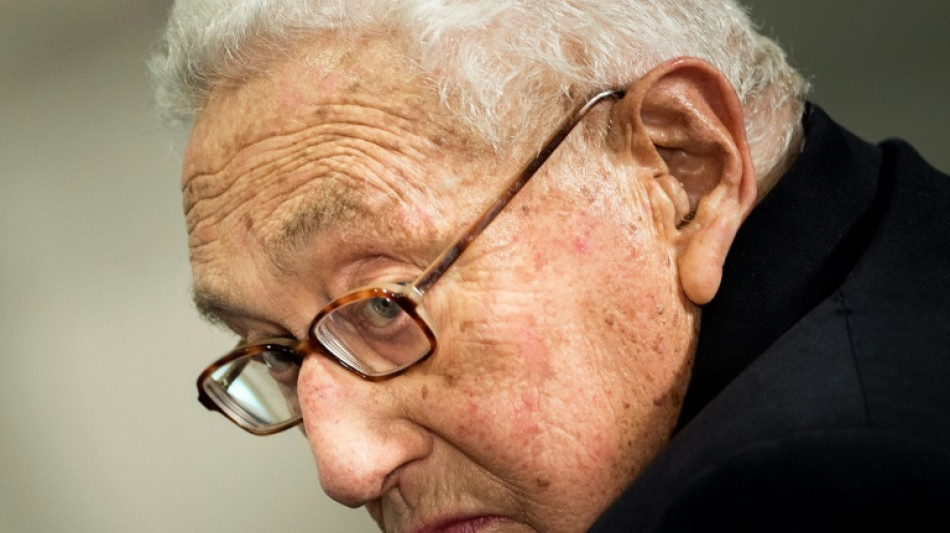
As global tributes to late US diplomat Henry Kissinger poured in, his death stirred fury across Southeast Asia.
Homage has been paid to Kissinger's realpolitik and intellectual heft as secretary of state to US presidents Richard Nixon and Gerald Ford.
But in Southeast Asia, millions have remembered when the United States bombed swathes of Laos and Cambodia during the Vietnam War, an onslaught ordered by Kissinger and Nixon.
"Every single time I hear Kissinger's name, my blood boils," Sera Koulabdara, who fled Laos with her family at age six, told AFP.
The bombing was a failed attempt to disrupt rebel movements and strengthen Washington's hand as it pulled out of Vietnam.
Koulabdara said her father remembered the bombing.
"He described it as a roaring rain, but instead of water, it was flames."
Laos became the world's most-bombed country per capita from 1964 to 1973 as the United States dropped more than two million tonnes of ordnance, equal to a plane load of bombs every eight minutes.
Since then, unexploded ordnance (UXO) in the impoverished country has killed or wounded at least 20,000 Laotians.
"The life-threatening problem that exists in Laos is a direct result of the US's barbaric decisions and one of the main architects, Kissinger," said Koulabdara, who heads advocacy group Legacies of War.
Demining work continues.
"Laos is still the country most polluted by cluster munitions in the world," said Reinier Carabain of Handicap International –- Humanity & Inclusion, an organisation that has destroyed nearly 47,000 pieces of UXO since 2006.
"Every day, civilians in a quarter of the villages in Laos run the risk of being killed or injured by explosive remnants".
- 'I am hopeless' -
In neighbouring Cambodia, the bombing campaign helped fuel the rise of the Khmer Rouge regime, which killed about two million Cambodians between 1975 and 1979 in acts later ruled as genocide by the kingdom's UN-backed court.
Former leader Hun Sen had long called for Kissinger to be charged with war crimes.
UXO still litter the countryside, killing an estimated 20,000 Cambodians in the past four decades.
Heng Ratana, director general of the Cambodian Mine Action Centre, told AFP the decision to bomb "our beautiful country and peaceful people by destroying everything" was Kissinger's true legacy.
"I am hopeless," said 60-year-old Cambodian Sam En, who was blinded and lost the use of both arms after he tried to remove a cluster bomb at his Kratie province home in 2014.
Sam En, who relies on his daughter for care, said he felt differently about Kissinger after his death.
"Before I felt angry. But now he has died, so as a Buddhist follower, I forgive him."
- 'Suffering' -
In Vietnam, where some see Kissinger's rapprochement with China as paving Beijing's rise to dominance in the region, he leaves a complex legacy.
Kissinger was awarded the Nobel Peace Prize for negotiations to end the Vietnam War, even though the conflict did not immediately finish and his North Vietnamese counterpart, Le Duc Tho, declined to accept the prize.
Pham Ngac, an interpreter for North Vietnam during the Paris Peace Accords negotiation, called Kissinger an "outstanding" diplomat.
"He was the most... persuasive diplomat, to the benefit of the US," the 88-year-old former diplomat told AFP.
Neither the Vietnamese nor Cambodian governments responded to AFP requests for comment on Kissinger's death.
"He was the one that helped cause a lot of suffering for Vietnamese people," Tran Quy Tuyen, a soldier in Hanoi's air defence division between 1965 and 1973, told AFP.
"I guess many Vietnamese would say that he should have died years ago," the 78-year-old said.
I.Stoeckli--VB