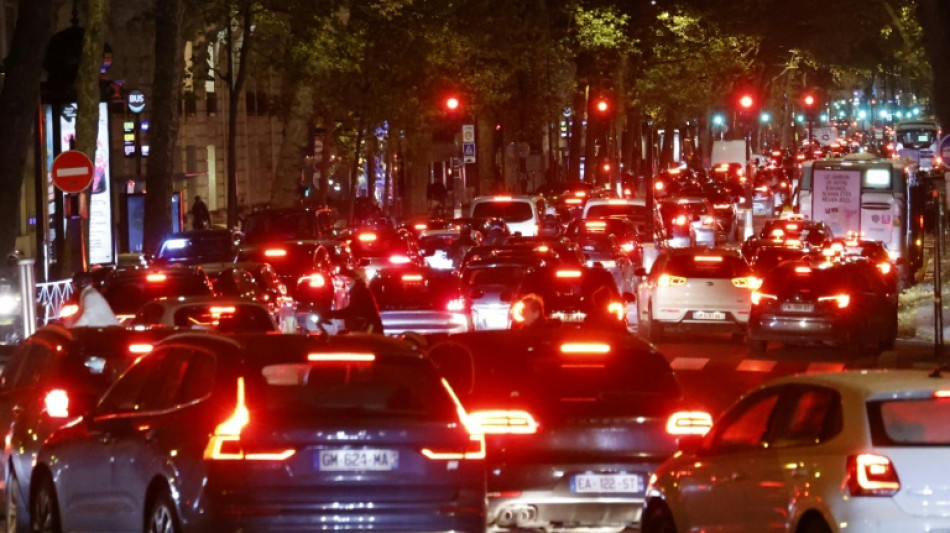
COP28: Why energy efficiency matters so much / Photo: © AFP

 Nazgul haunt the hall as 'Rings of Power' trailer airs at Comic-Con

 Trump orders disclaimer signs outside museum of American history

 Mahomes back in full practice, 'optimistic' for NFL opener

 US panel endorses more unproven if buzzy peptides

 ICC prosecutor Karim Khan removed over 'serious misconduct'
 Venezuela to withdraw from International Criminal Court

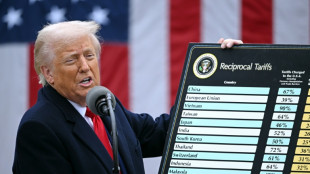 Trump tariff wall set to stay after Supreme Court blow: analysts

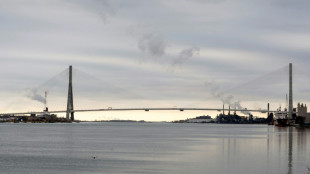 Canada inaugurates US border bridge after cancelling joint ceremony
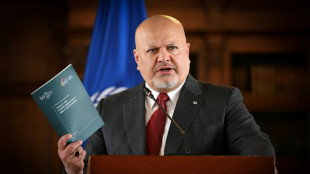
 ICC members vote to dismiss embattled prosecutor Karim Khan

 Over 100,000 flee or hole up indoors as wildfires rage in France and Spain

 Trump says EU to pay 'very big price' for Google fine

 Michael Kim fires 59 at PGA Tour 3M Open

 Pogacar lauds team spirit after 'rough' Tour de France days

 James hopes to bring title magic to Philadelphia 76ers

 Anthropic bets on cheaper AI with new model

 LeBron James: 'King' seeks final NBA conquest with 76ers

 British sprinter Ujah denies alleged cryptocurrency fraud

 Hamilton tops times ahead of Leclerc in Ferrari 1-2 in Hungary

 LeBron James says he will play for Philadelphia 76ers

 Росія після Путіна: «Парламент із шансом в один відсоток»

 Has AI become too powerful to control?

 IOC reject complaint against FIFA chief Infantino over 'political neutrality'

 More than 80,000 flee forest infernos in France and Spain

 Tens of thousands in France flee burning holiday haven, by road and sea
 Maresca says it's a 'privilege' to succeed Guardiola at Man City

If we are to save the planet, we are going to have to use energy far more efficiently.
Yet experts say this obvious measure has been long overlooked with COP28 set to hear calls Saturday for the annual rate of energy efficiency improvements to double by 2030.
- What does it mean? -
Energy efficiency means "using less energy for the same or even higher level of service" from machinery or technology, according to specialist analysts Enerdata.
It is not the same as using energy more sparingly, like turning your heating down to 19 degrees Celsius (66 Fahrenheit).
Conventional cars, for instance, waste up to around 80 of the energy contained in the petrol that powers them, the US Environmental Protection Agency estimates.
The International Energy Agency (IEA) said that efficiency gains could cut the efforts we need to make to be carbon neutral by 2050 by half.
"Often governments don't give (it) as much focus as we think they should," IEA expert Brian Motherway told AFP, and it could be crucial over the next decade.
"The more efficiently we use our energy the less we have to invest in solar panels, in nuclear, in grids," he added.
- Has Ukraine war been a turning point? -
The huge spikes in energy prices last year after Russia's invasion of Ukraine brought the subject sharply home to many.
Investments in better insulated buildings, public transport and infrastructure for electric vehicles shot up 16 percent last year to $560 billion, while 25 countries launched education campaigns.
But 2023 has seen a slight drop, the IEA said, with inflation and higher interest rates slowing investment just as record temperatures saw sales of air conditioners rise along with electricity consumption in a large swathe of the globe.
The IEA director Fatih Birol said governments at COP28 must agree to "double global efficiency... to around 4 percent per year to be in line with our climate targets."
He said such a move would be a major signal to markets, investors and industry. The consequences are huge: doubling investment would save seven billion tons of CO2 -- the annual emissions of the whole transport sector.
But while the IEA says that measures exist in three-quarters of the world economy, that technical advances are being made, progress on the ground has been uneven.
- Where can we make progress? -
"Everywhere!" say the experts, particularly in the built environment. Even in Europe, where the sale of heat pumps to replace gas and oil heating systems went up 40 percent in 2022, investment has been "flat".
The likes of offices, hotels and shops account for a third of electricity consumption in winter in France. According to RTE, who manage its high-tension power grid, "savings of 20 percent could be made without much effort with a little awareness and technical management."
Changing light bulbs in the United States to LEDs could save enough energy to run three million electric vehicles for a year or heat 2.6 million homes equipped with heat pumps, the IEA said.
Big business, which has been heavily hit by the rise in energy inflation, is taking the problem on. But small and medium-sized firms are struggling to do so, said the agency, even though over the next decade they could account for 70 percent of industry's potential savings.
Air conditioning is another major issue, with sales rocketing in hotter countries as the planet warms. "Between now and 2050, 10 air conditioners will be bought every second," said the IEA's Motherway. "Yet the average air conditioner bought right now is literally half as efficient as the best one."
- What can be done? -
For Jean-Pascal Tricoire, head of Schneider Electric, one of the world leaders in energy management, technology is the answer.
Home automation or "domotics" could save 30 percent of energy, often because users can follow their consumption more closely. "And in Europe, if all suitable roofs were equipped with solar panels, we could reduce our electricity needs by a fifth," he argued.
Efficiency is particularly crucial in emerging and developing countries, where most population growth is expected. Africa and India may have to build 100 billion square metres of new buildings in the next three decades.
But we are still building "a lot of homes with very poor energy efficiency levels, and of course the occupants will suffer -- they’ll be too warm, or too cool," said Motherway. "Even basic standards which don't necessarily add to the building cost would make a huge difference," he argued.
D.Schaer--VB