
The psychological effect of being held hostage / Photo: © AFP

 'Betrayal': The young victims of India's exam leak scandal

 'The Odyssey' sparks IMAX stampede -- and a backlash

 Houthis vow retaliation for Saudi strikes as conflict deepens

 SpaceX carries out successful Starship test flight, first since going public

 Meta quits clean energy pledge amid gas-powered data center push

 Turk's term as UN human rights chief extended despite US warnings

 US measles outbreak the worst in 35 years: official data

 Trump weighs harder Iran strikes as conflict widens

 Scotland's Scott splits Australian swim dominance at Commonwealths

 Paramount agrees to delay Warner Bros. merger

 Mixed day for global equities as oil prices retreat

 Trump says hasn't decided on big Iran strikes, Tehran getting 'serious'

 Karim Khan: Forensic ICC prosecutor with a tarnished legacy

 Sinner, Djokovic withdraw from Montreal Masters

 Ferrari boss cautious after Hamilton and Leclerc shine in Hungary

 Pogacar breaks Alpe d'Huez record to extend Tour de France lead

 Fury stops Wach in Thailand to close in on Joshua fight

 US court rules abortion pill restrictions 'unlawful'

 Tens of thousands flee forest infernos in France and Spain

 Many thousands flee burning France holiday haven by road and sea

 Charli XCX pivots from hyperpop in post-Brat album

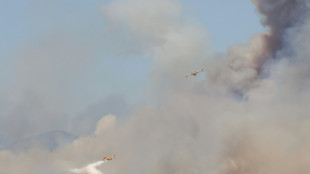 Worst wildfire in Madrid's history forces thousands to flee homes

 Pogacar extends Tour de France lead with 'cool' Alpe d'Huez win

 Pogacar extends Tour de France lead with
Alpe d'Huez win
Pogacar extends Tour de France lead with
Alpe d'Huez win

 Россия после Путина: «Парламент с шансом в один процент»

How will the first group of hostages released by Hamas on Friday recover from the psychological trauma of being held captive since the Palestinian militant group's attack on Israel on October 7?
It is a difficult question to answer, experts say, because the capacity to recover from being held hostage varies enormously and unpredictably from one person to another.
"Whilst many people released from captivity experience understandable distress symptoms, not all of them will develop PTSD (post-traumatic stress disorder) or other mental health disorders," explained British psychiatrist Neil Greenberg, who specialises in psychological trauma.
"However, an important minority will," he added.
"Much will depend on the experiences of the people as they were taken hostage and whilst in captivity," he said. "How they are supported after they get released is also really important."
Under a truce deal between Hamas and the Israeli government, 13 Israeli hostages who had been held captive in the Gaza Strip were handed over to Israel on Friday, an Israeli security source told AFP.
About 1,200 people, mostly civilians, were killed in Israel during a cross-border attack by Hamas on October 7 and around 240 others were taken hostage, according to Israeli officials.
Israel's relentless retaliatory bombing of Gaza and its ground offensive have since killed nearly 15,000 people in the Palestinian territory, according to the Hamas government in Gaza.
Under the Hamas-Israel deal, 50 hostages are due to be freed in stages in return for the release of 150 Palestinian prisoners from Israeli jails, mostly teenage boys, during a four-day pause in fighting.
- No specific post-hostage symptoms -
Once the hostages are able to rejoin their families, one question will be how the experience affected their mental health.
Greenberg said there are no particular mental consequences of being taken hostage compared to other traumatic experiences such as being bombed, as has been the case of civilians in Gaza trapped under Israeli air strikes.
"There are no specific post-hostage PTSD symptoms," he said.
However he said the experience can sometimes trigger psychological problems later on -– feelings of isolation, humiliation or helplessness.
Other factors such as intense media attention can also have a bearing on a former hostage's capacity to recover.
Some struggle afterwards, such as French journalist Brice Fleutiaux, who committed suicide in 2001 shortly after being released from captivity in Chechnya.
Or John Paul Getty III, whose grandfather was the richest man in the world when he was taken hostage as a child in 1973.
He battled with addiction after his release, had a drug-induced stroke and remained paralysed for the rest of his life.
While not all experiences have such extreme mental consequences, former hostages have displayed a range of post-traumatic symptoms.
These include difficulty concentrating, memory loss, bouts of depression or panic attacks, and withdrawing from contact with other people.
- Tricky to study -
Most former hostages do tend to regain control over their lives. Some, however paradoxical it might seem, may even eventually reap psychological benefits from the experience.
"This does not kick in on day one, but many ex-hostages find that months or years later, they can cope better with adversity because they have been able to overcome the psychological -- and often physical -- challenges of being kidnapped," Greenberg said.
One example is Terry Waite, who was kept hostage in Lebanon from 1987 to 1991 and subsequently became a humanitarian activist and writer.
Psychiatrists acknowledge it is tricky to predict in advance whether one person more than another will develop mental problems.
"As yet there is no clear delineation of all factors which conduce to an adverse outcome following being taken hostage," according to a 2009 study in the journal of the British Royal Society of Medicine.
The authors did, however, identify a number of risk factors.
"There is evidence that women -- especially younger women -- more than men, are at risk of such an outcome, as are those of low educational level, and those exposed to an extended period of captivity," they said.
But the subject is difficult to research, so the scientific and clinical data available is limited.
One complicating factor is that symptoms of distress may take a long time to emerge.
"They can appear a year, two years, even 10 years after and it's really unpredictable," psychiatrist and PTSD specialist Christine Roulliere told AFP.
She said hostages need to receive treatment as soon as they are released.
"It's essential for the person to be able to put into words what they've gone through," she said.
"The aim is to help them get back into the world of the living."
W.Huber--VB