
North Korea says spy satellite launch successful / Photo: © KCNA VIA KNS/AFP

 Democrats, Trump hold final rallies before midterm elections

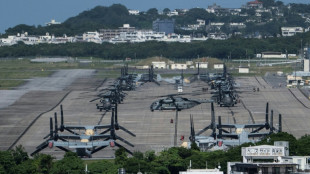 Japan urges US to enforce discipline after second Marine arrest

 'Remarkable' rookie Lendeborg scores 37 as Warriors beat Clippers

 ExxonMobil urged to re-think Papua New Guinea gas project

 Asian stocks mixed as tech sector struggles to rebound from selloff

 India's royals find new power in their past

 Irish bookshops help meet UK demand for Sally Rooney novels

 NFL Vikings suffer first loss while Broncos edge Chiefs

 Host of fresh faces in Australia white-ball squads to face England

 NFL linebacker Campbell to remain hospitalized overnight

 BEING rather than HAVING. A fascinating, practical STORY.

 Chervon Names Jody Grimsley Senior National Account Manager

 'Grateful' Antonelli becomes youngest Formula One world champion

 Four sporting prodigies who scaled the heights

 Six key races that made Kimi Antonelli a world champion

 Isa double sends Pau past Toulouse in Top 14

 NFL Lions linebacker Campbell carted off to hospital

 Iran warns new war could last longer after Trump threatens strikes

 Bulgarian president wins runoff vote as Black Sea attacks raise stakes

North Korea said Wednesday it had succeeded in putting a military spy satellite in orbit after two previous failures, as the United States led its allies in condemning the launch as a "brazen violation" of UN sanctions.
A rocket carrying the satellite blasted off Tuesday night from North Phyongan province and "accurately put the reconnaissance satellite 'Malligyong-1' on its orbit," state-run news agency KCNA reported.
Images in state media showed North Korean leader Kim Jong Un smiling and waving, surrounded by white-uniformed scientists and engineers who cheered and clapped after watching the successful blastoff.
The United States led condemnation of the launch, saying it was a "brazen violation" of UN sanctions and could destabilise the region, with United Nations Secretary-General Antonio Guterres also slamming the launch.
South Korea reacted by partially suspending a 2018 military deal aimed at reducing military tensions, saying it would resume surveillance operations along the border with North Korea.
As North Korea stopped responding to military-to-military communication lines earlier this year, Seoul's "defence ministry will just announce it," rather than notifying Pyongyang directly, a government spokesperson told AFP.
North Korea's previous efforts to put a spy satellite into orbit in May and August both failed. Seoul, Tokyo and Washington had repeatedly warned Pyongyang not to proceed with another launch, which would violate successive rounds of UN resolutions.
Space launch rockets and ballistic missiles have significant technological overlap, experts say, but different payloads, and Pyongyang is barred by UN resolutions from any tests involving ballistic technology.
Seoul's spy agency this month said Pyongyang appeared to have received technical advice from Russia, in return for sending at least 10 shipments of weapons for Moscow's war in Ukraine.
KCNA said that it was North Korea's "legitimate right" to launch the satellite, as the country confronts what it calls threats from South Korea and the United States.
The North plans to launch more satellites "in a short span of time" to step up its surveillance capability on South Korea, KCNA said.
South Korea's Joint Chiefs of Staff said they were analysing the launch and did not confirm if the satellite had, in fact, been placed in orbit.
"North Korea's military satellite launch constitutes a provocative act that blatantly violates the UN Security Council resolutions prohibiting its use of ballistic missile technology," the JCS said in a text message to reporters.
- 'Confidence in success' -
Seoul has been saying for weeks that Pyongyang was in the final stages of preparation for another attempted spy satellite launch.
The North's May attempt failed due to the "abnormal" startup of its second-stage engine, Pyongyang state media said at the time, while the August bid was attributed to an error in the "emergency blasting system".
The launch comes after Russian President Vladimir Putin suggested in September after meeting with North Korean leader Kim Jong Un that his nation could help Pyongyang build satellites.
Seoul and Washington have both subsequently claimed Pyongyang has been shipping weapons to Russia, with US Secretary of State Antony Blinken warning this month that military ties between North Korea and Russia were "growing and dangerous".
The launch also appears to kick off a space race on the peninsula, experts said, as Seoul plans to launch its first spy satellite via a SpaceX rocket later this month.
"Kim Jong Un demonstrated his will to have an upper hand in military superiority by attempting to launch the first military reconnaissance satellite into orbit before South Korea," Lim Eul-chul, associate professor at the Institute for Far Eastern Studies, Kyungnam University said.
"Of course, it appears that there will be differences in the performance of the satellites."
Successfully putting a spy satellite into orbit would improve North Korea's intelligence-gathering capabilities, particularly over South Korea, and provide crucial data in any military conflict, experts say.
M.Schneider--VB