Azov Regiment takes centre stage in Ukraine propaganda war / Photo: ©

 Miami stumble to draw against Cincinnati despite Suarez strike
 Bangladesh scrambling as Ganges water treaty to expire
 England in peril with Rugby League World Cup semi spots at stake

 Antonelli ready to rewrite the Formula One record books in Mexico
 EU, Canada to build 'new chapter' in alliance at Montreal summit
 Argentine football fan jailed for threats over Di Maria return

 Liverpool beat Chelsea in League Cup shoot-out, Man City survive scare
 Inter leave it late again in Serie A as AC Milan, Juventus lose
 Shares in Google owner Alphabet plummet on profit miss, ad slowdown
 Putin hails Elon Musk as 'truly a genius'

 US stocks eye big tech earnings as Fed holds rates steady
 US Fed holds interest rates steady despite 'too high' inflation
 Rwanda cannot be blamed for what happens in DR Congo, FM says
 Inter leave it late again in Serie A as Bologna sink AC Milan
 Bolsonaro's escape to the US: How it happened
 Russell calls on Scotland to 'kick on' and beat big teams
 Airbus aims for record deliveries despite disappointing quarter
 Cuba wins UN vote against US embargo with weakest backing in 30 years

 Real Madrid, La Liga apology over Mbappe shows power of Chinese market
 From Gaza to Ramallah, Palestinians see little hope in Israeli vote
 US labor leader Dolores Huerta dead: family
 Investors turn cautious ahead of tech results, Fed update on rates
 'Cruise for life' strands passengers in Cambodia as operator goes bust
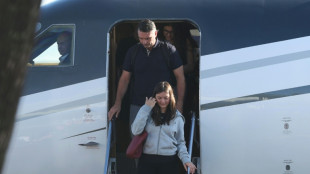 Bolsonaro flees Brazil for US after election defeat
 A throne on wheels, popemobiles star in new Vatican show
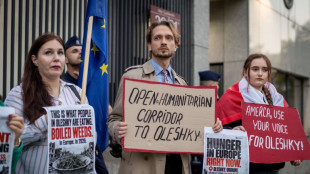
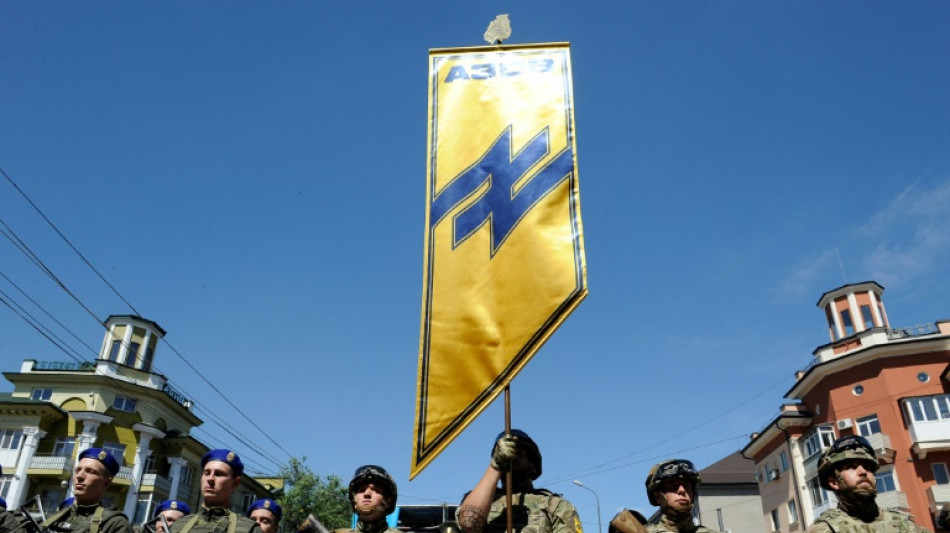
Some call them war heroes, others neo-Nazis: Ukraine's Azov Regiment is at the heart of the propaganda war between Kyiv and Moscow, as Russia claims to seek the "denazification" of Ukraine.
The Azov Special Operations Detachment, previously known as the "Azov Battalion" but now called the "Azov Regiment", is often targeted in pro-Russian social media posts, including by Russian embassies in Paris, London and elsewhere.
The regiment is currently entrenched in the southern port city of Mariupol that has been the scene of some of the war's heaviest fighting.
Russian Foreign Minister Sergei Lavrov used their presence to justify the bombing of a maternity ward there, saying the Azov regiment "and other radicals" were hiding in the building.
The regiment, created in 2014 by far-right activists, was first deployed against pro-Russian separatists in eastern Ukraine.
It has since been integrated into the National Guard, under interior ministry command.
Its founders included Andriy Biletsky, a former member of the Patriot of Ukraine paramilitary organisation.
As first mostly volunteers, the battalion's members wore insignia, such as the so-called "Wolfsangel" (wolf's hook), that were reminiscent of symbols used by SS units in Nazi Germany.
- 'De-ideologised' -
"In 2014 this battalion had indeed a far-right background, these were far-right racists that founded the battalion," said Andreas Umland at the Stockholm Centre for Eastern European Studies.
But it had since become "de-ideologised" and a regular fighting unit, he told AFP.
Its recruits now join not because of ideology but because "it has the reputation of being a particularly tough fighting unit," Umland said.
The Azov battalion, named after the Sea of Azov to Ukraine's south, became famous for winning back Mariupol from Russian-backed separatists in 2014.
Eight years later, it is again fighting for the city that Russian President Vladimir Putin hopes will give him his first major victory in the Ukraine campaign.
Beating the Azov Regiment could also help him justify the "denazification" claims prominent in Russian propaganda, which also labels Ukrainian leader Volodymyr Zelensky, who is Jewish, as leading a "gang of drug addicts and neo-Nazis".
Such attacks try to build on Russia's collective World War II memory of what it calls the Great Patriotic War, and thus whip up nationalist support for the invasion, experts say.
- 'Absolute evil' -
"The terms 'nazism' and 'fascism' evoke, in the Russian context, absolute evil that you cannot bargain with," said Sergei Fediunin, a political scientist at France's National Institute for Oriental Languages and Civilisations.
"The only option is to fight and destroy it."
Russian propaganda also targets the Ukrainian nationalists who fought Soviet Russia after 1945 and their leader, Stepan Bandera, who collaborated with Nazi Germany.
The Azov Regiment, meanwhile, has joined the propaganda war, publishing victory statements on the Telegram messaging service that are often accompanied by videos of burning Russian tanks, and calling the Russians "the real fascists".
The Azov now function like other regiments "but with better PR," said Vyacheslav Likhachev, a research analyst at the ZMINA Centre for Human Rights in Kyiv.
Their stellar reputation attracts plenty of potential recruits, "so they can choose the better ones", he told AFP.
The unit, numbering 2,000 to 3,000 troops, has kept the same wolf-hook insignia, but Umland said in Ukraine there was little confusion about its links to the past.
"It doesn't have the connotation of being a sort of fascist symbol anymore," he said.
Overall, ultra-nationalist political forces have been on the decline in Ukraine since 2014, said Anna Colin Lebedev at France's Paris Nanterre University.
"One of the reasons is that soft nationalism has now become mainstream since the Russian attack," she said on Twitter.
Azov's former commanders, including Biletsky, entered politics after 2014 but their far-right platform never attracted more than two percent of voters.
But since Russia's invasion some of them have taken up arms again, with the Azov Regiment or other units.
Biletsky, meanwhile, has returned to Mariupol from where he runs an active Telegram account.
P.Anderson--BTB