India's Russian arms explain "shaky" Ukraine stance / Photo: ©

 No penalty practice? No problem for Man City in shoot-out win
 Microsoft beats expectations fueled by Azure cloud business
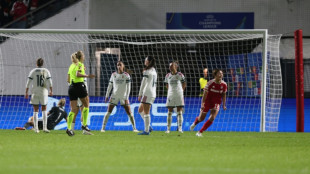
 Chelsea win as Bayern draw with Madrid in Women's Champions League

 Kane watches as Bayern cruise into German Cup last 16

 Bayern boss Kompany out of hospital after meningeal irritation
 Shares in Google owner Alphabet sink on profit miss, ad slowdown
 Chelsea win as Bayern and Madrid draw in Women's Champions League
 Made with munitions from the Falklands War, a 'Chalice of Peace' for the pope
 Pioneering US labor leader Dolores Huerta dies at 96

 Italian PM slams 'shameful' release of alleged protest organiser
 Hollywood producer Kennedy to head LA28 Olympic ceremony plans
 Djokovic wins Basel opener to boost ATP Finals bid
 US Fed holds interest rates steady despite surging inflation
 Chiefs sign ex-Ravens kicker suspended over sex allegations
 Inglis and Carey put Australia in command of South Africa decider
 92-year-old US judge handling Maduro case dies
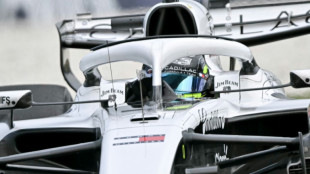 Perez extends Cadillac deal to 2029
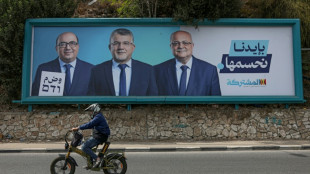 Arab Israelis proud of high election turnout, uncertain for future
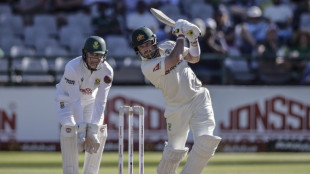 Inglis, Carey put Australia in command of South Africa decider
 French firm Safran helps build aircraft wings of the future in UK factory
 Ceasefire in Russia-occupied Ukrainian city holds for second day
 Canada hikes rates to contain oil price surge caused by Iran war

 World Bank warns of worsening food insecurity as commodity prices soar

 Mona Lisa scrubbed from Syrian textbooks as critics slam conservative drift
 Bolsonaro flees Brazil for US after election defeat: AFP
When 20 Indian soldiers were killed in a recent border clash with China, the military hardware New Delhi sent to bolster its Himalayan frontier was mostly Russian-origin, showing not for the first time its closeness to "longstanding and time-tested friend" Moscow.
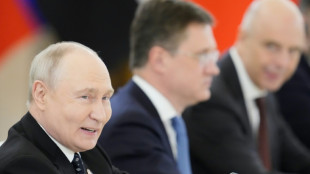
Facing an increasingly assertive China closer to home, these ties help explain Prime Minister Narendra Modi's reluctance to criticise Vladimir Putin -- a regular visitor -- over the Ukraine invasion.
India has abstained on UN resolutions censuring Russia and continues to buy Russian oil and other goods, despite pressure from Western countries.
US President Joe Biden this week called India "somewhat shaky" on Russia.
In the Cold War, officially non-aligned India leaned towards the Soviet Union -- in part due to US support for arch-rival Pakistan -- buying its first Russian MiG-21 fighter jets in 1962.
These military ties were cemented by two watershed events: India's humiliating defeat to China in a 1962 border war and the war with Pakistan in 1971 that led to the creation of Bangladesh.
During the latter, the USSR sent ships to the Indian Ocean to deter a direct US intervention to help Pakistan. Shortly before the two had signed the landmark Indo–Soviet Treaty of Peace, Friendship and Cooperation.
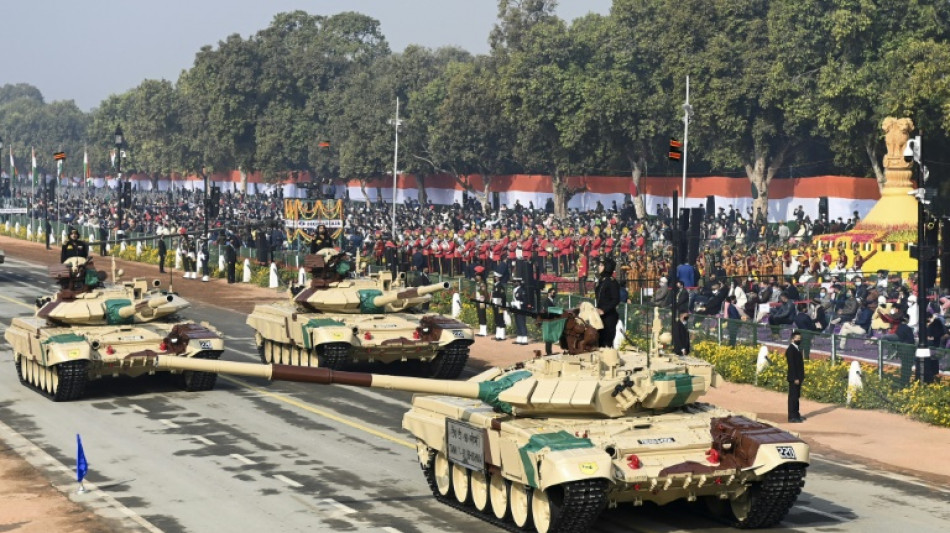
And following skirmish with China in 2020, Indian reinforcements to shore up its Himalayan border included Russian tanks and aircraft.
Russia "always remained immune to external pressure and supplied us when we needed it, and have not slipped," Nandan Unnikrishnan of the New Delhi-based Observer Research Foundation told AFP.
"The Ukraine war doesn't change our neighbourhood situation, so why should we even consider replacing our long-tested and trusted supplier without any practical replacement?" he said.
- Air, land and sea -
When the Soviet Union collapsed in 1991, 70-85 percent of the Indian military's hardware was Russian, and in recent years India has sourced more from elsewhere -- notably France, the US and Israel -- and made more itself.
But according to the Stockholm International Peace Research Institute, not only does Russia remain India's biggest supplier of major arms but New Delhi is also Moscow's largest customer in this field.
From 2017-21, India was the world's largest importer of major arms, and 46 percent of them were Russian. Some 28 percent of Russia's arms exports went to India, and account for the lion's share of the two countries' overall trade.
Almost all of India's estimated 3,500 battle tanks are Russian-made or designed -- built in India on license -- while the bulk of its combat aircraft are Sukhois and MiGs.
India's sole operational aircraft carrier is the refurbished Soviet-era Admiral Gorshkov, four of its 10 destroyers are Russian-origin, as are eight of its 14 non-nuclear-powered submarines.
India also has large Russian orders pending including a $5-billion deal for S-400 air defence systems -- the first deliveries began last year -- four frigates and one nuclear-powered submarine.
"With that kind of a dependency it is very difficult for India to take any other stand on Russia," Manoj Joshi, an author and former member of a government task force for reforms in national security told AFP.
But he said that the dependency doesn't end with buying equipment. For sometimes decades afterwards, it needs upgrades, maintenance, spares and other support from Russia.
India and Russia are also cooperating in defence, for example in making BrahMos cruise missiles, one of which India accidentally fired at Pakistan this month.
Russian kit is also relatively cheap, and Western countries are much more reluctant than Moscow to transfer technology to allow arms to be made in India, experts say.
"The US sells everything with an end-user condition and still won't sell us a certain class of weapons -- unlike Russia," said Joshi.
M.Ouellet--BTB