Canada's Arctic security moves to forefront after Russian invasion of Ukraine / Photo: ©

 Germany's dry rivers spark battle on engineering vs restoration
 Senators demand inquiry into conditions aboard USS Abraham Lincoln
 All Blacks' Proctor out of South Africa series, Mo'unga called up

 Bangladesh quick Hasan reduces Australia to 74-4 at lunch

 Seoul tech leads Asian stock gains as traders cheer US inflation
 Farage and Count Binface go head-to-head in snap UK poll
 Afghan students divided over smartphone ban at universities
 Japan go back to school for second Australia Test
 Matthew McConaughey on his sweet return to the big screen
 President's economic record on the line as Zambia votes

 Grieving Messi available for Miami in Leagues Cup clash

 Colombia enters 'final phase' of quake search as toll hits 265

 Father-figure Christie helps guide Kounta to European silver

 McIlroy returns to St. Jude to launch marathon PGA playoff push
 Guimaraes makes Arsenal debut in Como friendly

 Travis Kelce says wedding to Taylor Swift was 'best night of my life'

 US stocks mostly up after data shows slightly lower inflation in July
 Caracas protest denounces secrecy of Venezuela transition talks
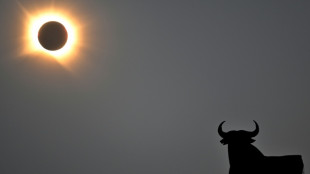
 Hudson-Smith regains Euro 400m title on home track
 Rob Reiner son denies grand jury murder charges
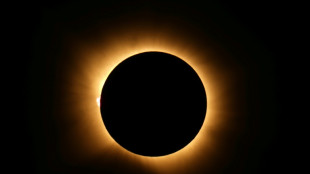 Spain darkens as solar eclipses races south from Arctic
 Skies darken as solar eclipse heads south from Arctic to Spain

 Protest denounces secrecy of Venezuela transition talks
 NBA's Los Angeles Lakers to be sold for reported $12.5 bn
 Lukaku joins Turkish side Fenerbahce from Napoli
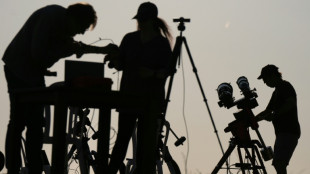
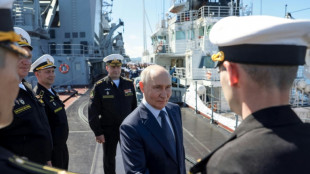
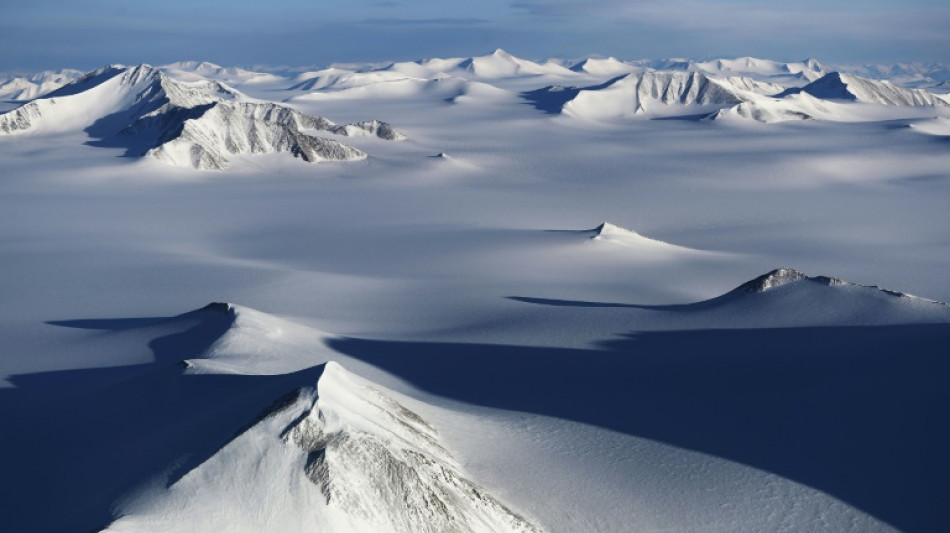
After the West broke off cooperation with Russia in the Arctic over its invasion of Ukraine, Canada is now scrambling to fortify defenses of what its top general called "NATO's northern flank."
Canada's chief of the defense staff, General Wayne Eyre, has warned that "much more effort" is needed to bolster domestic security with a strong "focus on the north."
Defense Minister Anita Anand, who is planning an Arctic trip soon, similarly vowed significant new military spending that would narrow the gap in Canada's two-percent-of-GDP pledge to NATO (currently 1.39 percent).
"As we're taking a look at what is happening in Ukraine, we're also having a very close look at what else Russia is doing in the world, and the far north is a key area of concern," Eyre told a security conference in Ottawa earlier this month.
He noted that Russia in the past decade has "reoccupied formerly abandoned Cold War bases" in the region, and said "it's not inconceivable that our sovereignty may be challenged."
The general and others downplayed the likelihood of Russia landing troops in Canada's Arctic, citing the harsh climate and 1,000 miles of sea ice between the two. Norway, which shares a small land border with Russia, should be more concerned.
Both nations along with the United States and other NATO allies held military drills this month in the north -– including bomber interceptions, mine-sweeping in waters off Alaska and landing paratroopers in the snow.
All agree that North America's Arctic defenses -- like the Cold War-era radar surveillance program known as the North Warning System (NWS) -- need upgrading to track more modern and faster aircraft and missiles.
Anand promised "a robust package to modernize" the NWS and other continental defenses, which analysts estimate will cost tens of billions of dollars and includes ice breakers, warships and a contract for 88 new fighter jets to be decided this year.
Foreign Minister Melanie Joly, after telling a Montreal forum on Monday that Ottawa "must better equip our soldiers," noted Germany's 100 billion euros ($112 billion) spending spree to modernise its armed forces in response to Russia's invasion of Ukraine.
- 'Head in the snow' -
According to Arctic expert Michael Byers at the University of British Columbia, defense spending has long been a third rail of Canadian politics.
Ottawa, he explained, "didn't feel any urgency" after the Cold War ended, which may have been justified "if you don't think that a nuclear armed power is going to invade a significant democracy."
Robert Huebert of the University of Calgary's Arctic Institute called it a "stick your head in the snow attitude."
But Russia's militarization of the Arctic and claims last year to parts of the resources-rich north that overlap with Canada and Denmark have pushed Arctic sovereignty to the forefront.
Byers opined that a troop invasion of the Canadian Arctic would be "completely irrational for Russia," noting that "it's a really hostile environment" and "a long way from Russia."
NATO, he said, should be more concerned about the large Russian navy presence in the Arctic, including the nuclear-powered ballistic missile submarines stationed in Murmansk, close to Russia's border with Norway.
"The threat is in Europe right now. It's not here," he said.
Huebert, however, said that along with using new hypersonic missiles in Ukraine, Russia has returned to "Cold War behaviours" such as air and sea incursions in "the sovereign waters of all northern states," including Canada's far north.
Earlier this month Canada, the United States, Norway, Iceland, Sweden, Denmark and Finland announced they would boycott meetings of the Arctic Council, which is currently chaired by Russia.
The Canadian Coast Guard has also stopped cooperating with Russia through the Arctic Coast Guard Forum.
University of Ottawa professor Mathieu Landriault suggested that the war in Ukraine has made Canadians more consenting to increased military spending to counter "a more aggressive Russia."
Going forward, he expects to see "two Arctics:" One where Russia collaborates with China to tap undersea energy and mineral resources and develop the Northern Sea Route for shipping, "and the seven others wanting nothing to do with Russia and cooperating amongst themselves."
That could lead to weaker overall environmental protections in the north, he said, and split indigenous populations with cultural and economic ties across Arctic borders such as the Saami in Scandinavia and Russia's Kola Peninsula.
"This will hurt them," he said.
C.Meier--BTB