Freud, a 'mad' president and a century of European diplomacy / Photo: ©

 Chelsea win as Bayern and Madrid draw in Women's Champions League
 Made with munitions from the Falklands War, a 'Chalice of Peace' for the pope
 Pioneering US labor leader Dolores Huerta dies at 96

 Italian PM slams 'shameful' release of alleged protest organiser
 Hollywood producer Kennedy to head LA28 Olympic ceremony plans
 Djokovic wins Basel opener to boost ATP Finals bid

 US Fed holds interest rates steady despite surging inflation
 Chiefs sign ex-Ravens kicker suspended over sex allegations
 Inglis and Carey put Australia in command of South Africa decider

 92-year-old US judge handling Maduro case dies

 Perez extends Cadillac deal to 2029
 Arab Israelis proud of high election turnout, uncertain for future
 Inglis, Carey put Australia in command of South Africa decider
 French firm Safran helps build aircraft wings of the future in UK factory

 Ceasefire in Russia-occupied Ukrainian city holds for second day
 Canada hikes rates to contain oil price surge caused by Iran war

 World Bank warns of worsening food insecurity as commodity prices soar

 Mona Lisa scrubbed from Syrian textbooks as critics slam conservative drift
 Bolsonaro flees Brazil for US after election defeat: AFP
 Brazil's Bolsonaros: between power, prison, and exile
 Israel president urges against new vote despite inconclusive result

 Eala recovers to move into Tokyo quarter-finals
 COPs 'bunch of baloney' says Panama as it vies to host nature summit
 Denmark mulls banning turbo chickens
 Nintendo producer 'all nervous' as Zelda classic remake hits shelves
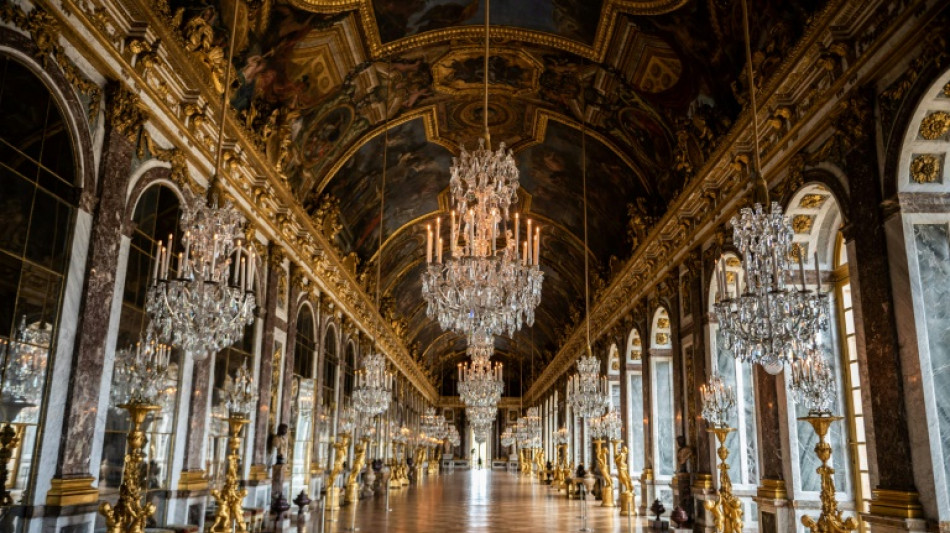
Finding a lost manuscript by Sigmund Freud has caused a French historian to revisit a key moment in European diplomacy 100 years ago that reverberates today as war returns to the continent.
"Le President est-il devenu fou?" (Has the president gone mad?) by Patrick Weil takes a fresh look at US president Woodrow Wilson (1913-21), who helped forge the Treaty of Versailles after World War I and tried to establish lasting peace through the creation of the League of Nations.
Wilson, of course, failed: the treaty's harsh conditions on Germany created resentment that helped fuel the rise of the Nazis.
Nor could he convince his colleagues in Washington to approve the treaty -- it was never ratified by the US, dooming the League of Nations at birth.
Back in the 1930s, Freud, the godfather of psychoanalysis, blamed Wilson's failure on messianic hubris, rooted in his repressed homosexuality and obsession with his father.
His text was not published until the 1960s, long after his death, and was rubbished by US reviewers, with The New Republic calling it either "a mischievous and preposterous joke... or else an awful and unrelenting slander upon a remarkably gifted American president".
But Weil says there may be something to Freud's critique.
- 'Hysteria' -
Whenever things went against Wilson, Weil writes, "he would plunge into hysteria", blaming everyone but himself.
Frequent minor strokes throughout Wilson's life may also have affected his sanity and undermined his ability to conclude the deal.
Certainly, many of his contemporaries, including British leader Winston Churchill and later US president Franklin Roosevelt, considered Wilson to be "crazy", Weil told AFP in an interview.
They kept that quiet, he said, because Wilson's reputation was important in building momentum behind the creation of the United Nations after World War II.
Weil uncovered Freud's original manuscript in an unmarked box in the archives of Yale University.
Freud had co-written his tract with a US diplomat, William Bullitt, and the original shows that some 300 changes were made by Bullitt before it was finally published in the 1960s, cutting many key psychological insights.
Weil uses his finding to help reassess the debate around the Treaty of Versailles -- a story with grim relevance now as the world seeks ways to negotiate with Russia.
"One can't help noticing how the personality of certain leaders plays a role in the dangers faced by the world -- today as much as yesterday," he said.
- 'NATO before the fact' -
France's prime minister in 1919, Georges Clemenceau, is often blamed for pushing too hard to punish Germany, wanting to crush any chance of its resurgence -- a move that spectacularly backfired.
But Weil puts a different spin on events, having dug up documents that show that France's primary aim was to win security guarantees from the US and Britain -- a sort of early form of NATO -- in case of future German aggression.
"It is NATO before the fact, and it is a French request to create it," Weil said.
Wilson's failure to see the importance of a defence pact -- or to convince his colleagues in Washington -- ultimately doomed Europe to more war, he argues.
"It was an obsession of Roosevelt (during World War II) not to commit the same mistakes," said Weil.
"What's important in today's context is that the leaders in 1945 had that experience of 1919. Churchill, Roosevelt -- they were there (at Versailles).
"They had that experience that today's leaders do not."
M.Odermatt--BTB