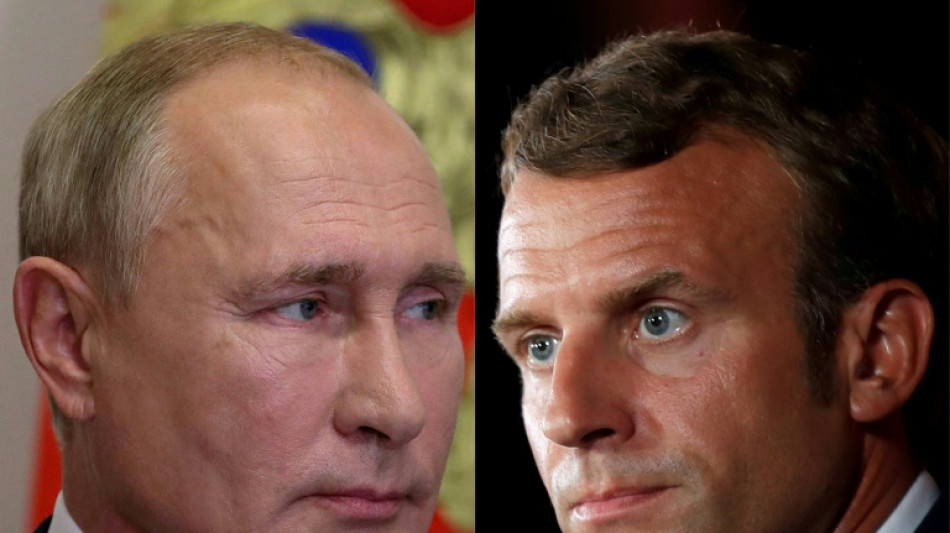
After 20 hours of talks, will Macron-Putin dialogue deliver? / Photo: ©

 Arteta coy over Lewis-Skelly's Arsenal future after 'emotional' celebration
 Romania shuts down nuclear plant as Danube drops
 German steel giant Thyssenkrupp weighs options as Rhine drops
 US ambassador denounces settler siege as Israel dispatches troops
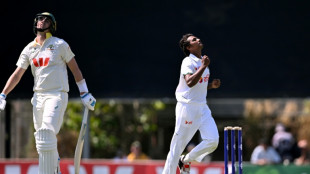
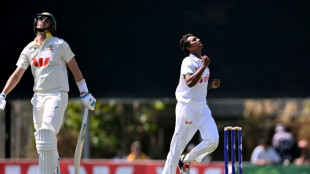 Hasan takes 6-55 as Bangladesh claim opening day of Australia Test

 Taiwan says AI agents used in cyberattacks targeting island
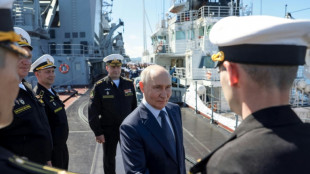 Japan protests Putin's first visit to disputed islands
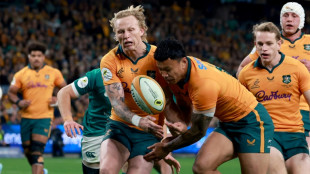 Kiss wants fit-again Wallabies playmaker Gordon to 'open up' Japan
 British eccentrics push humble garden shed to new heights
 Zambia votes with president's economic record on the line
 Germany's dry rivers spark battle on engineering vs restoration
 Senators demand inquiry into conditions aboard USS Abraham Lincoln
 All Blacks' Proctor out of South Africa series, Mo'unga called up
 Bangladesh quick Hasan reduces Australia to 74-4 at lunch
 Seoul tech leads Asian stock gains as traders cheer US inflation
 Farage and Count Binface go head-to-head in snap UK poll
 Afghan students divided over smartphone ban at universities
 Japan go back to school for second Australia Test
 Matthew McConaughey on his sweet return to the big screen

 President's economic record on the line as Zambia votes
 U.S. Polo Assn. Takes No. 1 Spot for All Sports Brands and Climbs to No. 22 Overall on License Global's 2026 'Top Global Licensors' Ranking
 Trump 'low-key' bets on economic pressure against Iran
 Pitch invaders take selfies with Fernandes during Man Utd friendly
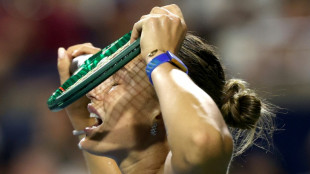 No-stress Sabalenka won't fret over lackluster 2026 results
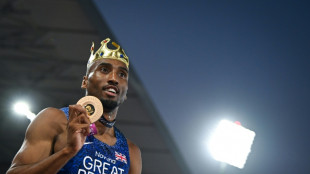 Hometown hero Hudson-Smith basks in Euro glory
The exchanges are tense, their views opposed, and the commitments made during their conversations rarely last long. But French President Emmanuel Macron believes his repeated calls with Russian counterpart Vladimir Putin are still worth it.
No leader has talked more with Putin over the last month than Macron, who has led diplomatic outreach to the Kremlin over the war in Ukraine on behalf of other Western allies and Ukrainian leader Volodymyr Zelensky.
Since flying to Moscow on February 7 for nearly six hours of face-to-face chat, Macron has held 10 separate phone calls: sometimes at his initiative, at others at Putin's.
In total, they have spent around 20 hours talking to each other in the last five weeks, according to a tally by AFP, giving the French leader a unique insight into Putin's state of mind, as well as his objectives.
"On his mindset, I think it's still the same: determined," an aide to Macron said on Saturday following their latest conversation, a joint initiative with German Chancellor Olaf Scholz.
"Did we detect a willingness to put an end to the war? The response is no."
The lack of major results from the exchanges -- either to avert the invasion, or reduce the suffering of Ukrainians since -- have raised questions about the purpose of the dialogue and why both men seem so invested in it.
- 'Not a sign of weakness' -
In off-the-record briefings organised by Macron's staff, officials stress that the "difficult" conversations serve as an opportunity for Macron to deliver warnings to Putin about fresh Western sanctions and "present him with options".
"It's obviously not a sign of indulgence or of weakness," the aide said after a call on March 3.
The 44-year-old French leader, who faces re-election next month, also sees his role as pushing the former KGB officer to face the truth.
During a March 3 call, when Putin referred to Zelensky's government in Ukraine as Nazis, Macron replied that it was "lies".
"Either you're telling yourself stories, or you're looking for a pretext. What you're saying does not conform with reality," he countered.
The fact that Putin continues to initiate calls "indicates one thing for me: it's that he is not ruling out a diplomatic solution", the aide said last weekend.
- 'Clinical' -
The Moscow talks in February and the subsequent calls -- averaging one every three days lately -- have made clear to Macron he is dealing with a different man to the one he last met in 2019, before Covid 19 upended the world.
"What he found at the Kremlin was a Putin who was more rigid and isolated, who has lapsed into a sort of ideological and security-first way of thinking," a French official said afterwards.
The 69-year-old Russian regularly submits Macron to lengthy historical lectures about what he perceives as disrespect from NATO and the West -- which he described recently as an "empire of lies".
Although Putin "sometimes shows signs of impatience", the picture that emerges of the conversations is one in which both men contradict each other, politely but firmly, amid long pauses for translations.
"President Putin has a way of talking that is very neutral and very clinical," the aide said of the atmosphere during the calls, which Macron takes in his office at the Elysee palace beneath a giant chandelier and gilded ceilings.
They use the informal "you" pronoun to address each other -- something usually reserved for friends and close contacts.
The Elysee has also played up the personal strain, with official pictures showing Macron at his desk looking pensive, unshaven and tired.
Polls suggest voters credit him for trying, with a surge in support over the last month making him the clear frontrunner for the presidential elections on April 10 and 24.
- 'Duplicity' -
The challenge for Macron remains transforming all the hours of back-and-forth into something tangible -- beyond simply improving his pre-election ratings.
He left the talks in Moscow -- held at a now famous six-metre (20-foot) table -- believing that Putin had committed not to escalate tensions and that he would re-engage in the so-called Minsk peace process with Ukraine.
Two weeks later during a late-night call, Macron thought he had secured an agreement from Putin to talk to US President Joe Biden -- only for Moscow to publicly deny any such plan the following morning.
Shortly after, Russian tanks were on the move.
"Yes, there was duplicity," Macron said bitterly in Brussels the day after the start of the invasion on February 24.
"Yes, there was a deliberate choice, in full conscience, by President Putin to wage war when we could still negotiate the peace."
In conversations since, Macron has pushed Putin to spare civilian targets and agree to a ceasefire and humanitarian corridors.
He was left complaining about his Russian counterpart's "moral and political cynicism" last week after Moscow finally proposed safe passages -- that would have led fleeing Ukrainians into Russia.
When pressed over civilian casualties, Putin issues point-blank denials.
While at the Kremlin, Macron was asked why he continued to believe that he could find common ground with a leader who has grown increasingly hostile to the West over his 22 years in power.
He admitted it was "partly thankless" but suggested he was serving a greater cause: making the European Union the master of its own destiny, discussing its security with Russia directly, rather than leaving the job to Washington.
"I have a very simple conviction: if we don't talk to Russia, do we increase our ability to create peace? No. And to whom do we leave this job? To others," he explained.
M.Odermatt--BTB