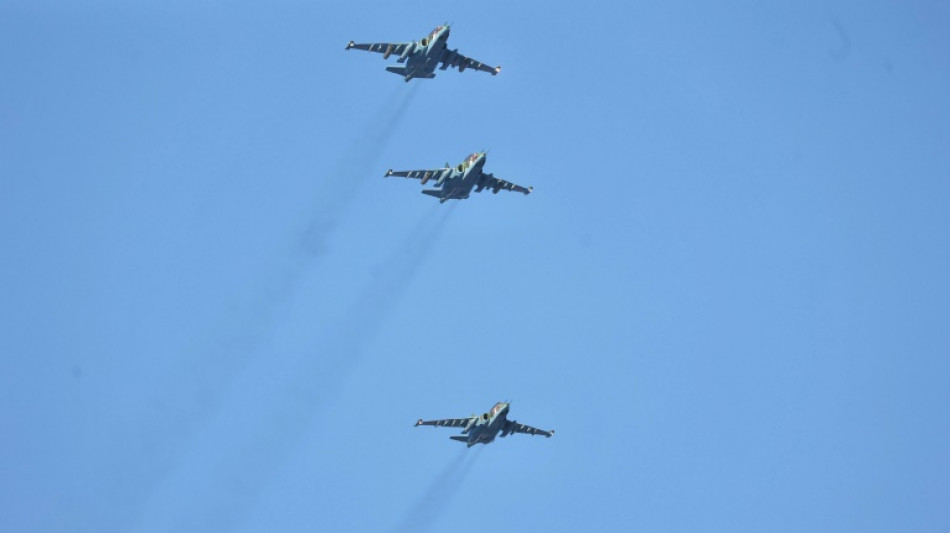
Could a no-fly zone be implemented in Ukraine? / Photo: ©

 Airbus aims for record deliveries despite disappointing quarter

 Cuba wins UN vote against US embargo with weakest backing in 30 years

 Real Madrid, La Liga apology over Mbappe shows power of Chinese market

 From Gaza to Ramallah, Palestinians see little hope in Israeli vote

 US labor leader Dolores Huerta dead: family

 Investors turn cautious ahead of tech results, Fed update on rates

 'Cruise for life' strands passengers in Cambodia as operator goes bust

 Bolsonaro flees Brazil for US after election defeat

 A throne on wheels, popemobiles star in new Vatican show

 Spain high-speed train crash kills 68, injures over 100

 UK woman drugged by husband tells rape trial she woke up bound

 Clean-up starts as Serbian students movement prepares to govern

 Flavio Bolsonaro: right-wing heir falls from presidential hopeful to exile

 UK budget lifts bank tax to offset surging energy bills

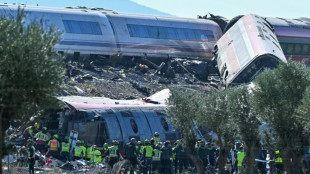 Spain high-speed train collision kills 64, injures over 100

 Brazil's Bolsonaro lands in Florida after election defeat: AFP

 Russia woos African leaders at Moscow summit

 Local ceasefire in Russia-occupied Ukrainian city holds for second day

 Odegaard urges Arsenal to move on after Fleetwood upset

 Japan, Germany leaders target closer ties on critical minerals

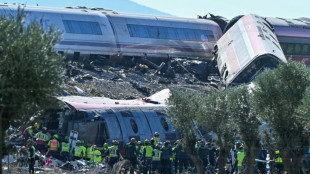 Spain high-speed train collision kills 31, injures 80

 Turkey hosted Libya east-west reunification talks last week

 Spain high-speed train collision kills 30

 Plane reportedly carrying Brazil's Bolsonaro departs Ecuador

 Springboks pick six uncapped players for Nations Championship

Ukrainian President Volodymyr Zelensky again urged NATO Monday to impose a no-fly zone over his country, saying it would protect not only Ukraine but the countries of the Atlantic alliance from Russian air attacks.
But the United States and NATO allies refused for the same reasons they have been citing since Moscow invaded Ukraine on February 24: that any attempt to establish a no-fly zone would place them in direct conflict with nuclear-armed Russia and spark a wider, more dangerous conflict.
Here is what you need to know about no-fly zones, or NFZs.
- What is a no-fly zone? -
It is a prohibition on all or certain types of aircraft flying through a designated airspace, over a country or region.
NFZs require one or more parties being willing to enforce them -- that is, being ready and able to shoot down any aircraft violating the space.
They have been used in attempts to limit an ongoing conflict on the ground and to protect certain populations. But they are costly, requiring constant air patrolling and monitoring.
From 1991 to 2003 the US, France and Britain enforced no-fly zones over Iraq in the wake of the 1991 Gulf War, to protect Shiite populations in the south and minority Kurds in the north from air attacks by the Saddam Hussein's Sunni government.
From 1993-1995 NATO enforced a UN-declared NFZ over Bosnia.
And in 2011 NATO also enforced a UN-approved NFZ over Libya during that country's civil war.
- What would a NFZ do in Ukraine? -
A full NFZ by NATO would mean that Russia's superior air power could not be deployed against Ukrainians -- but also that the Kyiv would not be able to fly its fighter jets and significantly effective attack drones against the Russians.
It could allow civilians, who are becoming casualties at a staggering rate, to flee the conflict more safely.
- So why not do it? -
US and NATO officials say flatly that for a Ukraine NFZ to work their own jets would have to be prepared to shoot down any Russian violators -- effectively making them direct participants in the war.
"If we did that, we'll end up with something that could end in a full-fledged war in Europe, involving many more countries and causing much more human suffering. So that's the reason why we make this painful decision," NATO Secretary General Jens Stoltenberg said on March 4.
A day later, Russian President Vladimir Putin confirmed those stakes, saying any country trying to enforce a Ukraine NFZ "will be considered by us as participation in an armed conflict by that country."
- What about a 'limited' NFZ? -
Last week a group of US defense and foreign policy experts released a letter calling for a "limited" NATO-enforced NFZ over Ukraine to establish humanitarian corridors in which civilians were protected from aerial bombardment.
But critics said that would not limit the risk of conflict with Russia, as NATO aircraft would still have to be willing to shoot down Russian aircraft.
- How much impact would one have? -
So far the war in Ukraine has not depended heavily on air power, on either side. In its invasion Russia has relied mostly on long-range missiles and surface artillery fire to attack Ukrainian targets. Fighting back, the Ukrainians have depended largely on ground fire.
A US defense official pointed to Russia's missile attack Sunday on a base in western Ukraine as an example. The Russians fired about two dozen cruise missiles from aircraft flying over Russian territory at the time.
"A no-fly zone inside Ukraine would have had no effect on this particular set of strikes," the official said Monday.
It "would not stop all of the air activity that is going on," the official said.
W.Lapointe--BTB