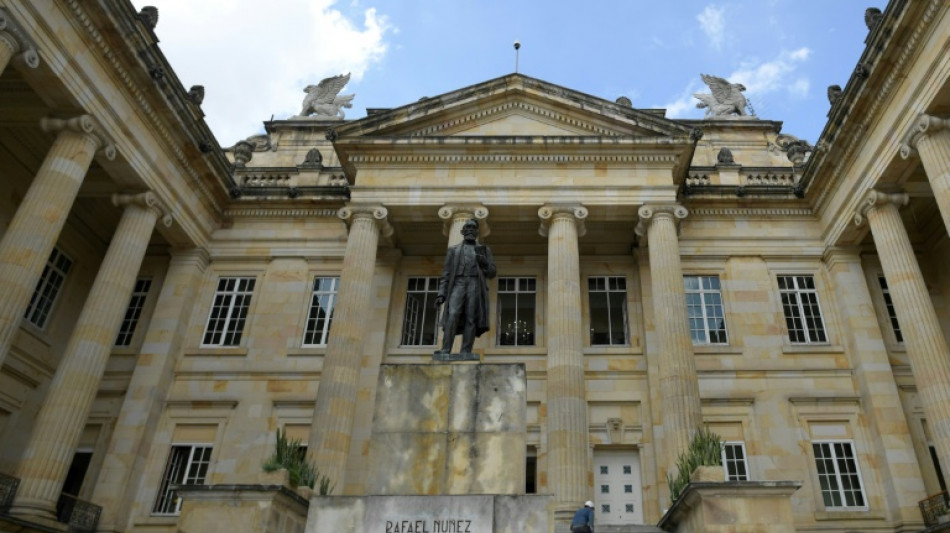
Colombians vote to short-list presidential contenders / Photo: ©

 Twitch sparks gamers' wrath with Amazon AI sharing deal

 Blaze forces families to abandon Turkish tour boat
 'If you can, move!' say Rome's viral dancing seniors

 Zambia voters weigh Hichilema's economic record

 SBCFX to Showcase Trading Innovation, Regional Growth Strategy, and Future Vision at iFX EXPO Asia 2026

 Hodgkinson sets up Werro showdown after Euro 800m drama
 'How many will die?': the mysterious ailment killing Kenyan elephants
 Arteta coy over Lewis-Skelly's Arsenal future after 'emotional' celebration
 Romania shuts down nuclear plant as Danube drops
 German steel giant Thyssenkrupp weighs options as Rhine drops
 US ambassador denounces settler siege as Israel dispatches troops

 Hasan takes 6-55 as Bangladesh claim opening day of Australia Test

 Taiwan says AI agents used in cyberattacks targeting island
 Japan protests Putin's first visit to disputed islands

 Kiss wants fit-again Wallabies playmaker Gordon to 'open up' Japan

 British eccentrics push humble garden shed to new heights

 Zambia votes with president's economic record on the line

 Germany's dry rivers spark battle on engineering vs restoration
 Senators demand inquiry into conditions aboard USS Abraham Lincoln

 All Blacks' Proctor out of South Africa series, Mo'unga called up

 Bangladesh quick Hasan reduces Australia to 74-4 at lunch
 Seoul tech leads Asian stock gains as traders cheer US inflation
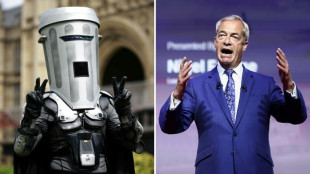 Farage and Count Binface go head-to-head in snap UK poll
 Afghan students divided over smartphone ban at universities
 Japan go back to school for second Australia Test
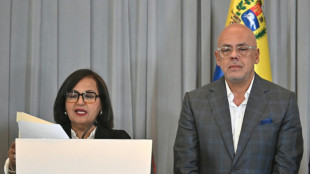
Colombians vote Sunday to draw up a shortlist of candidates for presidential elections polls suggest may yield the country's first-ever leftist leader.
Nearly 39 million of Colombia's 50 million inhabitants are eligible to cast their ballot in a complex but critical election in a country plagued by violence and growing poverty levels.
On one part of the ballot, voters will determine the composition of the Senate and House of Representatives, currently in the hands of right-wing parties.
But all eyes will really be on the outcome of the presidential primaries -- called inter-party "consultations" -- happening alongside the legislative vote.
In a country with a history of political violence and voter turnout traditionally below 50 percent, outgoing President Ivan Duque has promised safety "guarantees" for the non-compulsory vote.
It comes with the president and legislature both at rock-bottom levels of public opinion.
Colombia has always been ruled by the political right, but polls show that former guerrilla, ex-Bogota mayor and senator Gustavo Petro, 61, on the left of the political spectrum, stands a real chance of winning.
Also in the running is former FARC hostage Ingrid Betancourt, who said in January she would vie to represent centrist parties as an alternative to both the ruling right and Petro.
Sunday's process must yield three presidential contenders from 15 candidates vying to represent groups of politically-aligned parties -- one each for the left, right and center.
Three others have already been chosen by their respective groupings.
Six finalists will face off in a first round of presidential elections on May 29, which will be followed by a runoff on June 19 if no one wins an outright majority.
- First leftist president? -
Petro enjoys polled support of about 45 percent -- more than any other candidate in a country traditionally distrustful of the left.
That distrust is widely associated with the now defunct Revolutionary Armed Forces of Colombia (FARC) and other rebel groups that fought the government in a near six-decade civil conflict.
"When the government is unpopular, there is alternation and the opposition wins, but in Colombia, this is new: the left has never really been in a position to win an election," said analyst Yann Basset of the Rosario University in Bogota.
In 2018, Petro lost the presidential race to Duque, who is leaving office as his country's most unpopular president in history following a year marked by social unrest and a violent police crackdown that drew international condemnation.
The right he represents is divided and has no clear frontrunner.
It is also Betancourt's second presidential run: she was abducted 20 years ago while campaigning and held captive in the jungle for more than six years.
If she goes through, her vice presidential running mate will be retired colonel Jose Luis Esparza, who rescued Betancourt from her FARC captors.
Colombian presidents serve a non-renewable four-year term.
- Economy dominates -
Duque's successor faces a multitude of challenges, not least of which is a new cycle of murders and kidnappings as violence has surged despite a 2016 peace deal that disarmed the FARC and officially ended the civil war.
Despite the pact, fighters of the leftist National Liberation Army (ELN) still battle dissidents of the disbanded FARC, paramilitary forces and drug cartels for territory, resources and smuggling routes.
Colombia is the world's largest cocaine exporter.
The new president will also have to contend with an economy hard hit by the fallout from the coronavirus pandemic.
I.Meyer--BTB