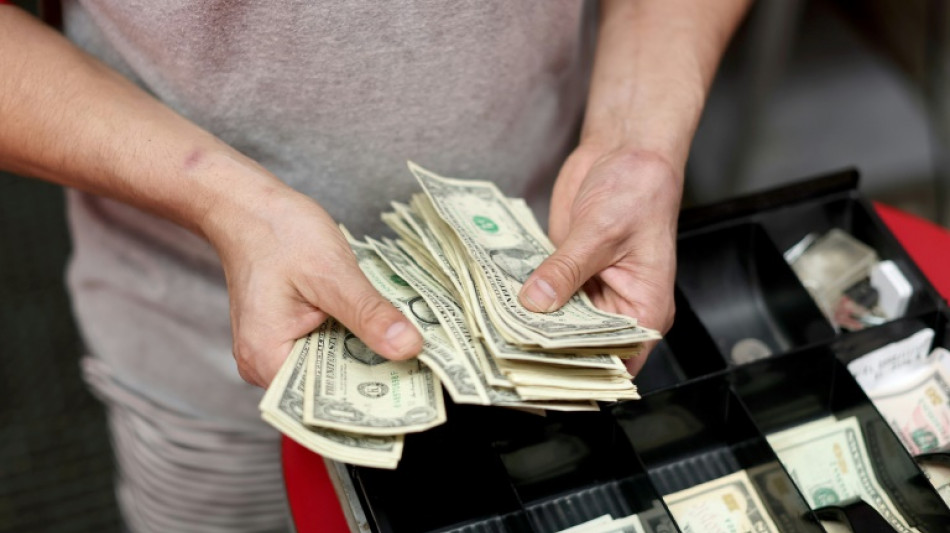
US inflation spike also due to generous pandemic stimulus / Photo: ©

 Lula win rattles Brazil markets over spending spree fears

 De la Fuente wins men's Ballon d'Or coach of year

 Trump slams 'rigged' Brazil election after ally loses to leftist Lula

 Nadal returns for Vegas hardcourt event

 Fainga'anuku named as loose forward for All Blacks northern tour

 Anthropic points to AI dangers, soaring sales in IPO filing

 Sinner to play rescheduled Saudi Six Kings in December

 Brazilian lawmaker Andre Janones, Lula's social media 'general'

 Swiss Ebola patient repatriated from Nigeria

 Nations far from a deal as UN nature talks enter final stretch

 Brazil markets battered, tech in focus elsewhere

 French court adjourns trial over 2020 death of delivery driver

 Serbian student movement eyes power after election triumph

 Machado ready to meet Venezuela leader after shock return

 Lula celebrates election win as Brazil markets tumble

 France's Macron accuses social media of sowing discord ahead of election

 Anthropic unveils IPO filing showing soaring sales and AI risks

 US singer Chris Brown avoids jail over London nightclub brawl

 US singer Chris Brown avoids jail over UK nightclub brawl

 Man Utd crisis deepens as Carrick faces axe
 Serbian student movement eyes power after resounding snap poll victory
 Eala breezes past world number 411 in Tokyo opener
 Swedish Centre Party leader says government coalition talks failed

 Barca's big-game defeats pose familiar questions
 Russia says open to mini Ukraine ceasefires, but no let up in war
President Joe Biden blames global supply snarls for the wave of price increases hitting US consumers and businesses, but the trillions of dollars injected into the economy during the pandemic also share responsibility.
The Covid-19 crisis disrupted manufacturing worldwide and caused shipping snags, creating global shortages of key materials that combined to push prices higher.
Amid a rapid recovery from the pandemic, US consumer prices soared seven percent last year, the highest in nearly four decades.
"Inflation has everything to do with the supply chain," Biden said during his lengthy press conference Wednesday.
But many economists and Biden's Republican opposition say massive federal stimulus and new spending also bear some of the blame for the inflation wave -- which the president's critics have labeled "Bidenflation."
"The last year, the glut of federal dollars that's been pumped into our economy, has fueled the surge in prices," said Stephanie Bice, a Republican lawmaker from Oklahoma.
Not long after he took office one year ago, Biden pushed a $1.9 trillion American Rescue Plan through Congress, the third pandemic aid program, despite overwhelming Republican opposition.
- Should have been 'smaller' -
Some economists say the package should have been more compact and targeted.
"My view last year was that the stimulus bill was needed but should be smaller," said Harvard economics professor Jason Furman, who was an adviser to former president Barack Obama.
"In retrospect, rather than being $2 trillion, it could have been $1 trillion, Furman told AFP.
Another Democratic economist, former US Treasury secretary Larry Summers, long warned that the additional stimulus though "admirably ambitious," could "set off inflationary pressures of a kind we have not seen in a generation."
However, current Treasury Secretary Janet Yellen said Thursday she expects price pressures to recede, and inflation to fall back close to two percent by the end of 2022, as supply issues ease and the Federal Reserve raises borrowing rates.
"If we are successful in controlling the pandemic I expect inflation to diminish over the course of the year and hopefully to revert to normal levels by the end of the year," Yellen said on CNBC.
But she noted that the Federal Reserve has a role to play and "needs to recalibrate monetary policy to facilitate those adjustments."
The Fed is expected to lift the benchmark borrowing rate off zero in March and hike as many as four times this year to contain inflation.
- 'Direct consequence' -
The pandemic inflation wave is not unique to the United States, but other major economies have seen more modest price increases.
The eurozone also saw record inflation, but the increase was only five percent, according to official data, while Britain saw a 30-year high of 5.4 percent.
While rising oil prices and supply chain problems are common issues, "the United States has done much more to give money to households," Furman said.
"That has led both to faster GDP growth in the United States, and also to faster inflation in the United States."
OECD chief economist Laurence Boone underlined the differing causes of rising prices on each side of the Atlantic.
"Inflation in the US is to a significant extent a direct consequence of the support to income, combined with inelastic or distorted supply," Boone said Monday at a Eurogroup meeting.
"The largest driver of inflation in the euro area is energy prices."
While European governments aimed to keep workers in their jobs during the pandemic shutdowns, Washington provided aid to workers laid off by their employers.
From March 2020 to March 2021, about $5 trillion -- bigger than the German economy -- was paid to small American businesses and households, through direct payments, generous unemployment benefits and tax credits for families with children, fueling strong consumption in the world's largest economy.
L.Dubois--BTB