Previous wars point to Putin's tactics in Ukraine / Photo: ©

 Reigning champ Knicks earn first win against Pistons

 Runners swap streets for shopping malls as haze chokes Singapore
 Billionaire Ambani's Jio to debut after record India IPO
 UK set for cautious budget as borrowing costs climb
 Anthropic's record IPO faces some big questions

 US Fed expected to hold rates steady ahead of key midterm elections

 Can this Latin Grammy-winner help Democrats win back Congress?
 Tuvalu has 'limited' power to halt its fossil fuel investments: NZ govt papers seen by AFP
 Palestinian activist Khalil returns to Columbia after US detention

 Trump drastically loosens oil and gas methane rules

 French Senate weighs bill to make protesters pay for unrest damage
 'A very sad day': Arteta despair as Arsenal stunned by Fleetwood
 Charles tackles thorny legacy of slavery on Caribbean trip

 Former Grand Slam winner Wawrinka ends tennis career

 Brazil's Flavio Bolsonaro flees to US after election loss
 'Faerie' nights: 'ACOTAR' fans finally get their book
 American woman convicted of getting military training from Islamic State

 Israel opposition holds narrow edge over Netanyahu in first projections

 Floriani hits maiden goal as Lazio go top
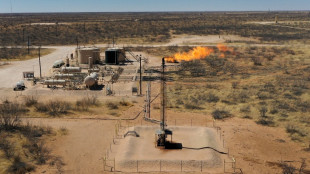 Trump set to drastically loosen oil and gas sector's methane rules

 Storied Paris department store seeks bankruptcy protection
 Xhaka, Embolo can return to Swiss squad after fake Covid docs affair
 Allegri suspended for two Serie A games after red card
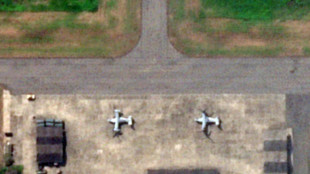 Flight data, satellite images reveal growing US role at Ecuador base
 McInnes feels 'guilt' ahead of Hearts return with Rangers
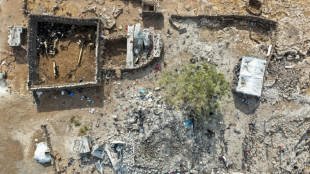
From wars in Chechnya to Syria, Vladimir Putin has overseen military campaigns that have inflicted vast and often indiscriminate damage on civilian infrastructure, raising fears he might repeat the tactics in Ukraine, observers say.
With his latest invasion seen by Western officials as going more slowly than expected, they see him turning increasingly to the use of artillery and missile strikes that, if continued, will lay waste to residential areas.
Putin's more than twenty-year career at the top of Russian politics was founded on his ruthlessness in military affairs.
Back in 1999, he was a surprise nomination for prime minister by then ailing president Boris Yeltsin whose popularity had been sapped by the country's economic woes, corruption and a bloody separatist war in the region of Chechnya.
One of Putin's first major acts as premier was to oversee a whole-scale offensive against the rebels in the breakaway Muslim-majority region in the far south-east.
Although he denied that a ground invasion was being prepared, tens of thousands of troops were ordered into Chechnya along with an aerial and artillery bombardment that reduced the capital Grozny to rubble.
"Putin behaved like a political kamikaze, throwing his entire political capital into the war, burning it to the ground," Yeltsin later wrote in his memoirs.
Grozny, already damaged during what was known as the First Chechen War in 1994-96, was described by the United Nations as the most destroyed city in the world following this second conflict from 1999.
But the fighting, reported by state media under tightly controlled conditions, turned Putin from a relative unknown to a favourite for the presidential election the following year which he went on to win.
- Syrian action -
After the invasion of neighbouring Georgia in 2008, which saw Russian troops easily overpower their badly equipped rivals, Putin ordered Russian troops into Syria in 2015 in support of Bashar al-Assad's regime.
The move, which caught the West by surprise, saw Russian warplanes play a central role in a bombing blitz against rebels that devastated Syrian cities, most notably during the siege of Aleppo in 2016.
"Aleppo is now a synonym for hell," then UN chief Ban Ki-moon said in December that year after a blocade trapped tens of thousands in the city which was pummelled with artillery and air strikes.
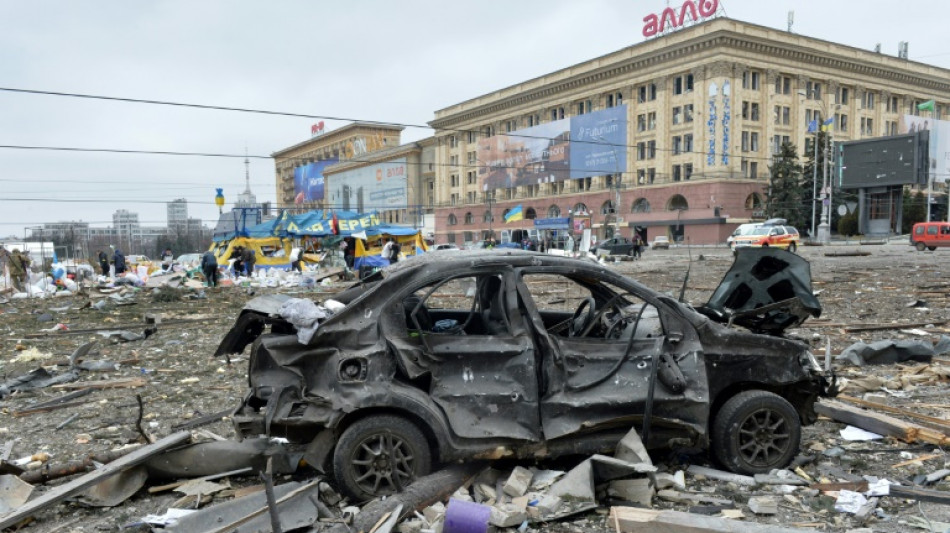
Charles Lister, an expert on the Syrian conflict at the Middle East Institute, wrote on Twitter this week that images of the shelling of the Ukrainian city of Kharkiv were "like Aleppo all over again".
Elie Tenembaum, a security expert at the French Institute of International Relations (IFRI), said that Putin had in fact initially attempted different tactics in Ukraine.
Apparently anticipating little resistance, air-borne special forces were landed near Kyiv last week in an attempted "thunder run" to take out the government, but were quickly killed or captured.
"It didn't work. They were up against too great a resistance, so what we're seeing now is a return to fundamentals," Tenembaum told AFP.
"Their main firepower is unguided munitions which risk devastating Ukrainian forces while causing very, very large numbers of civilian casualties which will increase the exodus (of refugees)," he added.
Images coming out of the country from Ukraine's second-city of Kharkiv, the southern port of Kherson and the suburbs of Kyiv showed damage to apartment blocks, schools, university buildings or government offices.
A suspected cruise missile exploded in the main square of Kharkiv on Tuesday.
"I don't see how Putin can climb down with dignity," warned Eliot A. Cohen, a security analyst at the Washington-based Center for Strategic and International Studies (CSIS) in Washington. "He will continue to double down, which will mean more destruction and suffering.
- War crimes? -
Critics of the Russian leader have long warned that he has been emboldened by previous operations which have gone unchallenged.
Russian chess master and opposition figure Garry Kasparov told Times Radio in London this week that "war crimes on an industrial scale" is "not new" for Putin.
The 69-year-old leader has called Russia's invasion a "special military operation" and said it was justified to defend Moscow-backed separatists in eastern Ukraine as well as to "de-nazify" the country which he claims is under far-right control.
Rights groups such as Amnesty International as well as online investigators that gather videos shot on the ground have begun safeguarding evidence they hope one day might lead to prosecutions.
Amnesty said it was "documenting the escalation in violations of humanitarian and human rights law, including deaths of civilians resulting from indiscriminate attacks on civilian areas and infrastructure."
M.Ouellet--BTB