US downplays Putin nuclear mobilization / Photo: ©

 UK set for cautious budget as borrowing costs climb

 Anthropic's record IPO faces some big questions

 US Fed expected to hold rates steady ahead of key midterm elections

 Can this Latin Grammy-winner help Democrats win back Congress?

 Tuvalu has 'limited' power to halt its fossil fuel investments: NZ govt papers seen by AFP

 Palestinian activist Khalil returns to Columbia after US detention

 Trump drastically loosens oil and gas methane rules

 French Senate weighs bill to make protesters pay for unrest damage

 'A very sad day': Arteta despair as Arsenal stunned by Fleetwood

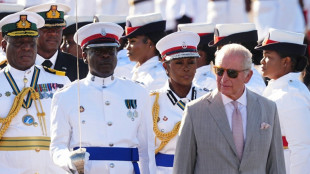 Charles tackles thorny legacy of slavery on Caribbean trip

 Former Grand Slam winner Wawrinka ends tennis career

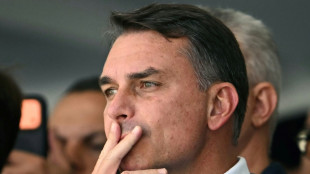 Brazil's Flavio Bolsonaro flees to US after election loss
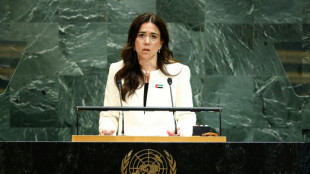
 'Faerie' nights: 'ACOTAR' fans finally get their book

 American woman convicted of getting military training from Islamic State

 Israel opposition holds narrow edge over Netanyahu in first projections

 Floriani hits maiden goal as Lazio go top

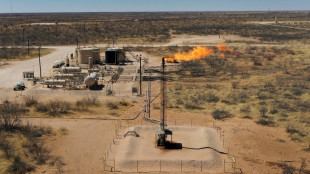 Trump set to drastically loosen oil and gas sector's methane rules

 Storied Paris department store seeks bankruptcy protection
 Xhaka, Embolo can return to Swiss squad after fake Covid docs affair
 Allegri suspended for two Serie A games after red card
 Flight data, satellite images reveal growing US role at Ecuador base
 McInnes feels 'guilt' ahead of Hearts return with Rangers

 Brazil's Lula turns 81, vows to work '24 hours a day'

 Boeing releases cautious growth plan as shares fall sharply

 Exiled Russian dissident Navalnaya warns dictators becoming 'more cunning'

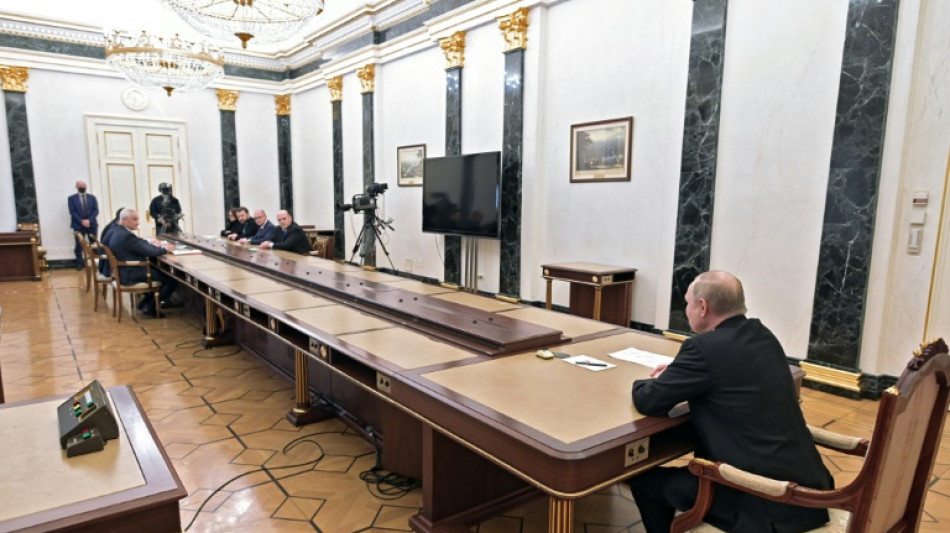
President Joe Biden and other top US officials played down the threat of Russia's "dangerous" nuclear mobilization Monday as the war in Ukraine intensified with more arms being sent to Kyiv by the West.
Asked if Americans should be worried about nuclear war after President Vladimir Putin said he was putting his strategic forces on alert, Biden gave a calm "no" in response.
State Department spokesman Ned Price said Washington sees "no reason" to change the alert levels of the US nuclear force, and a senior defense official said the Pentagon had not seen any palpable shift by the Russians despite Putin's Sunday announcement.
The Pentagon continues to "review and analyze and monitor" Russia's posture, said Defense Department spokesman John Kirby.
Secretary of Defense Lloyd Austin "is comfortable with the strategic deterrence posture of the United States and our ability to defend the homeland," Kirby told reporters.
- 'Provocative rhetoric' -
On Sunday, four days after Moscow launched the invasion of Ukraine, Putin announced that he had ordered his military chiefs "to put the deterrence forces of the Russian army into a special mode of combat service," using a reference to the country's massive nuclear weapons infrastructure.
US officials called the order "dangerous" and "escalatory."
But on Monday officials at the US State and Defense Departments said they were still trying to determine just what action was being taken in response to the order.
"This sort of provocative rhetoric ... is dangerous, adds to the risk of miscalculation, (and) should be avoided," Price said.
"We have long agreed -- the United States and the Russian Federation -- that a nuclear use would have devastating, devastating consequences," said Price.
- Russians slowed, not stopped -
One Monday Biden hosted a video conference with allies and partners supporting Ukraine in its fight against what the White House called "Russia's unjustified and unprovoked war."
In the secure meeting, the group discussed "coordinated efforts to impose severe costs and consequences to hold Russia accountable" while trying to maintain global economic stability, including keeping energy prices down, the White House said.
The US and NATO allies continued to ship in to Ukraine munitions that Price said would help them battle both Russian armored vehicles and air power.
He declined to confirm a report that Washington, following Germany's example, was delivering shoulder-mounted Stinger missiles that can bring down helicopters and slower-moving jets, after denying them to the Ukrainians for months.
In an assessment of the progress of Russian forces, Pentagon spokesman Kirby said fuel shortages, other logistical issues, and unexpectedly stiff resistance from Ukraine's military had significantly slowed the Russian advance.
"It's clear the Russians had not made the progress that they wanted to make by day five," said Kirby.
"They have faced setbacks. And they have faced resistance," Kirby told reporters.
Nevertheless, he said, even if they have been slowed the Russians have an overwhelming force -- 25 percent of which remains just outside Ukraine poised to move -- that is determined to seize key cities and oust the Ukrainian government.
"Make no mistake, Mr Putin still has at his disposal significant combat power. He hasn't moved all of it into Ukraine," Kirby said.
"They have suffered setbacks, but I don't think we can just assume that they're going to stay set back."
"They continue to want to move on Kyiv, to capture Kyiv," he said.
G.Schulte--BTB