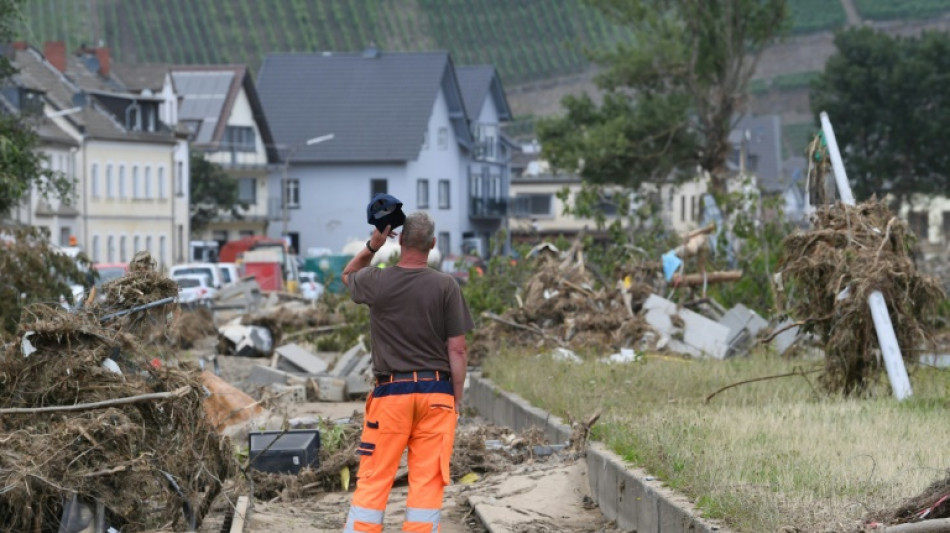
From bad to worse: key IPCC findings on climate impacts / Photo: ©

 UK set for cautious budget as borrowing costs climb
 Anthropic's record IPO faces some big questions

 US Fed expected to hold rates steady ahead of key midterm elections

 Can this Latin Grammy-winner help Democrats win back Congress?

 Tuvalu has 'limited' power to halt its fossil fuel investments: NZ govt papers seen by AFP
 Palestinian activist Khalil returns to Columbia after US detention

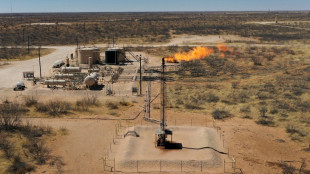 Trump drastically loosens oil and gas methane rules

 French Senate weighs bill to make protesters pay for unrest damage
 'A very sad day': Arteta despair as Arsenal stunned by Fleetwood
 Charles tackles thorny legacy of slavery on Caribbean trip

 Former Grand Slam winner Wawrinka ends tennis career

 Brazil's Flavio Bolsonaro flees to US after election loss
 'Faerie' nights: 'ACOTAR' fans finally get their book

 American woman convicted of getting military training from Islamic State

 Israel opposition holds narrow edge over Netanyahu in first projections

 Floriani hits maiden goal as Lazio go top
 Trump set to drastically loosen oil and gas sector's methane rules

 Storied Paris department store seeks bankruptcy protection

 Xhaka, Embolo can return to Swiss squad after fake Covid docs affair

 Allegri suspended for two Serie A games after red card

 Flight data, satellite images reveal growing US role at Ecuador base
 McInnes feels 'guilt' ahead of Hearts return with Rangers

 Brazil's Lula turns 81, vows to work '24 hours a day'

 Boeing releases cautious growth plan as shares fall sharply
 Exiled Russian dissident Navalnaya warns dictators becoming 'more cunning'
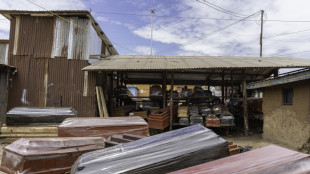
With nearly half the world population "highly vulnerable" to severe climate shocks and nature facing in some cases irreversible threats, UN experts unveiled Monday a harrowing picture of global warming impacts.
Here is a rundown on some of the major findings in the Intergovernmental Panel on Climate Change's report from the key Summary for Policymakers:
- A here-&-now reality -
Severe climate impacts -- once seen as a problem on the horizon -- have become a here-and-now reality.
Global warming has already contributed to species decline and extinction; an increase in vector-borne disease; more deaths due to heat and drought; reduced yields in staple crops; water scarcity; and a decline in fisheries and aquaculture.
Climate change has adversely affected physical health worldwide, and mental health in regions where data is available. Even as needs increase, health services have been disrupted by extreme events such as flooding.
The rise in weather and climate extremes has already led to "irreversible impacts" in both human society and the natural world, the report concludes.
And it makes clear that this is only the beginning.
Impacts will intensify with every fraction of a degree of warming.
At 1.5 degrees Celsius above preindustrial temperatures, 14 percent of terrestrial species will face an extinction risk.
Meanwhile, billions more people will be exposed to dengue fever, and climate-driven extreme events "will significantly increase ill health and premature deaths".
- High tide = high risk -
No matter how quickly carbon pollution driving global warming is drawn down, a billion people will be at risk from coastal climate hazards such as increasingly powerful storms amplified by rising seas.
The population exposed to once-a-century coastal flooding will double if oceans rise 75 centimetres (30 inches), well within the range of 2100 projections. Currently, some 900 million people live within 10 metres (33 feet) of sea level.
By 2100, the value of global assets within future 1-in-100-year coastal floodplains will be about $10 trillion in a moderate greenhouse gas emissions scenario.
- 1.5C overshoot (not OK) -
In the first instalment of its trilogy of reports, the IPCC's August 2021 assessment on physical science kept alive the Paris Agreement goal of capping global warming at 1.5C.
But even then, it said temperatures would temporarily exceed that threshold, potentially within a decade.
In its latest report the IPCC outlines the stiff penalty involved in this so-called "overshoot".
Additional warming above 1.5C "will result in irreversible impacts" on ecosystems such as coral reefs, mountain glaciers and ice sheets with enough frozen water to lift ocean tens of metres.
Permafrost stocked with twice the carbon in the atmosphere could become destabilised.
"The risk of severe impacts increases with every additional increment of global warming during overshoot," the IPCC says with "high confidence".
- 'Adapt or die' -
Adaptation barely figured in the IPCC's equivalent report from 2007. By comparison, the new assessment -- the sixth since 1990 -- highlights the need to cope with unavoidable climate impacts on almost every page.
Overall, the IPCC warns, global warming is outpacing our preparations for a climate-addled world: "At current rates of adaptation planning and implementation, the adaptation gap will continue to grow."
Whether it's reducing food waste or promoting sustainable farming; restoring protective mangrove forests or building sea dams; planting urban green corridors or installing air conditioners -- the search for ways to live with climate change has become urgent.
- 'Maladaptation' & trade-offs -
The IPCC also highlights the dangers of getting it wrong at a time when there's no margin for error.
"There is increased evidence of maladaptation across many sectors and regions," the report cautions.
Building a seawall to protect against storm surges made more destructive by sea level rise, for example, may result in further development in precisely the areas most exposed to danger, creating "lock-ins" and increased exposure over the long-term.
- Tipping points & compound impacts -
The report trains a spotlight on irreversible and potentially catastrophic changes in the climate system known as tipping points that would be triggered at different thresholds of global warming.
These include the melting of ice sheets atop Greenland and the West Antarctic, which have enough frozen water to lift oceans 13 metres.
In a more immediate future, some regions -- north-eastern Brazil, Southeast Asia, the Mediterranean, central China -- and coastlines almost everywhere could be battered by multiple climate calamities: drought, heatwaves, cyclones, wildfires, flooding.
Scientists have only begun to study the impact of such compound calamites.
S.Keller--BTB