'The foxes are guarding the hen house': Russia's war highlights UN impotence / Photo: ©

 Xhaka, Embolo can return to Swiss squad after fake Covid docs affair
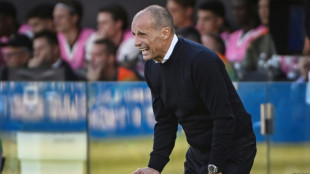 Allegri suspended for two Serie A games after red card
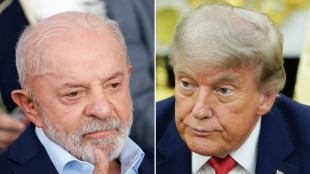
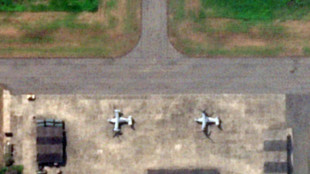 Flight data, satellite images reveal growing US role at Ecuador base
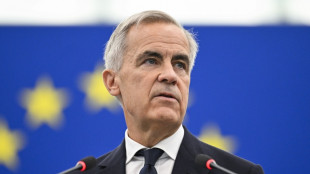
 McInnes feels 'guilt' ahead of Hearts return with Rangers
 Brazil's Lula turns 81, vows to work '24 hours a day'
 Boeing releases cautious growth plan as shares fall sharply
 Exiled Russian dissident Navalnaya warns dictators becoming 'more cunning'
 Bayern 'risk' reaps huge reward for Ballon d'Or winner Kane
 Record turnout as Israeli voters deliver verdict on Netanyahu
 Iraola says Isak 'feels the trust' after Liverpool scoring streak

 French media protest manhandling of journalists at far-right party rally
 EU seeks deportation powers for beefed up border agency
 Two charged with UK security offences over airbase plot: police
 Maresca defends Donnarumma, Guehi after Man City defeat
 Nordic leaders call Putin as local truce begins in Ukraine
 Osaka unveils crane outfit in Tokyo before win over Paolini

 Ronaldo in line for Portugal return after fallout with coach
 Norway media take legal action to block Meta from using content
 Bayern praise 'humble' Kane after Ballon d'Or win
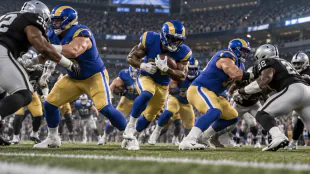
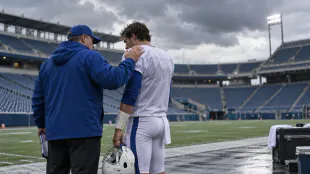 Colts retain Daniel Jones as starter despite continued offensive struggles
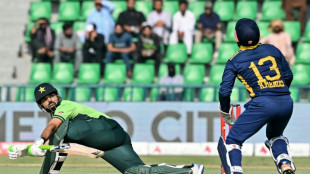 Madushanka wrecks Pakistan as Sri Lanka press for final slot
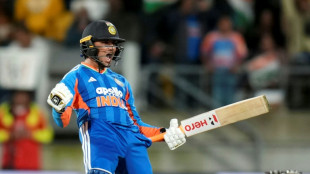 Destructive Abhishek 113 leads India to series win over New Zealand
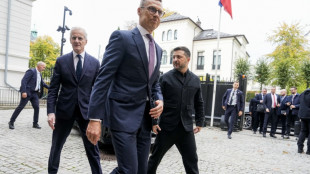 Norway, Finland leaders hold 'frank and substantive' talk with Putin
 Wall Street faces earnings and Fed tests after turbulent technology-led week
 Ukraine, Russia say US-brokered truce holding in ravaged city
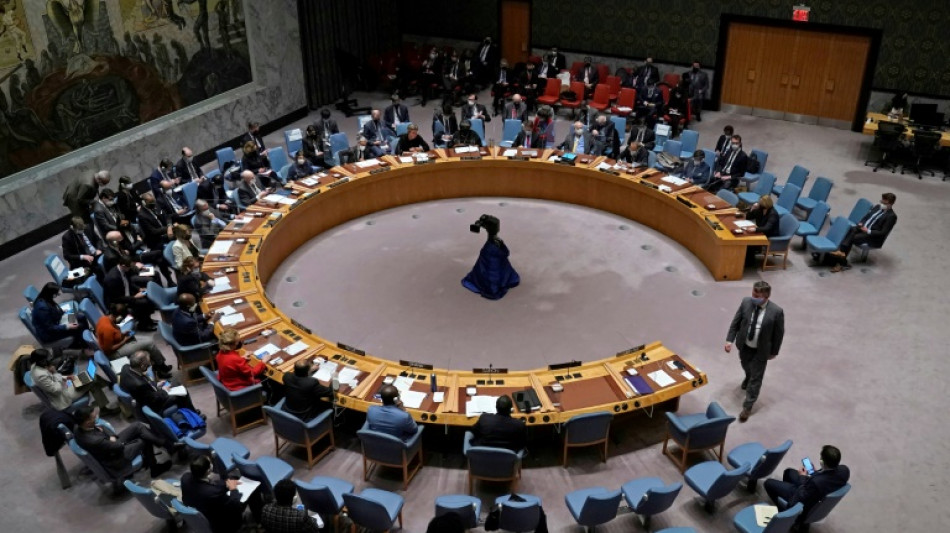
It was arguably the ultimate illustration of UN powerlessness: an emergency Security Council meeting designed to avoid war rendered redundant by Russia's invasion of Ukraine just minutes after the late-night session began.
As UN chief Antonio Guterres and member state after member state on the 15-country council urged Vladimir Putin to step back from the brink, the Russian leader was already sending his troops across the border.
The ambassadors of the United States, Britain, France and others reading pre-prepared speeches calling for Putin to pursue diplomacy seemed unaware of what journalists watching the proceedings already knew: Russia's president was on state television announcing that his military operation had begun.
As news filtered through to the chamber at the UN's headquarters in New York, the mood turned to one of anger, despair and hopelessness.
Adding an air of surrealism was the identity of the country chairing the meeting: Russia, in its role as temporary president of the council.
"I call on every one of you to do everything possible to stop the war," pleaded an emotional Ukrainian ambassador Sergiy Kyslytsya.
But as with the 2003 invasion of Iraq by the United States and Britain, the United Nations again proved incapable of preventing conflict.
With Putin intent on launching his invasion and Russia a permanent council member with the power to veto resolutions, what if anything could the body have done?
"The Security Council was never going to solve this crisis," Richard Gowan, a UN expert at the International Crisis Group think tank, told AFP.
"That is because of Russia's veto power, plus the simple fact that President Putin clearly doesn't give a damn about international opinion or diplomacy."
Since its creation in 1945, the UN has been unable to stop any conflict started by one of its five permanent members: Britain, China, France, Russia and the United States.
The same five powers that emerged victorious from World War II wield all the power today, relegating the organization to a role focused primarily on providing humanitarian aid in natural disasters and wars, in some cases succeeding in limiting the expansion of conflicts.
The format of the Security Council has not changed in 77 years, with other countries rotating through the body's 10 non-permanent member spots, which do not have veto power.
- Deadlocked reform -
Experts and governments have long argued for reform to take into account an international order that is now multipolar, with countries like India, Japan and Germany arguing that they should have a permanent, veto-wielding seat.
But reform efforts have been deadlocked for years, however, hampering the credibility of the council, which has all too often been riven by division and infighting, leading to inaction.
"Essentially the foxes are guarding the hen house. Thus, the Security Council is back to its Cold War paralysis," Pamela Chasek, chair of the political science department at Manhattan College in New York, told AFP.
Russia has not hesitated to wield its veto, doing so more than 15 times with regards to the Syria conflict.
Moscow will exercise its right again on Friday, to block a resolution proposed by Western powers that would "condemn in the strongest terms the Russian invasion of Ukraine," according to a senior UN official.
A similar text will then be sent to the General Assembly, which brings together all 193 members of the UN. Experts will closely watch the vote to see how isolated Russia is, but ultimately it is non-binding.
A similar scenario occurred in 2014 when Russia annexed Crimea. Eight years later, Russia is still in control of that region.
- 'Saddest day' -
At Wednesday night's session, as ambassadors learned of Russia's invasion via their mobile phones, many made second speeches, directing much of their anger at Moscow's envoy Vassily Nebenzia.
"There is no purgatory for war criminals. They go straight to hell, ambassador," Kyslytsya, the Ukrainian representative, told him.
US ambassador Linda Thomas-Greenfield was seen consoling Kyslytsya and afterwards, a dejected Guterres said Russia's military assault marked "the saddest day" of his tenure as UN chief.
For some UN watchers, the invasion is not only a personal failure for Guterres but also further evidence of the declining stature of the world body.
"The mediation efforts by the Secretary-General would have been taken seriously 20 years ago," Trita Parsi of the Quincy Institute think tank told AFP.
"Today, no one even notices his absence because no one has even an expectation that the UN or the Secretary-General will play such a role."
So what can we expect the Security Council to achieve in the Ukraine crisis?
"For now, the UNSC is a theater where the West and Russia can shout at each other," said Gowan.
"It won't do much to bring this war to a close."
prh-ft-mlm-pdh/sst
S.Keller--BTB