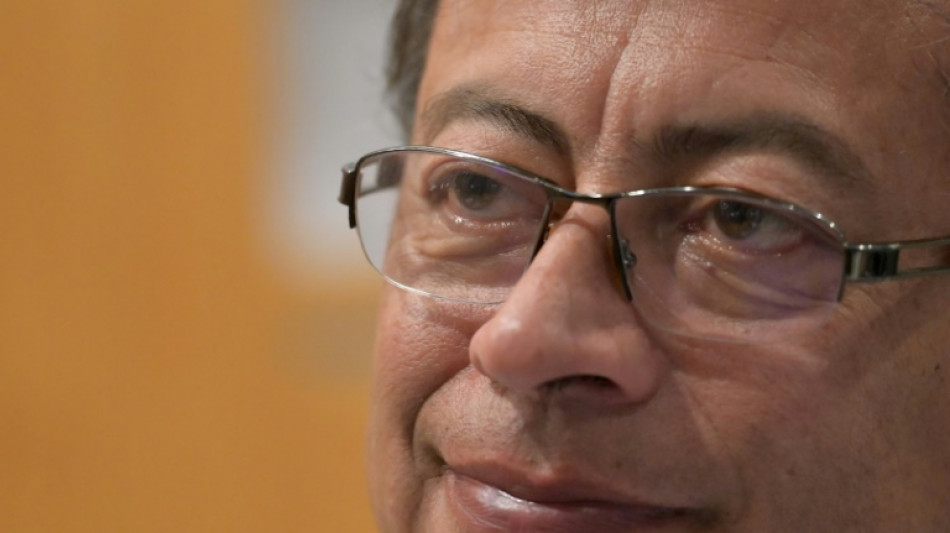
Ex-guerrilla Petro hopes to be Colombia's first leftist president / Photo: ©

 Xhaka, Embolo can return to Swiss squad after fake Covid docs affair
 Allegri suspended for two Serie A games after red card
 Flight data, satellite images reveal growing US role at Ecuador base
 McInnes feels 'guilt' ahead of Hearts return with Rangers
 Brazil's Lula turns 81, vows to work '24 hours a day'
 Boeing releases cautious growth plan as shares fall sharply
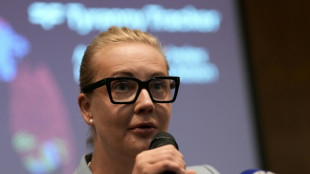 Exiled Russian dissident Navalnaya warns dictators becoming 'more cunning'
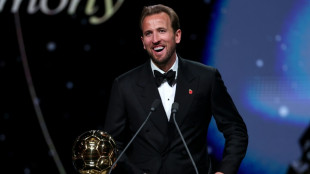 Bayern 'risk' reaps huge reward for Ballon d'Or winner Kane
 Record turnout as Israeli voters deliver verdict on Netanyahu
 Iraola says Isak 'feels the trust' after Liverpool scoring streak

 French media protest manhandling of journalists at far-right party rally

 EU seeks deportation powers for beefed up border agency
 Two charged with UK security offences over airbase plot: police
 Maresca defends Donnarumma, Guehi after Man City defeat
 Nordic leaders call Putin as local truce begins in Ukraine

 Osaka unveils crane outfit in Tokyo before win over Paolini

 Ronaldo in line for Portugal return after fallout with coach
 Norway media take legal action to block Meta from using content

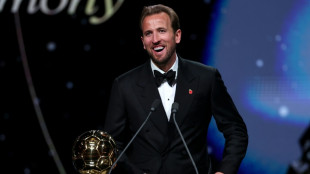 Bayern praise 'humble' Kane after Ballon d'Or win

 Colts retain Daniel Jones as starter despite continued offensive struggles

 Madushanka wrecks Pakistan as Sri Lanka press for final slot
 Destructive Abhishek 113 leads India to series win over New Zealand
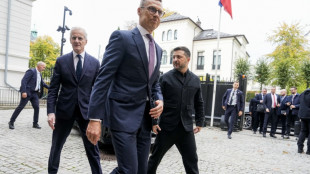 Norway, Finland leaders hold 'frank and substantive' talk with Putin
 Wall Street faces earnings and Fed tests after turbulent technology-led week
 Ukraine, Russia say US-brokered truce holding in ravaged city
Gustavo Petro is a former Colombian guerrilla who became mayor of Bogota and a senator -- now, he wants to be the first leftist president in the South American nation's history.
Polls suggest he stands a chance, with stated support of about 42 percent -- head and shoulders above any other contender in a country traditionally distrustful of the left.
The 61-year-old Petro, who is active on social media, hopes to win outright in the first round on May 29, for which he would need 50 percent of the vote.
If not, there will be a runoff on June 19.
He is an inspiring orator and crowds chant his name at political rallies where he rails against the ruling political "oligarchy" and promises to tackle poverty and social inequality.
Petro moves around with an entourage of bodyguards and snipers in armored cars in a country with a long history of violence and a toll of five assassinated presidential candidates.
In 2018, Petro lost the presidential race to right-wing Ivan Duque, who now has record disapproval rates.
Petro told AFP recently he would pursue a different leftist model than those of controversial leaders such as Nicaragua's Daniel Ortega and Venezuela's Nicolas Maduro.
He would instead align himself to a "progressivism" he associates with Chile's president-elect Gabriel Boric and Brazil's ex-president Luiz Inacio Lula da Silva.
Here are some main points from an interview with AFP:
Q: What kind of a leftist agenda would you pursue?
A: "There is appearing in Latin America a new type of progressivism that... does not base the economy on the extraction of non-renewable raw materials (but rather) on knowledge and production.
"I think it would mark a different way of Latin American social struggle than (those of) Daniel Ortega and Maduro, which basically continue a rhetorical leftist idea based on oil extraction, based on having a banana republic that imprisons any kind of opponent."
Petro says he would, however, resume diplomatic relations with Caracas, frozen since 2019, and restore order in the border region where armed groups fight over trafficking routes and resources.
Q: What would your first presidential decisions be?
A: "The signing of (oil) exploration contracts in Colombia would cease... because we want to start the transition to (clean energy)... and the process of decarbonization of the economy.
"I think it is appropriate to establish a program to fight against immediate, urgent hunger... and to (restore) the country's great agricultural and food-producing potential."
Q: How would you approach the United States?
A: "There are common subjects. One of those... is the climate crisis...
"We have to see how, in a united way with America, we make the leap towards a decarbonized, oil-free, carbon-free economy."
Q: In a country with a history of political assassinations, do you fear for your life?
"A: "It doesn't stop appearing like a flash, when I get mixed up in the crowd, when I am on a stage and there is a full square (where from) anywhere someone could shoot... but I try to avoid thinking about that.
"Both the specter of fraud and the specter of death undoubtedly accompany us in some way in this presidential campaign."
Q: What will you do about drug trafficking?
A: "(The use of) Glyphosate (a herbicide used to eradicate coca plants) has been a major failure in Colombia.
"In addition to poisoning our land and waters, the cost of spraying one hectare with glyphosate is higher than the cost of giving the farmer fertile land."
He would instead pursue "a peaceful policy of dismantling drug trafficking" that could include lighter penalties for those who agree to abandon the trade.
C.Kovalenko--BTB