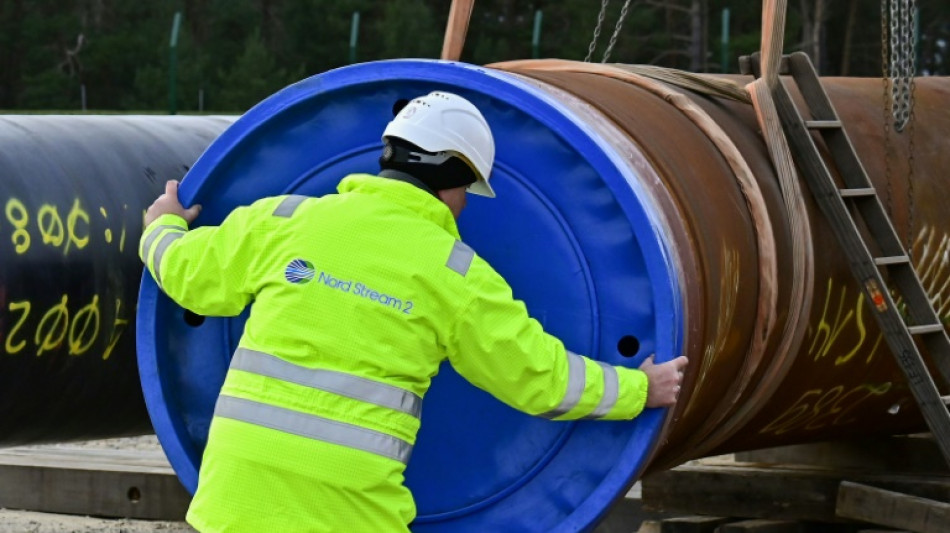
Germany halts controversial Russian pipeline project / Photo: ©

 Brazil's Lula turns 81, vows to work '24 hours a day'
 Boeing releases cautious growth plan as shares fall sharply

 Exiled Russian dissident Navalnaya warns dictators becoming 'more cunning'
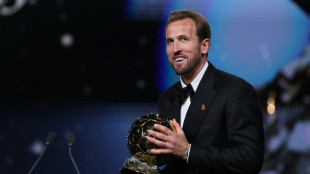
 Bayern 'risk' reaps huge reward for Ballon d'Or winner Kane
 Record turnout as Israeli voters deliver verdict on Netanyahu
 Iraola says Isak 'feels the trust' after Liverpool scoring streak

 French media protest manhandling of journalists at far-right party rally
 EU seeks deportation powers for beefed up border agency
 Two charged with UK security offences over airbase plot: police
 Maresca defends Donnarumma, Guehi after Man City defeat
 Nordic leaders call Putin as local truce begins in Ukraine
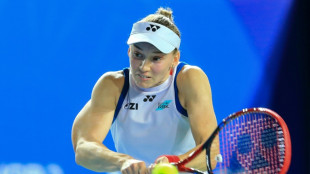
 Osaka unveils crane outfit in Tokyo before win over Paolini

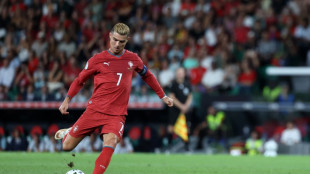 Ronaldo in line for Portugal return after fallout with coach
 Norway media take legal action to block Meta from using content
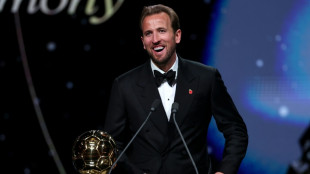 Bayern praise 'humble' Kane after Ballon d'Or win

 Colts retain Daniel Jones as starter despite continued offensive struggles
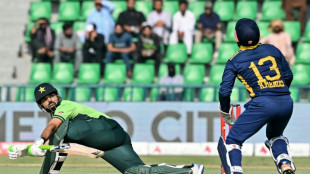 Madushanka wrecks Pakistan as Sri Lanka press for final slot
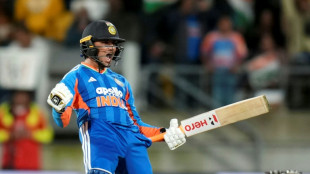 Destructive Abhishek 113 leads India to series win over New Zealand
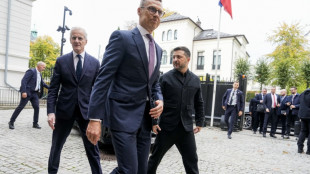 Norway, Finland leaders hold 'frank and substantive' talk with Putin
 Wall Street faces earnings and Fed tests after turbulent technology-led week

 Ukraine, Russia say US-brokered truce holding in ravaged city
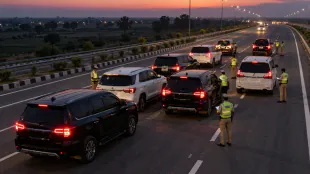 Police form SIT after vehicles in Rahul Gandhi convoy collide on expressway

 Delhi grants minimum monthly pay and DA to about 4,000 MCD health workers
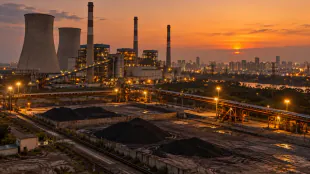
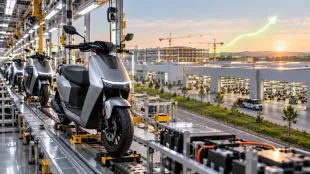 Ather Energy shares climb 14% after quarterly profit and expansion plan
 Gold ETF flows turn negative after 13 weeks as bullion loses 4%

Germany on Tuesday put on ice the controversial Nord Stream 2 pipeline in response to Moscow's recognition of two breakaway regions in eastern Ukraine, finally halting the 10-billion-euro project that has long irked allies.
Berlin had over the years doggedly pursued the pipeline which was set to double natural gas import capacity from Russia, despite opposition from the United States and Eastern Europe which fear it would leave the continent too dependent upon Russian energy.
Through controversies that had weighed on German-Russian ties -- from the poisoning of Kremlin critic Alexei Navalny to several spying scandals to a series of cyberattacks, the German government had pushed on with the project, which was finally completed last year and was awaiting regulatory approval.
But hours after Putin's decision on recognising separatists in eastern Ukraine, German Chancellor Olaf Scholz said on Tuesday he had asked for the approval process to be halted, despite a severe energy crisis that has sent gas prices soaring in Europe.
"That sounds technical, but it is the necessary administrative step so there can be no certification of the pipeline and without this certification, Nord Stream 2 cannot begin operating," he said.
The White House immediately hailed the decision, while Ukrainian Foreign Minister Dmytro Kuleba called it "a morally, politically and practically correct step in the current circumstances".
Meanwhile Dmitry Medvedev, vice president of Russia's council of security said Germany was just shooting itself in the foot.
"The German chancellor Olaf Scholz has asked to suspend the certification of Nord Stream 2... well, welcome to the new world where Europeans will soon pay 2,000 euros for 1,000 cm3 of gas," he tweeted.
- Rising tensions -
Germany's ambivalent attitude on Nord Stream 2 had long been a source of friction with allies.
Even as Russia massed over 100,000 troops on Ukraine's borders, Scholz refused to utter the name of the pipeline when asked about possible sanctions against Russia.
Former chancellor Gerhard Schroeder's involvement as chairman of the Nord Stream AG shareholders committee has also become a source of embarrassment for Germany as the West faces off with Russia in the worst crisis since the Cold War.
The mixed messaging over the gas pipeline had led NATO partners, including the United States, to question if Germany was on board as the West sought to hold off what it viewed as an expansionist Russia.
With doubts swirling, German ministers found themselves forced to reiterate repeatedly that they would indeed pull the plug on the pipeline should Russia march on Ukraine.
Kyiv, in conflict with Russia since Moscow's 2014 annexation of Crimea, has long been a critic of Nord Stream 2.
The pipeline bypasses Ukraine's own infrastructure, depriving it of around a billion euros annually in gas transit fees and, Kyiv fears, removing a key check on potential Russian aggression.
President Volodymyr Zelensky has insisted that Nord Stream 2 poses a serious global security threat.
"We view this project exclusively through the prism of security and consider it a dangerous geopolitical weapon of the Kremlin," he said last year.
Running from Russia's Baltic coast to northeastern Germany, the 1,200-kilometre (745-mile) underwater Nord Stream 2 follows the same route as Nord Stream 1, which was completed over a decade ago.
Like its twin, Nord Stream 2 would be able to pipe 55 billion cubic metres of gas per year from Russia to Europe, increasing the continent's access to relatively cheap natural gas at a time of falling domestic production.
Russian giant Gazprom has a majority stake in the 10-billion-euro ($12 billion) project. Germany's Uniper and Wintershall, France's Engie, the Anglo-Dutch firm Shell and Austria's OMV are also involved.
Europe's top economy imports around 55 percent of its gas from Russia -- up from 40 percent in 2012 -- and believed the pipeline has a role to play in the transition away from coal and nuclear energy.
But it will now have to accelerate its build up of other energy sources -- including importing LNG from elsewhere -- in order to meet its energy needs.
Vice-Chancellor and Energy Minister Robert Habeck admitted on Tuesday that there will be "consequences in terms of energy policy, geopolitics and strategy" for Germany.
"We will not forget this winter anytime soon," Habeck said.
G.Schulte--BTB