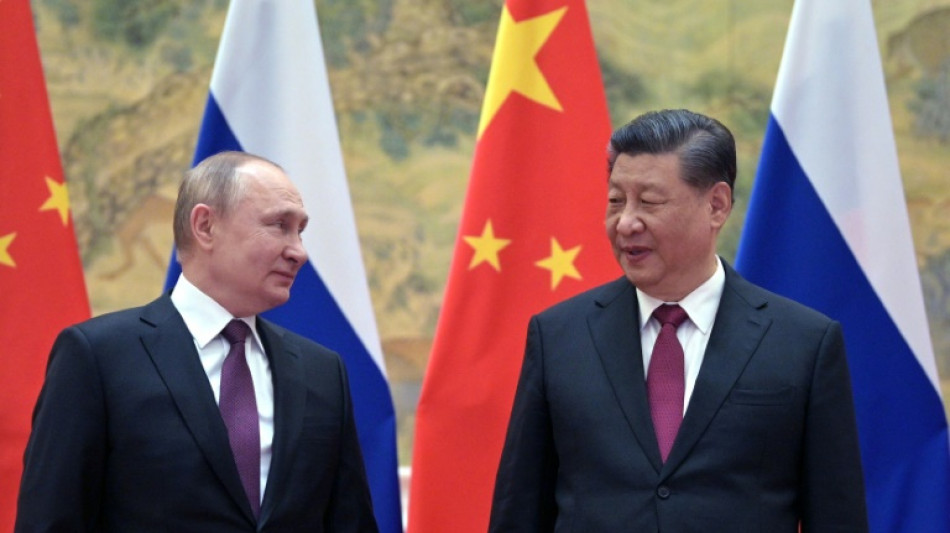
China moves closer to Russia, but wary on Ukraine / Photo: ©

 Brazil's Lula turns 81, vows to work '24 hours a day'
 Boeing releases cautious growth plan as shares fall sharply

 Exiled Russian dissident Navalnaya warns dictators becoming 'more cunning'
 Bayern 'risk' reaps huge reward for Ballon d'Or winner Kane
 Record turnout as Israeli voters deliver verdict on Netanyahu
 Iraola says Isak 'feels the trust' after Liverpool scoring streak

 French media protest manhandling of journalists at far-right party rally
 EU seeks deportation powers for beefed up border agency
 Two charged with UK security offences over airbase plot: police
 Maresca defends Donnarumma, Guehi after Man City defeat
 Nordic leaders call Putin as local truce begins in Ukraine
 Osaka unveils crane outfit in Tokyo before win over Paolini

 Ronaldo in line for Portugal return after fallout with coach
 Norway media take legal action to block Meta from using content

 Bayern praise 'humble' Kane after Ballon d'Or win

 Colts retain Daniel Jones as starter despite continued offensive struggles

 Madushanka wrecks Pakistan as Sri Lanka press for final slot
 Destructive Abhishek 113 leads India to series win over New Zealand
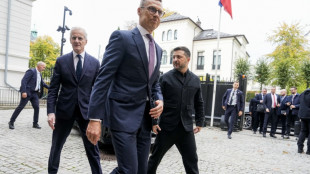 Norway, Finland leaders hold 'frank and substantive' talk with Putin
 Wall Street faces earnings and Fed tests after turbulent technology-led week

 Ukraine, Russia say US-brokered truce holding in ravaged city

 Police form SIT after vehicles in Rahul Gandhi convoy collide on expressway

 Delhi grants minimum monthly pay and DA to about 4,000 MCD health workers

 Ather Energy shares climb 14% after quarterly profit and expansion plan

 Gold ETF flows turn negative after 13 weeks as bullion loses 4%

China and Russia set off alarms in the West this month with the most robust declaration of their friendship in decades but Beijing has signalled it would not back Vladimir Putin if he sent troops in to invade Ukraine.
The February 4 joint statement by the neighbours included unprecedented support from Beijing for Moscow's opposition to the expansion of NATO, and came as Washington and its allies were warning of full-scale Russian military action against Kyiv.
It was "quite a quantum shift from what has been a steady intensification, elevation of the content of Russia-China declarations over the last 20 years", former Australian prime minister Kevin Rudd said during an online discussion co-hosted by the Atlantic Council think tank and the Asia Society.
"It is China becoming a global security actor in a way that I personally have not seen before."
China's unusually direct position on NATO and support for Moscow's "reasonable" security concerns have, however, placed it on a diplomatic tightrope, forcing it to balance its close Russia ties with major economic interests in Europe.
With more than 150,000 troops massed on the border with Ukraine, Russia has demanded guarantees that Kyiv will never be allowed to join NATO -- a position in stark contrast to China's long-standing stated foreign policy red line: no interference in other countries' internal affairs.
When asked if there was a contradiction, Chinese Foreign Minister Wang Yi told the Munich Security Conference via video link Saturday that the sovereignty of all nations should be respected.
"Ukraine is no exception," he said.
That position was tested in just two days.
Russian President Putin on Monday recognised two "republics" in Ukraine held by pro-Moscow separatist rebels, and ordered the deployment of troops there.
The United States and its allies blasted Russia for violating the sovereignty of Ukraine at an emergency UN Security Council meeting, but China was circumspect, urging restraint by "all sides".
Putin has "denied the territorial independence and sovereignty -- indeed, the very existence -- of Ukraine", Ivo Daalder, former US ambassador to NATO, wrote on Twitter.
"Both were core... (tenets) of China's approach to the crisis. Putin has blown both to bits."
- Delicate balance -
This is not the first time China has had to strike a delicate balance between its interests and a major international escalation by its strategic partner Russia.
When Moscow annexed Crimea in 2014, China did not join Russia's veto of a UN Security Council resolution on the issue, instead abstaining and mainly offering economic support.
Eight years later, experts say there are again limits to what Beijing can -- or wants to -- do for Moscow.
Among the key factors are trade and financial links with Europe. Overt backing of any Russian belligerence could also threaten the major investment deal Beijing is trying to seal with the bloc.
Further, some analysts say China may not want to escalate already high tensions with the United States.
"The Ukraine crisis... carries significant risk of the bottom falling out of (China's) relationships with the EU and the US," wrote Bill Bishop in the Sinocism China Newsletter.
"I do not believe that Xi and his team want to see Russia invade Ukraine, as they understand the risks from the expected reaction to any invasion."
Others said that, with its support for Moscow's concerns about NATO, Beijing may be looking to its own future security interests.
By implicitly siding with Moscow, Beijing gains "considerable diplomatic leverage" and "presumes that Russia will act likewise when China finds itself in a critical security situation", Richard Ghiasy, an expert at the Hague Centre for Strategic Studies, told AFP.
- Act of defiance -
Despite Beijing's guarded language on Ukraine, observers say the China-Russia joint announcement is still a stark challenge to the United States and its allies beyond the current crisis.
The statement contained challenges to the definitions of democracy and human rights, which Moscow and Beijing have been accused of violating by the West for years.
This prompted scathing criticism in Europe, with some accusing two authoritarian regimes of trying to redefine universal concepts to suit their agenda.
"It's an act of defiance," EU foreign policy chief Josep Borrell said at the Munich Security Conference on Sunday.
"It's a clear revisionist manifesto."
R.Adler--BTB