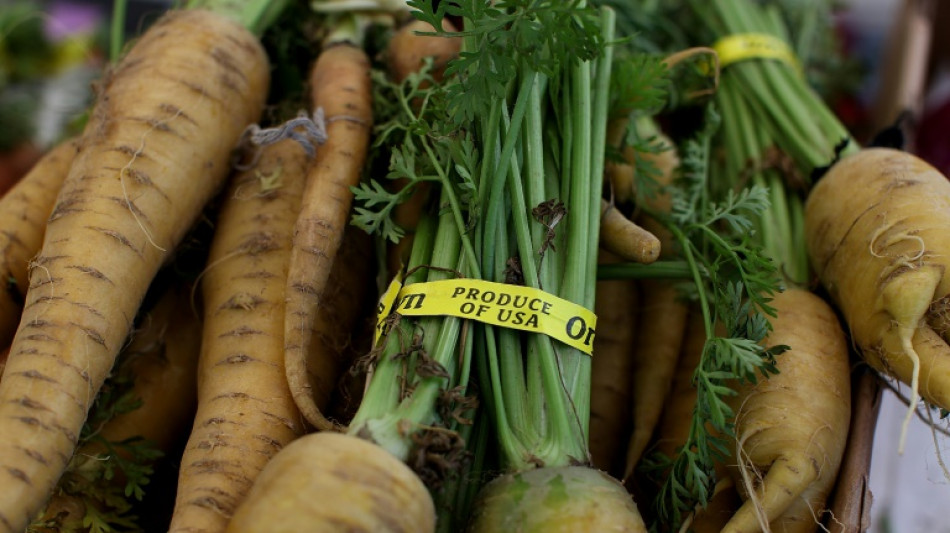
US strengthens organic food protocols to counter fraud / Photo: © GETTY IMAGES NORTH AMERICA/AFP/File

 Samsung Leads Global DRAM Market as SK Hynix Gains Share

 Kakao Details Spinoff Plan to Monetize AI Through KakaoTalk

 ASIC Fines Mona Museum Owner's Company for Late Financial Report

 Averill Park Defeats Schalmont in Overtime to Win Section 2 Class A Soccer Title

 SCANDIC FINANCE แต่งตั้งอเล็กซ์ โบดี เป็นรองประธานกลุ่มบริษัท

 Alex Bodi wiceprezesem grupy SCANDIC FINANCE

 Southern Africa Malaria Surge Highlights Gap Between Data and Action

 Ο Άλεξ Μπόντι νέος αντιπρόεδρος του ομίλου SCANDIC FINANCE
The US Department of Agriculture on Thursday unveiled new rules to strengthen oversight of the "organic" label on food, after some significant fraud cases.
The final rule, the most significant update to US organic food regulations since 1990, tightens certification requirements along the organic food supply chain, requires certificates for imported goods and beefs up inspection protocols.
To qualify for the fast-growing organic segment in the United States, food must be produced without the use of most synthetic fertilizers and pesticides, antibiotics or genetic engineering.
The purpose of the new rule is "to reinforce the trust of consumers, farmers, and those transitioning to organic production," said Jenny Lester Moffitt, the agency's undersecretary for marketing and regulatory programs.
"This success is another demonstration that USDA fully stands behind the organic brand," Moffitt said of the policy, which goes into effect on March 20.
Sales of organic food have more than doubled in the last 10 years, reaching $57.5 billion in 2021, according to the Organic Trade Association.
The OTA praised the new rules, saying the policy "will have significant and far-reaching impacts on the organic sector and will do much to deter and detect organic fraud and protect organic integrity throughout the supply chain."
In a Federal Register notice outlining the rule, the USDA cited several cases of fraud involving organic food.
In one case prosecuted in Iowa in 2019, the defendant sold some $142 million in non-organic grain over seven years, claiming inaccurately the grain was organically grown in Nebraska and Missouri. Four individuals were sentenced to prison in the case.
"This rule includes more robust traceability and verification practices that would have helped identify and stop this type of fraud earlier, preventing further sale of the fraudulent products and reducing the impact of the fraud," the USDA said in the notice.
K.Thomson--BTB