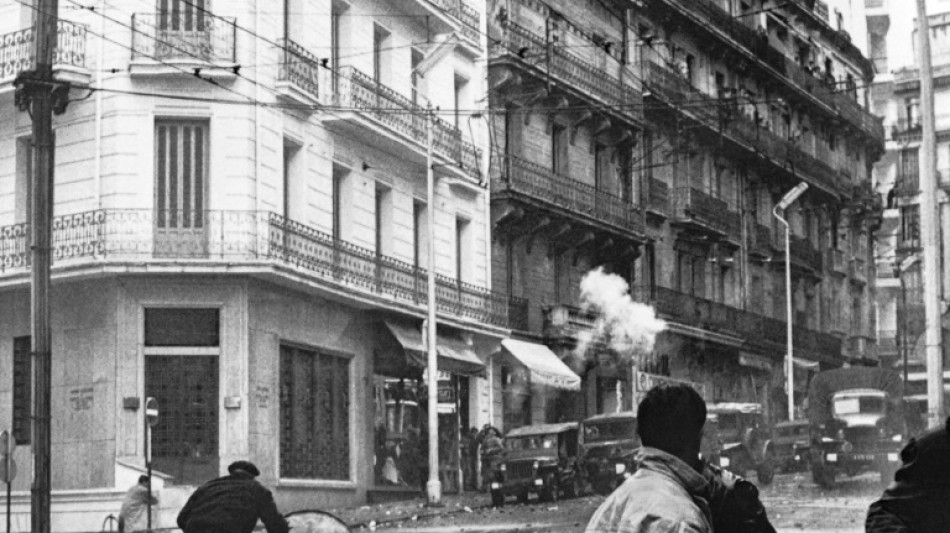
Algeria's 60 years of complex relations with former occupier France / Photo: ©

 Brazil's Lula turns 81, vows to work '24 hours a day'
 Boeing releases cautious growth plan as shares fall sharply

 Exiled Russian dissident Navalnaya warns dictators becoming 'more cunning'
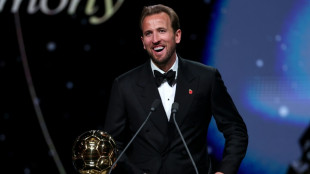 Bayern 'risk' reaps huge reward for Ballon d'Or winner Kane
 Record turnout as Israeli voters deliver verdict on Netanyahu
 Iraola says Isak 'feels the trust' after Liverpool scoring streak

 French media protest manhandling of journalists at far-right party rally
 EU seeks deportation powers for beefed up border agency
 Two charged with UK security offences over airbase plot: police
 Maresca defends Donnarumma, Guehi after Man City defeat
 Nordic leaders call Putin as local truce begins in Ukraine

 Osaka unveils crane outfit in Tokyo before win over Paolini

 Ronaldo in line for Portugal return after fallout with coach
 Norway media take legal action to block Meta from using content
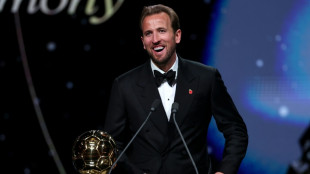 Bayern praise 'humble' Kane after Ballon d'Or win
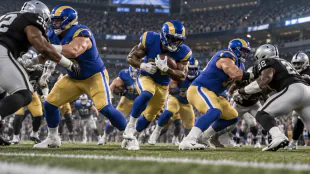
 Colts retain Daniel Jones as starter despite continued offensive struggles

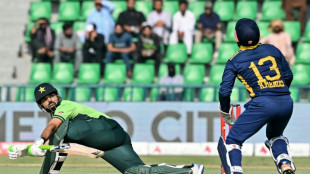 Madushanka wrecks Pakistan as Sri Lanka press for final slot
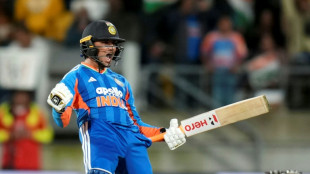 Destructive Abhishek 113 leads India to series win over New Zealand
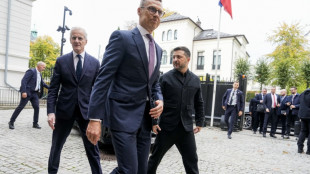 Norway, Finland leaders hold 'frank and substantive' talk with Putin
 Wall Street faces earnings and Fed tests after turbulent technology-led week
 Ukraine, Russia say US-brokered truce holding in ravaged city
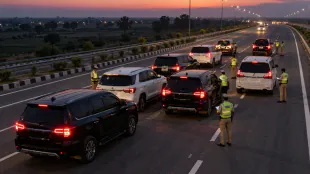 Police form SIT after vehicles in Rahul Gandhi convoy collide on expressway

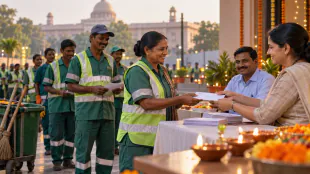 Delhi grants minimum monthly pay and DA to about 4,000 MCD health workers
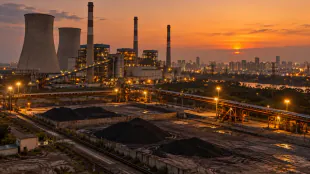
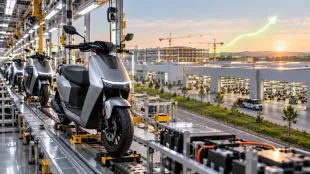 Ather Energy shares climb 14% after quarterly profit and expansion plan

 Gold ETF flows turn negative after 13 weeks as bullion loses 4%
In the 60 years since Algeria won independence from France, it has gone through multiple crises with its former occupier, often fuelled by domestic politics.
Yet the two sides had surprisingly good relations for the first four decades, and it was only in the 1990s that things started to fall apart, experts say.
"Generally, despite appearances and criticism, there has been a stable, very balanced relationship," said Luis Martinez, a Maghreb researcher at Sciences Po university in Paris.
That is despite the devastation caused by the eight-year war of independence that finally led to the signing of the Evian accords on March 18, 1962, ending the conflict.
French historians say half a million civilians and combatants died -- 400,000 of them Algerian -- while the Algerian authorities insist 1.5 million were killed.
Under French General Charles de Gaulle, whose administration signed the accords, and his successor Georges Pompidou, Paris had good relations with Algiers.
The same was true of the administration of Francois Mitterrand, even though he had been interior minister when Algeria's armed independence struggle began in 1954 and remained opposed to the country's independence.
"Mitterrand was surrounded by Socialist Party people, who were all pro-FLN," said historian Pierre Vermeren, referring to the National Liberation Front, which led the revolt and has dominated Algerian politics ever since.
"(Mitterrand) was able to take a back seat" and let others deal with Algeria, said Vermeren, a professor at the Sorbonne University.
France was allowed to continue its nuclear tests in the Algerian Sahara until 1967, and de Gaulle managed to negotiate a secret deal with the new Algerian state to allow for chemical weapons tests until 1978.
But in 1992, Paris raised hackles by criticising Algiers for suspending elections, in which Islamist parties had won the first round.
Algeria withdrew its ambassador in response.
The polls' cancellation sparked another decade of devastating conflict in the North African country, until Abdelaziz Bouteflika, who rose to the presidency in 1999, offered an amnesty that paved the way for peace.
Despite being close to France, Bouteflika made use of anti-French discourse, primarily for domestic consumption, Vermeren said.
"To win back control of the ideological and political sphere after the civil war, (the Algerian leadership) 'forgot' that France had helped them fight the Islamists," he said.
"They went back to their traditional enemy."
- 'Good ties in secret' -
Under Bouteflika, Algerian leaders used ever-stronger language, accusing France of "genocide" during its more than 130-year occupation of Algeria.
Then, in 2019, a vast protest movement toppled the autocratic leader after two decades in power -- but the new regime has kept up the anti-French discourse.
Observers say however that cooperation behind closed doors has been surprisingly close.
In 2013, Algeria allowed French forces to use its airspace to reach Mali, where they were battling jihadists.
"French-Algerian relations are good when they're in secret. They're more hostile when they're in public," said Naoufel Brahimi El Mili, who has written a book on 60 years of "secret stories" between the two countries.
When Emmanuel Macron became president, he had good relations with Algeria.
Visiting Algiers during his campaign in February 2017, he described colonisation as a "crime against humanity".
After his election, he made gestures aimed at healing past wounds on both sides of the Mediterranean.
But he refused to apologise for colonialism, a highly sensitive topic in France, which for decades saw Algeria as an integral part of French territory and where far-right discourse has been escalating.
Comments reported last October dampened hopes around reconciliation.
Macron accused Algeria's "political-military system" of rewriting history and fomenting "hatred towards France".
In remarks to descendants of independence fighters, reported by Le Monde, he also questioned whether Algeria had existed as a nation before the French invasion in the 1800s.
Once again, Algeria withdrew its ambassador.
- 'Algeria votes Macron' -
Now, weeks ahead of the French presidential election in April, relations appear to be looking up again.
Millions of French citizens of Algerian origin and descendants of Europeans who left after independence are among those casting votes.
"Algeria will vote for Macron," said author El Mili. "Algerians are convinced that a Macron II will be bolder."
Xavier Driencourt, a former French ambassador to Algeria, shared that view.
"They don't want (candidate) Valerie Pecresse who has a fairly right-wing tone, and definitely not (Eric) Zemmour or Marine Le Pen," he said, referring to conservative Pecresse and two far-right presidential hopefuls.
But much remains to be done. In recent years Algeria has diversified its international ties, with China becoming its main trade partner.
Martinez from Sciences Po said Macron's comments had done a lot of damage.
"They'll go back to the drawing board, and try to see what they can agree on," he said.
Former envoy Driencourt said "it takes two sides to have a relationship".
Would Algeria be interested after the election?
"I'm not very optimistic," he said.
C.Meier--BTB