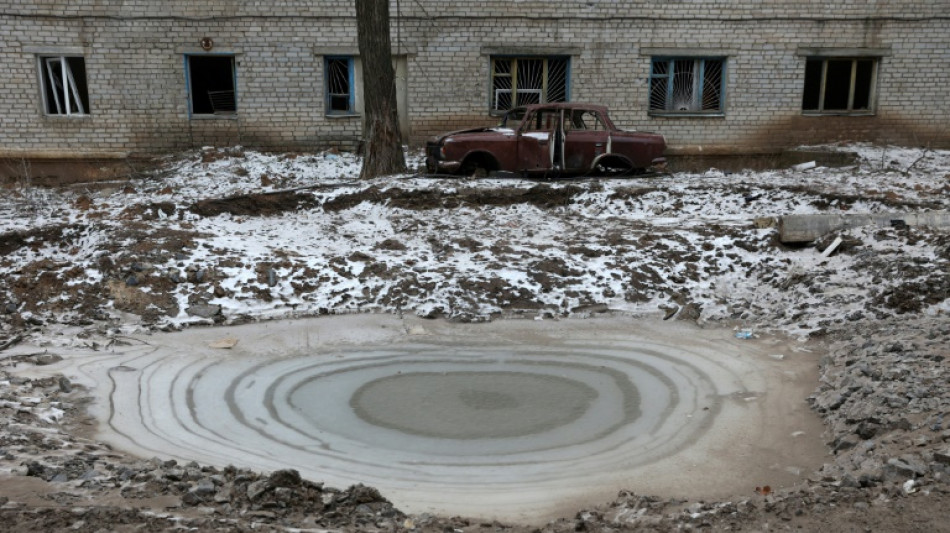
North of Soledar, Ukrainians yearn for peace / Photo: © AFP

 Gazans hold mass funeral for those killed during war
 WHO pleads for more support to tackle Ebola outbreak
 Oil drops, stocks gain on hopes of Hormuz opening

 Infantino faces nervy times to see if challenger emerges
 Greece gains ground against blaze near Athens
 Oil turns lower, stocks gain on hopes of Hormuz opening
 World Bank warns developing countries to embrace AI or be left behind

 'No decision' on Mudryk future after Chelsea return: Alonso

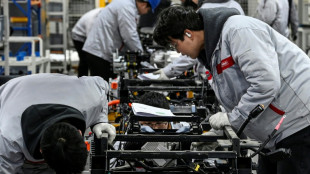 China draws up safety rules for autonomous vehicles

 Wenger says scrapping Infantino's World Cup plan was "absolutely necessary"

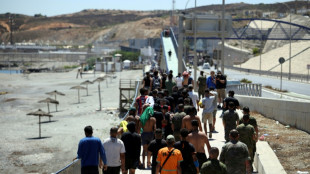 Spain confronts EU migration hawks in tense Ceuta talks

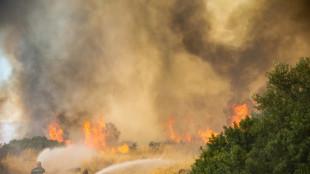 Firefighters hope to contain blaze on Athens outskirts

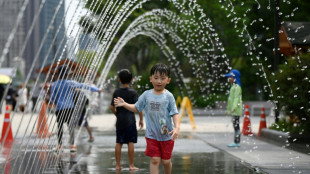 Heatwave divides rich and poor of upmarket Seoul

 Drone strike on Moscow region kills 5

 Guatemala issues 'danger' alert after Fuego volcano erupts

 Heat kills 16 in South Korea this summer: interior ministry

 Arson suspect arrested as US northwest battles wildfires
 Britain's Royal Mint strikes gold in electronic waste
 Amorim evokes spirit of Baresi as he bids revive AC Milan fortunes
 Suspected heatstroke kills three lions at Japan zoo
 Stocks mixed as Seoul stabilises, oil prices rise with eyes on Mideast
 Trapped by war, Bangladesh seafarer recounts Gulf ordeal
 WWII shells surface in wildfire-ravaged French village

 Last Scottish island bird hunt banned after almost 500 years
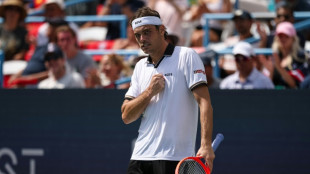 Fritz outguns Jodar to win ATP Washington title
In Siversk, a town north of Soledar that could be next in line for the Russian advance, Oleksandr Kuzenko and his neighbours took solace in an old tradition Friday as they hunkered down in their basement shelter.
Malanka, New Year Eve's in the Julian calendar, is best known for famed mid-January celebrations in western Ukraine featuring colourful costumes, masks and gatherings.
But for 64-year-old Kuzenko and his neighbours of 30 years -- three elderly women he helps care for -- the folk holiday celebration was sparse.
A few garlands of tinsel decorated the thick blanket hung over the entrance to the only room housing a stove in the basement where they have taken shelter since their town was ravaged by shelling.
The eastern Ukrainian town of Siversk faced fierce strikes over the summer, as Moscow's troops tried and failed several times to capture it.
A sign pinned to the blanket read: "Happy New Year 2023, year of the rabbit, year of victory!" It was illuminated by one of the only three candles they have left, already half-burned down.
- 'Let them shoot' -
"We are staying strong, trying to survive, waiting for the war to end," Kuzenko told AFP, seated at a table bearing a couple of small plates of food they were sharing.
Nearby, one of his neighbours, 69-year-old Lyubov, stirred a pot of scraps for the many abandoned pets they now look after.
But the war may be far from over for Siversk.
It risks becoming a frontline town again, as the Russian defence ministry declares victory -- a claim denied by Ukraine -- in Soledar, some 30 minute's drive south.
But with no gas, electricity or water, let alone internet, many of the 1,700 people local officials say still live in Siversk and surrounding settlements hear little of the news at the front.
"We don't have a radio," said Kuzenko, just "word of mouth".
"Some say that Soledar is surrounded, others say that it is not surrounded. Let the military decide what will happen next."
Near the steep steps leading into Kuzenko's shelter, 55-year-old Oleksandr Sirenko said he hoped Ukraine's troops would hold fast, as he chopped window frames and bits of floor into smaller pieces to burn for firewood.
"We only hope they don't retreat. We are afraid, but where should we go?"
- 'We are not afraid' -
Scratching a dog's ear outside the basement where she has lived since March, first with 17 people, now only six, Valentyna Kuteyko, 61, said: "Siversk has been surrounded more than once.
"What else is there to hit?"
As the sound of artillery rumbled along the street, she said she would, nonetheless, "stay here, try to live and to survive".
"We are not afraid, let them shoot."
Dmytro Afanasiev, 34, said he knew little of the news from the front, but just wanted the killing to stop.
"We aren't worried about what could happen because of Soledar; we are worried that many people are dying," he said.
Even as intense fighting grinds on mere kilometres away, authorities and volunteers are trying to maintain basic services, said Oleksiy Vorobyov, the head of the Siversk civil-military administration.
They hand out basic goods and even make minor repairs to buildings or restore some garbage collection.
The aid deliveries provide stoves, firewood, food and generators, he said. But the remaining residents "all lack one thing: Peace".
R.Adler--BTB