-
 Alcaraz withdraws from Cincinnati Masters with wrist injury
-
Kgatlana strikes as South Africa reach WAFCON quarter-finals
-
 SpaceX revenue jumps 92% in first earnings report, but shares slide
-
Pakistan close on series-levelling win against West Indies

-
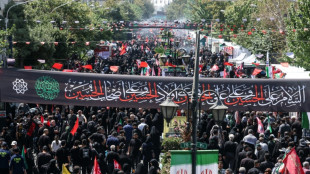 US eyes Hormuz deal 'today or tomorrow' as ship sinks in Red Sea
-
Paramount CEO says politics fueling Warner Bros. merger battle
-
 SpaceX revenue jumps 92% in first earnings report
-
Trump's sale of access to Truth Social raises eyebrows
-
 New commissioner Berg wants to take MLS to 'next level'
-
SpaceX rocket stage expected to slam into Moon
-
 Colombian ex-guerrillas fear for future under hardline president
-
US hopeful Hormuz strait deal will be done 'today or tomorrow'
-
 Tsitsipas comeback continues with Montreal first-round win
-
Michigan primary puts Democratic divide on the ballot
-
 Swiatek fends off Bejlek to reach Toronto third round
-
South Africa captain Kolisi to make Test return in Argentina
-
 Reusser romps to overall lead at Tour de France Femmes
-
Cuba's famed resilience comes at a growing mental cost
-
 McDonald's reports slower US sales in 2nd quarter
-
Swiss Reusser wins Tour de France Femmes time-trial

-
 Arsenal step up bid to sign Newcastle's Guimaraes: reports
-
Hundreds flee homes after Guatemala's Fuego volcano erupts
-
 Gazans hold mass funeral for those killed during war
-
Thousands pay tribute to Italian football legend Baresi
-
 WHO pleads for more support to tackle Ebola outbreak
-
Oil drops, stocks hit records on hopes of Hormuz opening
-
 Oil drops, stocks gain on hopes of Hormuz opening
-
Renard returns as Ivory Coast coach

-
 Infantino faces nervy times to see if challenger emerges
-
Italian garbagemen help recover lost 1 mln euro lottery ticket
-
 Greece gains ground against blaze near Athens
-
EU nations patch things up after Ceuta migration discord
-
 Oil turns lower, stocks gain on hopes of Hormuz opening
-
US hopeful Hormuz strait deal will be done 'today or tomorrow' after ship hit
-
 World Bank warns developing countries to embrace AI or be left behind
-
Infantino's problems mount as Wenger and key FIFA ally turn on him
-
 'No decision' on Mudryk future after Chelsea return: Alonso
-
Oil edges higher, stocks gain as investors eye political risks
-
 China draws up safety rules for autonomous vehicles
-
Man Utd sign reported record £20mn sponsorship deal for training kit
-
 Wenger says scrapping Infantino's World Cup plan was "absolutely necessary"
-
Stokes reveals England coaching ambition
-
 Spain confronts EU migration hawks in tense Ceuta talks
-
Cargo ship hit after Trump insists Iran talks could reopen Hormuz today
-
 Firefighters hope to contain blaze on Athens outskirts
-
BP profit soars as Mideast war roils energy prices
-
 Heatwave divides rich and poor of upmarket Seoul
-
Most stock markets gain, while oil prices edge up after plunge
-
 Drone strike on Moscow region kills 5
-
Most stock markets gain, while oil prices edge up after latest plunge
Croatia adopts euro, enters borderless Europe club
Croatia on Sunday switched to the euro and entered Europe's passport-free zone -- two major milestones for the country after joining the European Union nearly a decade ago.
At midnight, the Balkan nation bid farewell to its kuna currency and became the 20th member of the eurozone.
It is now the 27th nation in the passport-free Schengen zone, the world's largest, which enables more than 400 million people to move freely around its members.
"It is the season of new beginnings. And there is no place in Europe where this is more true than here in Croatia," tweeted EU chief Ursula von der Leyen, as she arrived in Croatia to mark the occasion.
She met Croatian Prime Minister Andrej Plenkovic and Slovenian President Natasa Pirc Musar at a border crossing with EU member Slovenia, and was then to head on to Zagreb.
Experts say the adoption of the euro will help shield Croatia's economy at a time when inflation is soaring worldwide after Russia's invasion of Ukraine sent food and fuel prices through the roof.
But feelings among Croatians are mixed.
While they welcome the end of border controls, some fear the euro switch will lead to an increase in the cost of living as businesses round up prices when they convert them.
"It will be difficult. Prices that are already high will become even higher," said Ivana Toncic, a teacher from Zagreb.
- 'Elite club' -
But tourist agency employee Marko Pavic said Croatia was joining "an elite club".
"The euro was already a value measure -- psychologically it's nothing new -- while entry into Schengen is fantastic news for tourism," he told AFP.
Use of the euro is already widespread in Croatia.
Croatians have long valued their most precious assets such as cars and apartments in euros, displaying a lack of confidence in the local currency.
About 80 percent of bank deposits are denominated in euros and Zagreb's main trading partners are in the eurozone.
Officials have defended the decision to join the eurozone and Schengen, saying that the country thus completes its full EU integration.
Croatia, a former Yugoslav republic of 3.9 million people that fought a war of independence in the 1990s, joined the European Union in 2013.
Experts say the adoption of the euro will lower borrowing conditions amid economic hardship.
Croatia's inflation rate reached 13.5 percent in November compared to 10 percent in the eurozone.
Analysts stress that eastern EU members with currencies outside of the eurozone, such as Poland or Hungary, have been even more vulnerable to surging inflation.
French President Emmanuel Macron on Sunday hailed Croatia's switch to the euro, describing it as a "stable and solid" currency that had contributed to Europe's resilience in facing the consequences of the war in Ukraine.
- Boost for tourism -
Earlier on Sunday, Croatian National Bank governor Boris Vujcic symbolically withdrew euros from a cash machine in downtown Zagreb.
In recent days, customers have queued at banks and ATMs to withdraw cash, fearing payment problems during the immediate aftermath of the transition period.
As the clock struck midnight, a series of events were held along Croatia's borders with its EU neighbours to symbolise barrier-free travel.
Foreign Minister Gordan Grlic-Radman took part in a ceremony at a crossing point with EU member Hungary, where the New Year countdown ended with a traffic barrier being raised.
A similar ceremony was held at the Slovenia border, with Interior Minister Davor Bozinovic and Slovenian Public Administration Minister Sanja Ajanovic Hovnik.
"Tonight we are celebrating New Year, new Europe with Croatia in Schengen," Bozinovic told reporters.
Croatia's entry into the Schengen borderless area is expected to provide a boost to the Adriatic nation's key tourism industry, which accounts for 20 percent of its GDP.
Previously long queues at the 73 land border crossings with Slovenia and Hungary will become history.
But border checks will only end on March 26 at airports due to technical issues.
And Croatia will still apply strict border checks on its eastern frontier with non-EU neighbours Bosnia, Montenegro and Serbia.
The fight against illegal migration remains the key challenge in guarding the European Union's longest external land border at 1,350 kilometres (840 miles).
E.Schubert--BTB