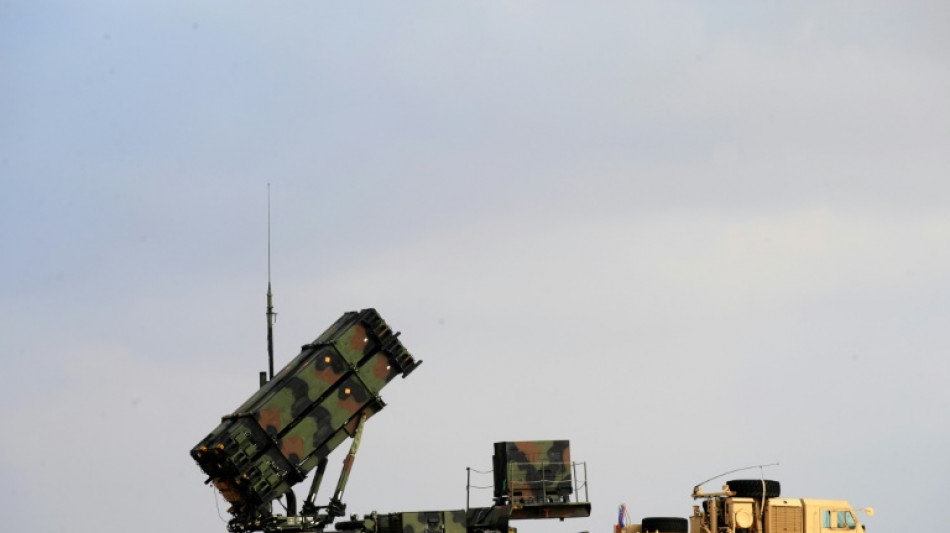
Patriot, Crotale, IRIS-T: Ukraine's multiple air defence systems / Photo: © AFP/File

 South Korea police raid Starbucks HQ over 'Tank Day' fiasco

 Tech back in fashion as Asian markets extend rebound

 Total eclipse gives scientists chance to probe Sun's mysteries
 What to know about the total solar eclipse on August 12
 'Like the end of the world': the eclipse chasers flocking to Spain
 Taiwan begins military drills as China pressure grows
 UK mansion where 'listeners' spied on Nazi generals becomes museum
 Sabalenka tops Uchijima in WTA Toronto opener
 Kgatlana strikes as South Africa reach WAFCON quarter-finals

 Pakistan close on series-levelling win against West Indies

 Paramount CEO says politics fueling Warner Bros. merger battle

 Trump's sale of access to Truth Social raises eyebrows

 SpaceX rocket stage expected to slam into Moon

 US hopeful Hormuz strait deal will be done 'today or tomorrow'

 Michigan primary puts Democratic divide on the ballot

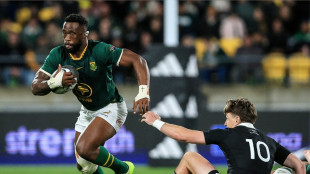 South Africa captain Kolisi to make Test return in Argentina

 Cuba's famed resilience comes at a growing mental cost

 Swiss Reusser wins Tour de France Femmes time-trial

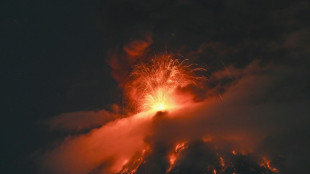 Hundreds flee homes after Guatemala's Fuego volcano erupts

 Thousands pay tribute to Italian football legend Baresi
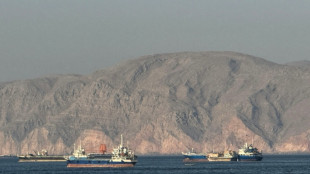 Oil drops, stocks hit records on hopes of Hormuz opening
 Renard returns as Ivory Coast coach

 Italian garbagemen help recover lost 1 mln euro lottery ticket
 EU nations patch things up after Ceuta migration discord
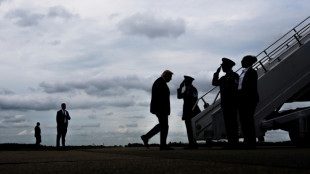 US hopeful Hormuz strait deal will be done 'today or tomorrow' after ship hit

Ukraine is having to master a patchwork of different air defence systems, with the latest addition -- the American-made Patriot -- bringing new capabilities but also complexity, analysts say.
Kyiv has taken delivery of the German IRIS-T, the French Crotale, the Norwegian NASAMS, as well the Italian Aspide 2000, the US-made HAWK and soon the Patriot.
"From a strictly military point of view, having a wide variety of systems is not easy... There are major logistical difficulties in putting in place multiple systems," said Camille Grand, researcher for the ECFR think tank and former deputy secretary general at NATO.
Posing the same challenges as Western-delivered artillery and armoured vehicles that have flooded into Ukraine since February, each system requires different training and maintenance, forcing Ukrainian forces to learn quickly and adapt.
Ukraine also has its own Soviet-era air defences based on the Buk-m1 or S-300 systems which are far less effective.
"We are not going to see perfect communication and interoperability between all these systems, because of their diversity, because of the complexity of implementing them, but we can imagine that the Ukrainian air defence command will manage to integrate them side-by-side," Grand added.
The sheer variety of systems could pose dangers as well as operational challenges, a French military source said.
"When the systems have not been designed to be interoperable, making them work together and optimising their use constitutes a real challenge for the command centre," the source said.
"The risk that we can have with surface-to-air defence systems is in particular that of friendly fire, all the more so at a time when Ukraine is using air weapons much more than at the beginning of the conflict," the source added.
A Ukrainian air defence missile is believed to be the source of a deadly explosion in eastern Poland last month which initially raised fears that Russia had struck NATO territory.
- Air war -
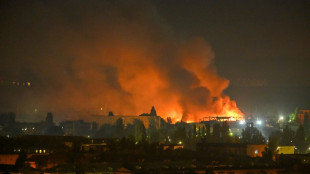
Air defence has become of crucial importance for Ukraine since October when Russia began a strategy of striking Ukraine's civilian infrastructure, depriving millions of Ukrainians of water, electricity and heating.
The key to a successful system is creating what the military calls a "multi-layered" ground-to-air defence capability that can intercept short-range attacks at low altitude, medium range attacks at medium altitude, and long range at high altitude.
Air defence batteries need to be positioned around strategic locations, such as large cities or key infrastructure centres, where they can take down ballistic missiles, cruise missiles or drones.
The Patriot missiles, which cost three million dollars each, can shoot down cruise missiles, short-range ballistic missiles and aircraft at a height significantly higher than the systems currently in place.
The United States promised to provide the Patriot for the first time as Ukraine's leader Volodymyr Zelensky made a lightning trip on Wednesday to Washington.
The pledge comes at a time when Western and Ukrainian defence experts are concerned about the possible delivery of Iranian ballistic missiles to Russia.
"If there was one system available to cover the entire territory of Ukraine, obviously that would have been the ideal case scenario," Viktoriya Fedorchak, a Ukrainian researcher working for the Swedish Defence University, told AFP.
"But we're talking about realistic availability of different capabilities that Ukraine's allies can provide. This diversity is the reality Ukraine needs to deal with and the country needs to get the most out of it."
Russian President Vladimir Putin is already aware how the Patriot delivery could change the balance of power.
"Those who are confronting us say this is a defensive weapon... there will always be an antidote. So the people who are doing this are doing it in vain. It's just prolonging the conflict, that's all," Putin told reporters on Thursday.
O.Krause--BTB