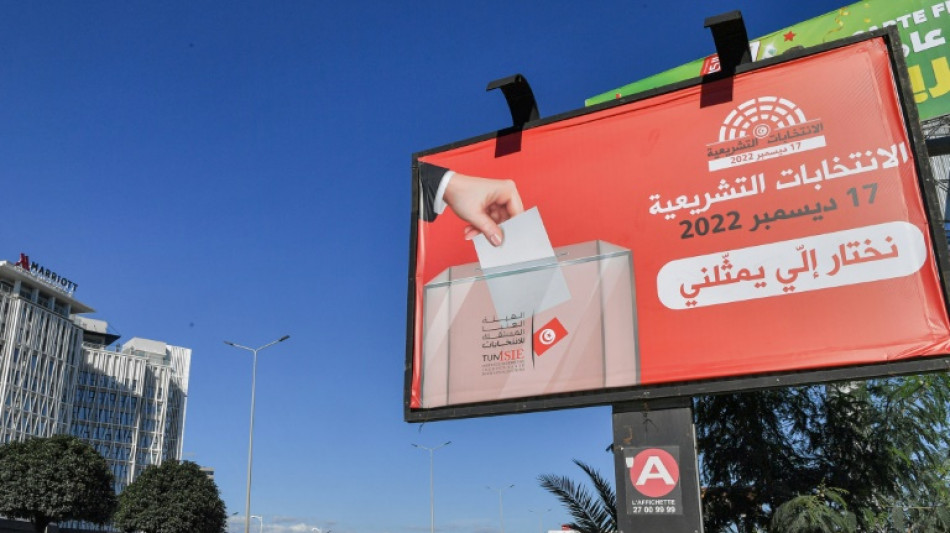
Tunisians vote for toothless parliament in poll shunned by opposition / Photo: © AFP/File

 Russian barrage on Kyiv kills 17 as Ukraine fails to down single missile
 'Lost': Migrants despair after Britain expels them back to France
 Cathay Pacific's profit soars 71% despite Iran war driving up fuel costs

 Russian barrage on Ukraine kills 15, wounds dozens more
 South Korea police raid Starbucks HQ over 'Tank Day' fiasco
 Tech back in fashion as Asian markets extend rebound
 Total eclipse gives scientists chance to probe Sun's mysteries
 What to know about the total solar eclipse on August 12
 'Like the end of the world': the eclipse chasers flocking to Spain
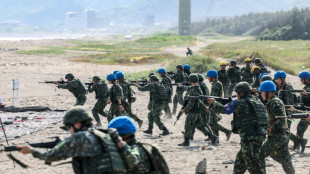 Taiwan begins military drills as China pressure grows
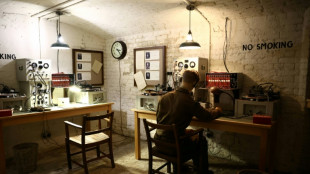 UK mansion where 'listeners' spied on Nazi generals becomes museum
 Sabalenka tops Uchijima in WTA Toronto opener
 Kgatlana strikes as South Africa reach WAFCON quarter-finals

 Pakistan close on series-levelling win against West Indies
 Paramount CEO says politics fueling Warner Bros. merger battle

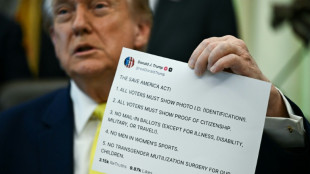 Trump's sale of access to Truth Social raises eyebrows
 SpaceX rocket stage expected to slam into Moon

 US hopeful Hormuz strait deal will be done 'today or tomorrow'

 Michigan primary puts Democratic divide on the ballot

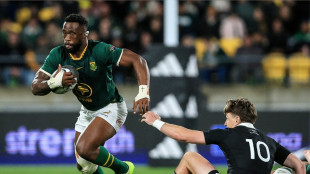 South Africa captain Kolisi to make Test return in Argentina

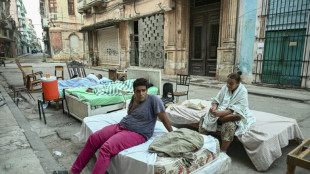 Cuba's famed resilience comes at a growing mental cost

 Swiss Reusser wins Tour de France Femmes time-trial
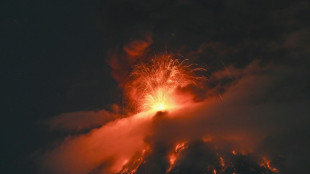 Hundreds flee homes after Guatemala's Fuego volcano erupts
 Thousands pay tribute to Italian football legend Baresi
 Oil drops, stocks hit records on hopes of Hormuz opening
Tunisians started voting in a lacklustre election Saturday for a parliament with virtually no power, the final pillar in President Kais Saied's political overhaul in the birthplace of the Arab Spring.
Opposition political groups in the North African country have called for a boycott. They say the poll is part of a "coup" against the only democracy to have emerged from the 2011 wave of uprisings across the region.
At a polling booth in central Tunis as the polls opened at 8:00 AM (0700 GMT), around 20 journalists looked on as two voters waited to cast their ballots.
The vote follows three weeks of barely noticeable campaigning, with few posters in the streets and no serious debate among a public largely preoccupied with pressing financial concerns.
Last year, after months of political deadlock and economic crisis exacerbated by the coronavirus pandemic, Saied suspended parliament and sent military vehicles to surround it in a dramatic power grab more than a decade after a popular revolution unseated dictator Zine El Abidine Ben Ali.
Saied, a former law professor, has since pushed through a new constitution giving the presidency almost unrestrained powers and laying the ground for a 161-seat rubber-stamp legislature.
His moves were initially supported by many Tunisians tired of the messy and corrupt democratic system in the post-Ben Ali era.
But almost a year and half on, the country's economic woes have gone from bad to worse, with 10 percent inflation. Frequent shortages of milk, sugar and petrol fuel a growing wave of emigration.
- A 'non-event' -
The previous legislature had far-reaching powers in the mixed presidential-parliamentary system enshrined in Tunisia's post-revolution constitution.
But candidates in Saturday's poll are standing as individuals under a system that neuters political parties including Saied's nemesis, the once powerful Islamist-leaning Ennahdha party.
The new chamber "won't be able to appoint a government or censure it, except under draconian conditions that are almost impossible to meet," said political scientist Hamadi Redissi.
Another analyst, Hamza Meddeb, told AFP the election was a "non-event" and predicted that few Tunisians would vote.
"This election is a formality to complete the political system imposed by Kais Saied and concentrate power in his hands," said Meddeb, a fellow at the Carnegie Middle East Center.
"Tunisians know that this parliament will have no political weight and will be stripped of all power."
Meddeb added that most of the candidates are "political newcomers" unable to mobilise a public struggling with "extremely difficult" economic conditions.
The Tunisian Observatory for Democratic Transition, a non-governmental organisation, said around half the candidates are either teachers or mid-level civil servants.
In contrast with the previous gender-equal system, women represent less than 15 percent of all candidates for the new parliament, according to the official list released by the election board.
- IMF bailout 'easier' -
Almost all of Tunisia's political parties, including Ennahdha, have said they will boycott the vote.
The powerful UGTT trade union federation has called the poll meaningless.
Al Bawsala, a civil society group that has monitored Tunisia's parliamentary politics since 2014, said it would boycott the activities of what it called a "puppet parliament" whose only role would be to "back the president's programme".
Hamish Kinnear, of risk intelligence firm Verisk Maplecroft, said the vote would "serve primarily as a tool for President Kais Saied to legitimise his grip on power".
But it would also "ease Tunisia's relations with key external partners by closing out 17 months of constitutional and governance uncertainty", Kinnear added.
Tunisia is in the final stages of negotiating a nearly $2-billion bailout package from the International Monetary Fund (IMF) to rescue its crisis-hit public finances.
Kinnear said the vote meant "securing financial assistance... will be easier now that greater political predictability is returning, even if the democratic legitimacy of the (constitutional) referendum and upcoming legislative elections is weak."
The IMF's top committee was set to approve next week the country's fourth loan in 10 years, but has postponed its decision until early January at the request of the Tunisian government, a source close to the talks told AFP.
P.Anderson--BTB