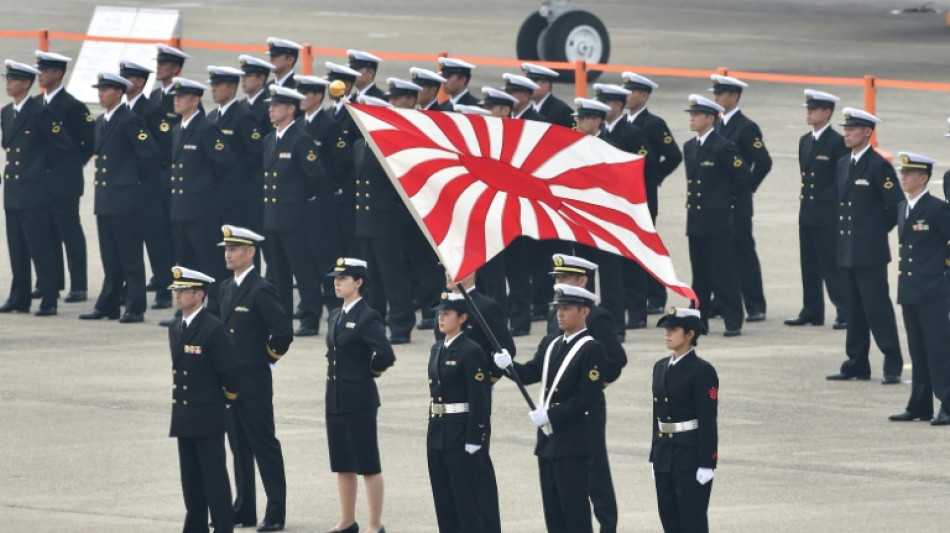
Counterstrikes and controversy: Japan's defence overhaul / Photo: © AFP/File

 Russian barrage on Kyiv kills 17 as Ukraine fails to down single missile
 'Lost': Migrants despair after Britain expels them back to France
 Cathay Pacific's profit soars 71% despite Iran war driving up fuel costs
 Russian barrage on Ukraine kills 15, wounds dozens more
 South Korea police raid Starbucks HQ over 'Tank Day' fiasco
 Tech back in fashion as Asian markets extend rebound
 Total eclipse gives scientists chance to probe Sun's mysteries

 What to know about the total solar eclipse on August 12

 'Like the end of the world': the eclipse chasers flocking to Spain
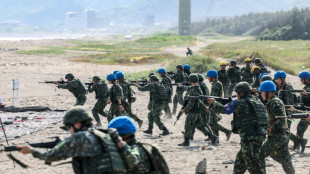 Taiwan begins military drills as China pressure grows
 UK mansion where 'listeners' spied on Nazi generals becomes museum
 Sabalenka tops Uchijima in WTA Toronto opener
 Kgatlana strikes as South Africa reach WAFCON quarter-finals

 Pakistan close on series-levelling win against West Indies

 Paramount CEO says politics fueling Warner Bros. merger battle

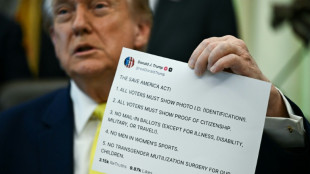 Trump's sale of access to Truth Social raises eyebrows

 SpaceX rocket stage expected to slam into Moon

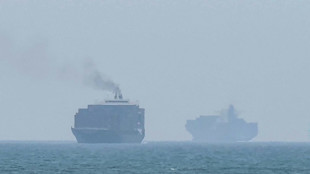 US hopeful Hormuz strait deal will be done 'today or tomorrow'

 Michigan primary puts Democratic divide on the ballot

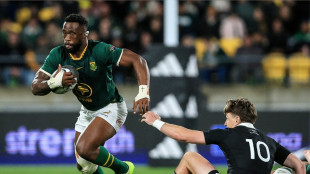 South Africa captain Kolisi to make Test return in Argentina

 Cuba's famed resilience comes at a growing mental cost

 Swiss Reusser wins Tour de France Femmes time-trial

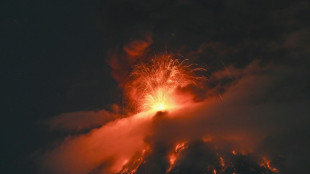 Hundreds flee homes after Guatemala's Fuego volcano erupts

 Thousands pay tribute to Italian football legend Baresi

 Oil drops, stocks hit records on hopes of Hormuz opening
Japan has laid out plans to expand its defence capabilities drastically over five years.
The new security strategy marks a major shift, as Japan confronts China's growing military might.
- Why are the changes controversial? -
Japan's constitution, drafted by the United States after World War II, does not officially recognise the military, so moves to bolster its capacity are highly sensitive.
The constitution limits spending on the army, navy and air force to nominally defensive capabilities, and bans the "use of force as means of settling international disputes".
Although defence spending has risen every year for decades, the total has long hovered at around one percent of GDP, below the NATO standard of two percent.
That level "became symbolic of Japan's security policy that focuses exclusively on self-defence", Naoko Aoki of the Atlantic Council think tank told AFP.
Now Prime Minister Fumio Kishida has pledged to ramp up spending to two percent by 2027, although how to finance the rise is proving a political headache.
"Breaching this self-imposed cap does not mean that Japan is abandoning its policy," said Aoki.
"But it reflects the alarm and concern that the Japanese feel about their security environment."
- What is 'counterstrike capacity'? -
A pillar of the new strategy is to acquire "counterstrike capacity": weapons to destroy enemy missile launch sites during an attack.
The move is delicate "because it would exceed what Japan has traditionally considered necessary to defend itself", Aoki said, although polls show most Japanese are in favour.
The government has insisted for decades that carrying out counterstrikes under certain conditions would not violate the pacifist limits of the constitution.
Even so, questions remain about the efficacy of counterstrike missiles given the sophisticated capacities of China and other neighbours, said James Brady, vice president of Teneo consultancy.
"North Korea alone has recently been demonstrating multiple types of mobile launch platforms, including road, railway, and submarine," he warned.
"Even with counterstrike capacities, Japan's defence planners would face a whack-a-mole scenario."
- Why is Japan doing this now? -
Unease has grown in Japan over China's rapidly modernising military and North Korea's wave of missile tests.
Russia's invasion of Ukraine has also "reinforced Japanese concerns", Aoki said.
Japanese officials have regularly protested Chinese maritime incursions, and raised concerns about joint aerial exercises by Chinese and Russian planes.
Under President Xi Jinping, China has also become more bellicose toward Taiwan, which it considers a part of its territory to be taken by force one day if necessary.
So "a key question going forward will be the extent to which Japanese and US forces can better integrate planning to respond jointly to something like a Taiwan contingency," Brady said.
- How will the changes be received? -
Plans to bolster Japan's missile arsenal have faced some hesitancy from the ruling party's coalition partner Komeito, which takes a traditionally pacifistic stance.
"Similarly, neighbouring capitals have traditionally opposed the idea of Tokyo re-arming, worried that it might prelude a return to the military expansionism of the pre-1945 era," Brady said.
Japan's ties with China have already deteriorated in recent years, and Beijing has said it is "firmly opposed" to the overhaul.
Russia too will likely see the moves as a further nail in the coffin for ties.
Tokyo's key ally Washington, however, is expected to welcome the shift and play a key role in bolstering Japan's defences.
Surveys also show Japan's public is broadly supportive of efforts to boost defences, including through the counterstrike capacity, though there is opposition to new taxes to finance spending.
Y.Bouchard--BTB