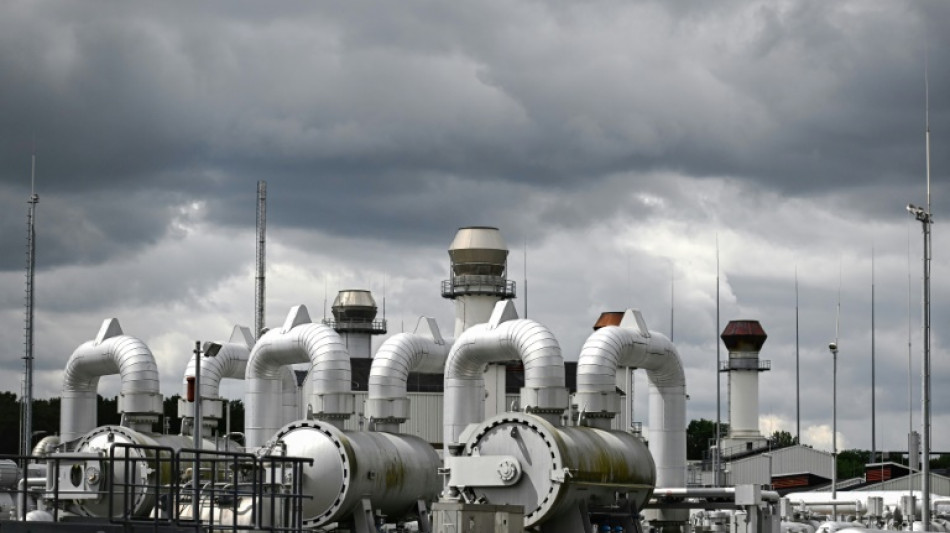
EU leaders fight for common ground on energy prices / Photo: © AFP

 Russia seizes assets of Nestle, French firms over West's Ukraine support
 England can build on World Cup 'spirit', says Tuchel

 UNESCO can be 'moderator' in AI debate: chief to AFP
 Infantino 'must go', says German FA vice-president
 Russia seizes assets of Nestle, French firms
 Japan's busiest rail station tests robot bins
 Anthropic says AI systems moving towards building themselves
 Asian stocks boosted by falling oil, yen weakens after BoJ rate hike
 Pakistan court blocks expulsion of Afghan medical college students
 Athletes 'can't take it any more' as Asian Games issues mount
 Allen lights up Bills' new stadium with 41-31 win over Lions
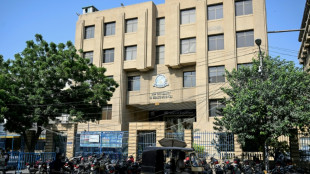 Afghan medical students in Pakistan hope court stops college expulsions
 AI doomsday warnings unlikely to slow IPOs but questions linger
 ICC eyes China in bid to expand cricket
 Nkunku craving freedom and fun on RB Leipzig return
 Bhutan's traditional archers lose ground to development

 Asian stocks track Wall St rally as oil prices drop
 South Korea makes Asian Games complaint over Japan warlord ceremony

 US aid cuts are killing Kenyan sex workers
 October 7 survivors, families take centre stage in Israel vote
 Captain Mat Ryan axed from Socceroos squad for Brazil games
 US approves sale of 48 F-35 jets to Saudi Arabia

 Juventus, Palace cruise to Europa League wins, Bournemouth beat Sociedad
 Stocks climb as oil retreats, Fed calms inflation fears

 Russians begin voting in controlled election as war drags
EU leaders are set for tough talks on how to handle Europe's energy shock Thursday, with capitals at loggerheads over imposing a cap on gas prices pushed skywards by the war in Ukraine.
The bloc's 27 member states have been squabbling for months over measures to lower energy bills, and will arrive at their Brussels summit in a chilly mood.
Countries such as Italy are pushing hard for a swift and ambitious cap on prices, in the teeth of opposition from Germany, the EU's biggest economy.
The political pressure to act is huge with strikes and protests over the cost of living spreading across Europe - notably in France and Belgium - and businesses fearing bankruptcy because of the high bills.
If this summit does not result in a "clear political signal that we...no longer tolerate high gas prices", it will be "Europe's failure", Belgian Prime Minister Alexander De Croo said on Monday.
The European Commission, the EU's executive arm, has tried to satisfy the diverging views with a series of proposals that it hopes will help Europeans pay for their heating as winter approaches.
But these have been dismissed as timid by those wanting a clear ceiling on gas prices despite the opposing view - championed by Germany, but also Denmark and the Netherlands - that this would choke off supply or encourage consumption.
The push for a common approach has been further hampered by discord between France and Germany, which burst into the open Wednesday when they delayed a regular meeting between cabinet ministers.
Breakthroughs in the EU are difficult to achieve when the bloc's biggest powers do not see eye to eye and French President Emmanuel Macron and Chancellor Olaf Scholz were set to meet ahead of the summit to mend ties.
"There has been a lot of progress, but no fundamental breakthrough," a senior EU diplomat involved in the negotiations said ahead of the two-day summit.
"Priorities differ: Germany has chosen security of supply because it can afford the high prices, but many countries cannot keep up with the cost," the diplomat added.
- 'Slow and painstaking' -
The Commission's proposals include an idea to allow joint purchases by the EU energy giants in order to command cheaper prices to replenish reserves.
Another proposal is to give the Commission the power to establish a pricing "corridor" on Europe's main gas index to intervene when prices get out of control.
Meeting in Brussels, the EU leaders will haggle over the Commission's proposals, with some countries seeking something much more far-reaching than what is on offer.
But German Chancellor Olaf Scholz on Thursday again rejected any attempt by the EU to cap prices on gas imports saying it "carries the risk that producers will then sell their gas elsewhere."
However, Scholz welcomed the European Commission's proposal for joint purchases in the EU.
A big problem in Europe is the link between gas and electricity prices. Under EU rules, a gas price index helps set the price of electric power across the continent, even if sourced from nuclear energy, renewables or coal.
But the index has skyrocketed since Ukraine was invaded by Russia, the country that supplied 40 percent of the EU's gas imports before the war.
Several countries - including nuclear powered France - are calling for an exception to the gas price mechanism while the commission draws up a new system that better reflects market reality.
This was already granted to Spain and Portugal earlier this year, giving them freer rein to keep electricity prices lower despite surging prices.
"We should not have to ask the Commission four times for the same thing in order to have a proposal," Spain's Ecological Transition Minister Teresa Ribera told AFP ahead of the summit.
"It is frustrating to see how slow and painstaking Europe's response to the challenge we face is," Ribera said.
T.Bondarenko--BTB