Faced with historic drought, the Dutch rethink water management / Photo: © ANP/AFP

 Apologetic Alvarez fires Atletico to win against Deportivo

 Lens beat PFC in Ligue 1 matchday impacted by social unrest
 Valkyries hit back against Dream to level WNBA Finals

 'Fighting for our rights': Paris protesters determined to march on
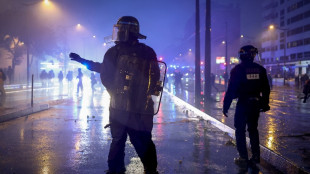 Clashes break out in Paris, other French cities amid fresh protests

 Spurs seal rare win at Chelsea as Palmer sees red

 Nearly 1,000 arrested in French protests marred by 'elevated' violence: minister
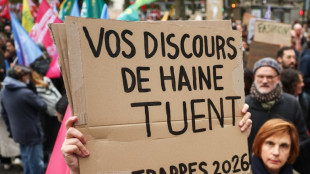 France extends detention of suspected racist shooter

 Andrade and Nemour star as Biles cheers at world gymnastics champs
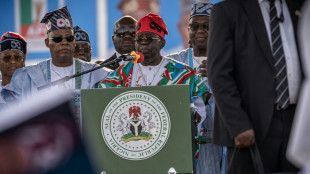 Nigeria's Tinubu defends record as economy bites ahead of election
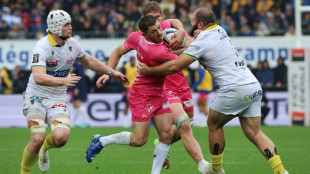
 'Guiding star' Fuellkrug bags Bremen brace, Leipzig win
 Man City's perfect start ended by Aston Villa, Arsenal go joint-top

 Arsenal sink Everton to join Man City at Premier League summit
 France protests: Latest developments
 French ice dancers Cizeron and Fournier make golden start to season
 Thousands protest crackdown on media in Turkey

 Brazil's Andrade returns to take vault gold at worlds
 Lula, Bolsonaro hold final rallies ahead of Brazil election

 Ukraine has 'stable connection' to Starlink: govt

 French protests kick off amid heavy security blanket

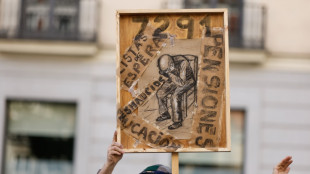 250,000 rally in Madrid demanding state pension guarantees
 UK police says 'claims' over Meghan Markle's dad not sent to other law enforcement
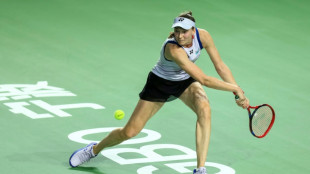 Top-ranked Rybakina to face Fernandez for Ningbo title
 Late India charge seals thrilling second T20 win over New Zealand
 Seen and heard at France protests
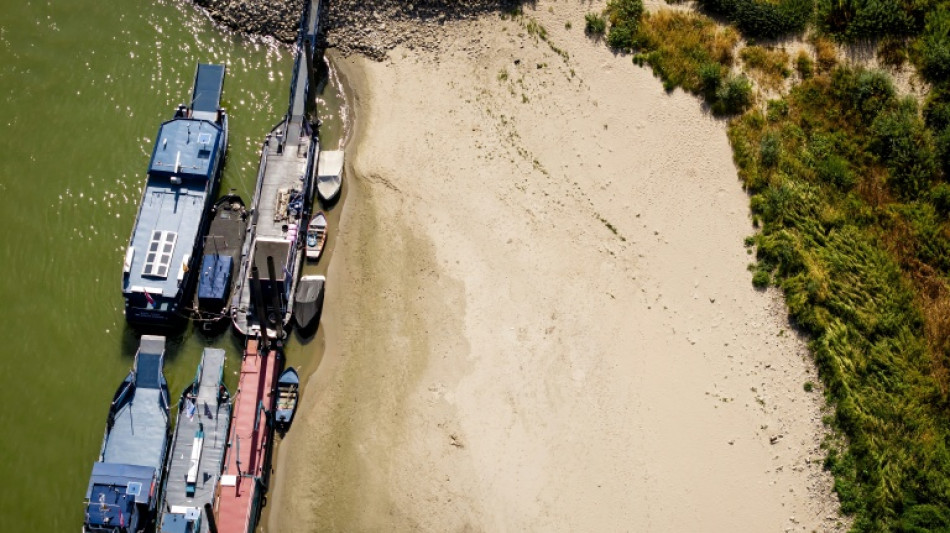
On the banks of the Waal, the Dutch branch of the Rhine, swimmers are sunning themselves on a Nijmegen beach that didn't exist before the river level dropped a few months ago.
Like many European countries, the Netherlands has been hit by a historic summer drought caused by a prolonged dry spell, exceptional heat and intense evaporation.
The Dutch -- with their dikes, dams and vast waterworks--have long been admired for their tenacity in the face of flood risks.
Now their country, which is lower than sea level, finds itself, in an era of global warming, facing a dilemma: how to retain water while protecting themselves from it?
"I've been coming to this river for, what... 25, 35 years?" said entrepreneur Leon Berkers. "And this is the lowest, the craziest level it's ever reached."
Berkers is the captain of a restaurant boat that is now listing heavily after becoming stuck in the riverbank.
"We can't even fill the coffee cups to the brim or they spill," his son Linus, 19, added with an air of amused exasperation.
The drought is particularly visible in the southern and eastern provinces, where the grass has turned the colour of straw and the Rhine this summer reached the lowest level ever recorded there.
- Maritime transport affected -
The shortage of fresh water and a process of salinisation, as seawater pushes inland through the river network, have affected the entire country. And sometimes the effects are devastating.
"It feels like we're in the south of France" said Marthe Wens, a researcher specialising in water and climate risks at the Institute for Environmental Studies at the Vrije Universiteit Amsterdam.
"First of all, there's nature, of course -- there are the trees, the grass," she said, noting, "the trees already look like autumn."
Another crisis is unfolding underground, threatening the very foundations of buildings. "Foundations are sometimes built on peat bogs: if these dry out, they shrink, and cracks can appear in buildings," she said.
Since mid‑July, Rijkswaterstaat, the national water management agency, has classified the situation as an "actual water shortage".
The agency has imposed restrictions on irrigation, while limiting how much certain locks can open to reduce the loss of fresh water and to prevent too much salt water from entering the network.
Shipping, both the inland sector, and by extension maritime transport, has been heavily affected.
"Not only are the carriers suffering, but also the industries that depend on the goods they transport," Wens said.
- Need for adaptation -
With extreme weather events becoming increasingly frequent as a result of climate change, the Netherlands will have to rethink a strategy that has until now been "waterproof."
"We have always designed our systems to protect us from flooding and to drain excess water into the sea," said Micha Werner, a professor specializing in drought resilience at IHE Delft, the world's largest institute for water education.
"But as we can see today with climate change, we are increasingly often faced with years of water shortage," he said.
"We therefore truly have to change the way we manage water resources: instead of trying to get rid of water, we actually need to start trying to retain it within our hydraulic systems, and that really requires adaptation," Werner said.
For Leon Berkers, whose restaurant boat has been stuck in the mud for more than a month, adaptation has so far meant improvising fixes to keep "pots and pans from flying around."
Putting out his cigarette before starting the evening service, he sighed: "I think we'll be without water for at least another two months."
R.Kloeti--VB