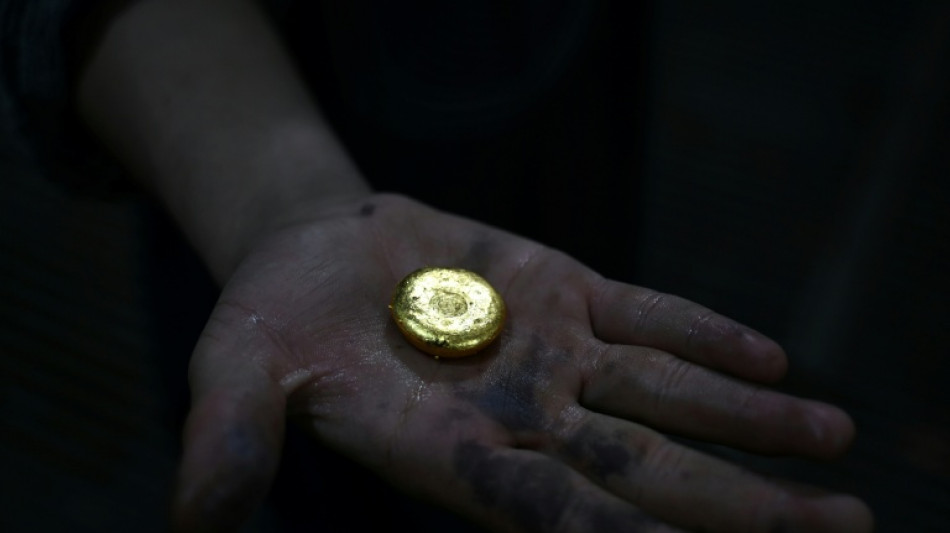
Afghanistan's gold rush upends lives and landscapes / Photo: © AFP

 Brazil chooses between Lula and Bolsonaro in nail-biter vote

 Le Pen begins presidential campaign after violent protests across France

 Doha opens ninth World Investment Forum focused on future investment

 Kuwait public works minister and UK ambassador discuss closer cooperation
 Adan Hospital launches catheter-based tricuspid valve replacement programme
 KIB Group nine-month profit rises 30% to KD 26.6 million

 John Catlin wins Hong Kong Open and secures first Masters invitation
 Poland’s WB Group plans $100 million India investment for drone production

 Pinheiro Braathen wins Soelden giant slalom
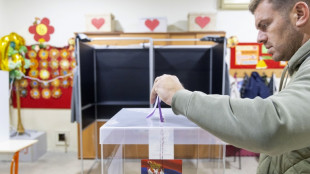
 Man Utd's Fernandes dropped by Carrick after Como outburst

 England great Anderson's future unclear after Lancashire exit

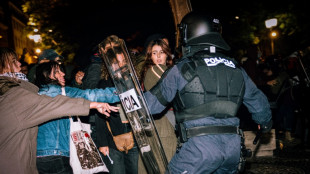 Demonstrators wounded as Portugal police clear housing protest camps

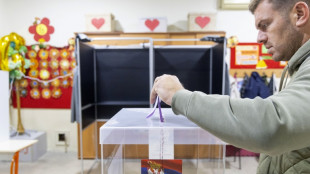 Serbia votes as ruling party faces ascendant student movement

 Police made 1,314 arrests in France's protests: government

 Catlin to make Masters debut after cruising to Hong Kong win

 Katsuragawa hails 'greatest moment' with South Korea win

 Japan's Yoshida wins first LPGA Tour title with South Korea win
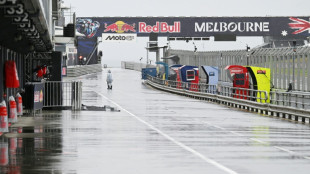
 Comeback kings Brewers down Rays to take 2-0 World Series lead
 Sri Lankan turbine project fuels anger as fish hauls plunge
 No LeBron, no problem as Sixers roll on

 Israel to close all land crossings with West Bank on election day

 'Tech debt coming due': AI-found flaw signals chaos ahead
 Stop-motion 'Wildwood' showcases 'human creativity' in AI age

 Obama blasts Trump's 'chaos and cruelty' while campaigning for Democrats

 Bolsonaro leads Lula in final Brazil election polls

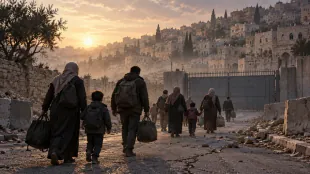
In Afghanistan's northeastern Badakhshan province, dozens of excavators operate day and night to extract gold from the mountains where villagers and their livestock once roamed.
Thousands of miners are deployed across the Shiwa area, about 50 kilometres (30 miles) northeast of the provincial capital Faizabad, extracting gold for investors nationwide.
Some residents in the area have profited from the gold rush, only to regret it later, such as farmer Muhammad Amin.
"Before, the river was deep, the water was clean," said the 74-year-old from Pul-e-Ziri Ban valley.
Since mining got underway, "the water of the river is not drinkable; you can't even wash your body with that water", he told AFP.
With tears in his eyes, Amin said the grass along the riverbank "has all gone" and farming is no longer possible due to "the wind and dust".
Now he can only feed up to 15 goats, compared with as many as 40 previously.
Amin said he was paid half the $20,000 for which he agreed to lease his land to a mining firm that failed to fulfil a promise to restore his fields after the work stopped.
The Taliban authorities have expanded the mining sector since returning to power five years ago, aiming to tap into Afghanistan's vast underground resources to boost state coffers.
Abdul Mateen Rahimzai, head of Badakhshan's mines department, said they have registered "almost 650 to 700 companies, and there are thousands of people working manually".
The World Bank said hundreds of mining contracts have been signed since 2021, with "real growth averaging 25 to 30 percent" annually according to a May report.
- 'Better than anything else' -
While mining has temporarily stopped in Amin's village, not far from his home, in Gulak-Dara valley, dozens of diggers were carving into the mountainside.
With jobs scarce in Afghanistan, the area has drawn workers from across the country.
Mohammad Agha Khwaja Khail, from Kabul, has worked in mining for five years and earns 10,000 Afghanis ($150) a month loading trucks.
"It's better than anything else... There aren't many jobs in Kabul," said the 21-year-old, above the din of diggers.
Shafiullah Ehsas, a father-of-five, transported his excavator hundreds of kilometres from Jalalabad about three months ago.
"In Jalalabad, the gold (mining) work hasn't started, and it was happening in Badakhshan, so we didn't have any other option but to bring our machinery here," said the 32-year-old, who earns 25,000 Afghanis per month.
The Ministry of Mines and Petroleum has sought to regulate the industry, with spokesman Hamayoun Afghan saying resources "used to be extracted erratically; it wasn't done under supervision" by the previous government.
Gold mining has accelerated in the north, the ministry spokesman said, including in neighbouring Takhar province where an Afghan company was operating with Chinese partners.
Fabrizio Foschini, a researcher at the Afghanistan Analysts Network, said during earlier decades of war "mining mainly benefited insurgent groups, including the Taliban, and local strongmen with links to corrupt government officials".
Mining firms are now taxed 20 grams of gold per hectare per month, or the equivalent in cash, no matter their profits.
- 'Reduced to ruins' -
Mohammadullah Mubariz, the manager of a mining company with about a hundred labourers and 20 diggers, said the team can extract "200 to 300 grams of gold" in a week.
Despite this, he said the firm was operating at a loss because of start-up costs since April.
Rahimzai, head of the provincial mines department, said last year the government collected 112 kilograms (247 pounds) of gold in Badakhshan. According to miners who spoke to AFP, their sale price per gram was around $118.
Rahimzai said that last year, "most of the mines were not registered, and there was no system to collect the fees from them".
He has also ordered the closure of around 225 sites that caused damage, including in the Shiwa area.
"There was a bridge there, there were shops, and there was a school. All of them were buried under floodwater, mud, and debris. The area has been completely reduced to ruins," Rahimzai told AFP.
The provincial mining chief also pledged to tackle any corruption, and ensure the "mineral resources of Badakhshan will be utilised properly and for the benefit of the people".
Some parts of the province remain untouched, including a few kilometres from Shiwa where herder Fazil hoped the miners would stay away.
"Because it's a place for people, for picnics, for livestock to graze," he told AFP, giving only his first name for security reasons.
The gold industry "doesn't benefit the local communities here", said the 45-year-old, who has brought his herd to the mountains each summer since childhood.
"It benefits only the powerful people."
str-baz-iw-qb/rsc/dan
F.Stadler--VB